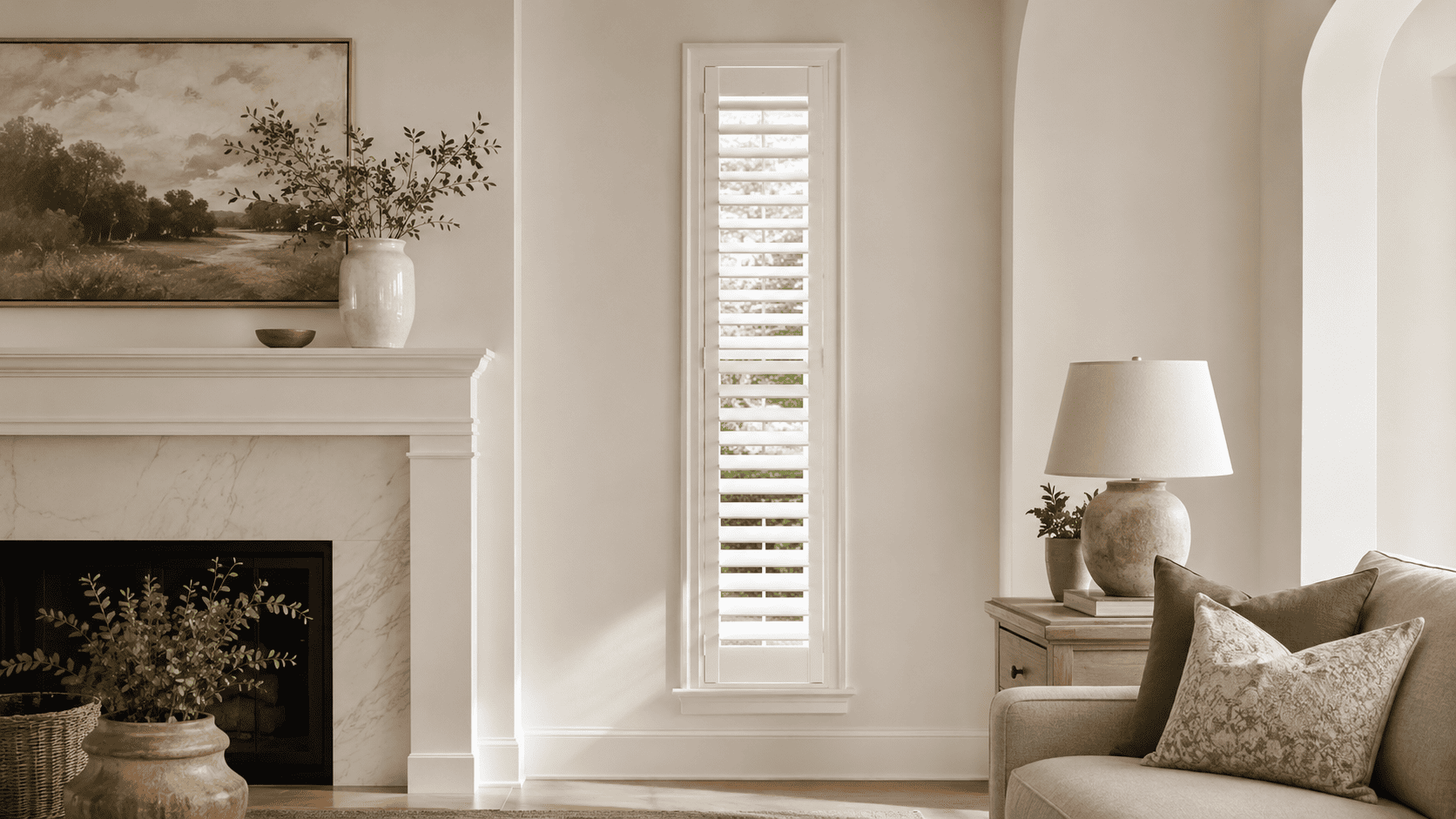
12 Inch Wide Window Shutters: Options for Narrow Windows and Small Openings
Author: Nigel Harris.
June 22, 2026.
Narrow windows can be easy to overlook, but they often have a bigger design impact than expected. A small opening beside a door, in a bathroom, along a stair landing, or in a compact room can affect privacy, light, and the overall balance of the space.
That is why choosing 12 inch wide window shutters is not only about finding something that fits. It is about proportion, panel layout, usable light control, and creating a finished look that feels intentional rather than improvised.
Can You Put Shutters on a 12-Inch-Wide Window?
Yes, narrow windows can often be fitted with custom window shutters, but the design has to be planned carefully. A 12-inch-wide opening leaves less room for standard panel proportions, so every detail matters more than it would on a wider window.
Why narrow windows need a custom approach
With a very slim opening, small differences in measurement can affect how the shutter sits, opens, and looks from the room. A made-to-measure design helps account for the exact window width, depth, trim, sill, and surrounding wall conditions.
This is especially important if your narrow window is part of a visible architectural feature, such as an entry door sidelight or a row of small windows. The shutter should look like it belongs to the window, not like a smaller version of a wider treatment forced into place.
Where 12 inch wide window shutters are commonly used
Narrow shutters may be considered for:
Entry door sidelights;
Small bathroom windows;
Stairway or hallway windows;
Narrow kitchen windows;
Accent windows;
Slim windows beside larger openings;
Compact windows in older homes.
In each case, the goal is usually the same: improve privacy and light control while keeping the small window visually clean.
Design Options for 12 Inch Wide Window Shutters
When the window is narrow, the best shutter layout is usually simple. Too many divisions, oversized details, or heavy framing can make the opening feel crowded.
Single-panel shutters for narrow windows
A single-panel design is often the cleanest option for a 12-inch-wide window. Instead of splitting the opening into multiple small sections, one narrow panel can help the shutter look more streamlined.
This approach can work especially well when the window is tall and slim. The vertical proportion is preserved, and the shutter becomes part of the window’s architecture instead of adding visual clutter.
Full-height shutters for a cleaner look
Full-height shutters are often a strong fit for narrow windows because they keep the design simple from top to bottom. The panel covers the full opening, which can make the window feel more complete and less fragmented.
For a small opening, this can be more elegant than adding unnecessary horizontal breaks. It also makes day-to-day use more straightforward because the shutter reads as one clean surface.
Fixed or adjustable louver considerations
Depending on the window size, frame depth, and desired function, the shutter may use adjustable louvers or a more limited configuration. If the opening is extremely narrow, the louver size and operating clearance need to be reviewed carefully.
The main question is not only whether the shutter fits, but whether it remains easy to use. A design that technically fits but feels awkward to adjust may not be the best choice for everyday living.
Proportion Matters More on Small Openings
On wide windows, the eye has more space to absorb frames, rails, louvers, and panel breaks. On narrow windows, those same elements become much more noticeable.
Keep the panel design visually light
A narrow shutter should not feel bulky. Slimmer visual lines, balanced rails, and a clean frame profile can help the window feel polished without overwhelming the glass area.
If the frame or panel components look too heavy, the window may appear smaller than it already is. The best design should give the opening structure while still allowing it to feel open and useful.
Match the style to nearby windows
If your 12-inch-wide window sits near larger windows, consistency matters. The shutter finish, louver style, and frame profile should coordinate with the surrounding openings so the room feels cohesive.
This does not always mean every shutter needs to be identical. It means the smaller shutter should relate to the larger ones in a way that feels deliberate.
Avoid overcomplicating a narrow window
Small openings usually benefit from restraint. Extra divider rails, busy panel splits, or overly decorative details can make a narrow window feel cramped.
A cleaner shutter design will usually age better visually and make the window easier to live with over time.
Privacy and Light Control for Narrow Windows
Many narrow windows are placed in areas where privacy matters. Even a slim window can expose a sightline into an entryway, bathroom, hallway, or side-facing room.
Entry areas and sidelights
Narrow windows near a front door can bring in helpful natural light, but they can also create privacy concerns. Shutters can help you control visibility while keeping the entryway bright and finished.
For sidelights, proportion is especially important. The shutter should respect the slim shape of the glass while improving comfort inside the home.
Bathrooms and small rooms
A narrow bathroom window may need privacy throughout the day without making the room feel closed off. Shutters can be useful because they let you adjust light and visibility without fully covering the window in a heavy-looking way.
For small rooms, the right shutter can also help maintain a cleaner wall line, which may make the space feel more organized.
Street-facing or side-facing windows
If a narrow window faces a sidewalk, driveway, neighboring property, or side yard, adjustable light control can make a practical difference. You can reduce direct sightlines while still allowing daylight to enter.
This is one reason custom shutters are often considered for small openings: they are not only decorative. They solve a real usability issue.
Why Made-to-Measure Shutters Help Narrow Windows Look Better
For very small openings, an approximate fit can be obvious. Gaps, awkward overlaps, or poor proportions stand out quickly because there is so little surface area to work with.
Exact measurement supports a cleaner result
A specialist measurement helps determine how the shutter should sit within or around the window opening. Width, height, depth, trim style, and obstacles such as handles or uneven framing can all affect the final recommendation.
For 12 inch wide window shutters, this step is especially valuable because the margin for error is smaller.
Frame depth affects function
The available window depth can influence the frame style, louver clearance, and how the shutter operates. A narrow window with limited depth may need a different configuration than a deeper opening with more room to work.
Reviewing these details before ordering helps avoid a shutter that looks good in theory but does not function well in the actual space.
A consistent finish makes small windows feel intentional
A narrow window can look disconnected if the finish does not coordinate with the rest of the room. Matching or complementing surrounding trim, wall color, or other shutters can help the small opening feel integrated.
For many homes, this is what turns a small window from an afterthought into a finished design detail.
What to Review During an In-Home Consultation
A narrow window often needs more design judgment than its size suggests. During an in-home consultation, you can use the visit to confirm both practical and visual details before making a decision.
Review these points with the specialist:
The exact width and height of the opening;
Whether an inside or outside mount makes more sense;
How much depth is available for the shutter frame and louvers;
Whether the shutter needs to coordinate with nearby windows;
How much privacy you want at different times of day;
Whether the panel will be easy to open and adjust;
Which finish will look most natural in the room;
Whether the window shape or trim creates any special constraints.
This step helps narrow window shutters feel tailored to the home instead of treated as a standard small-size product.
Make Small Windows Look Deliberate
A 12-inch-wide window may be small, but it still deserves careful design. The right shutter can improve privacy, soften daylight, and give the opening a more complete architectural look.
The best results usually come from a simple layout, balanced proportions, and a made-to-measure fit. When the shutter is designed around the actual window, even a very narrow opening can feel finished, useful, and visually connected to the rest of the room.