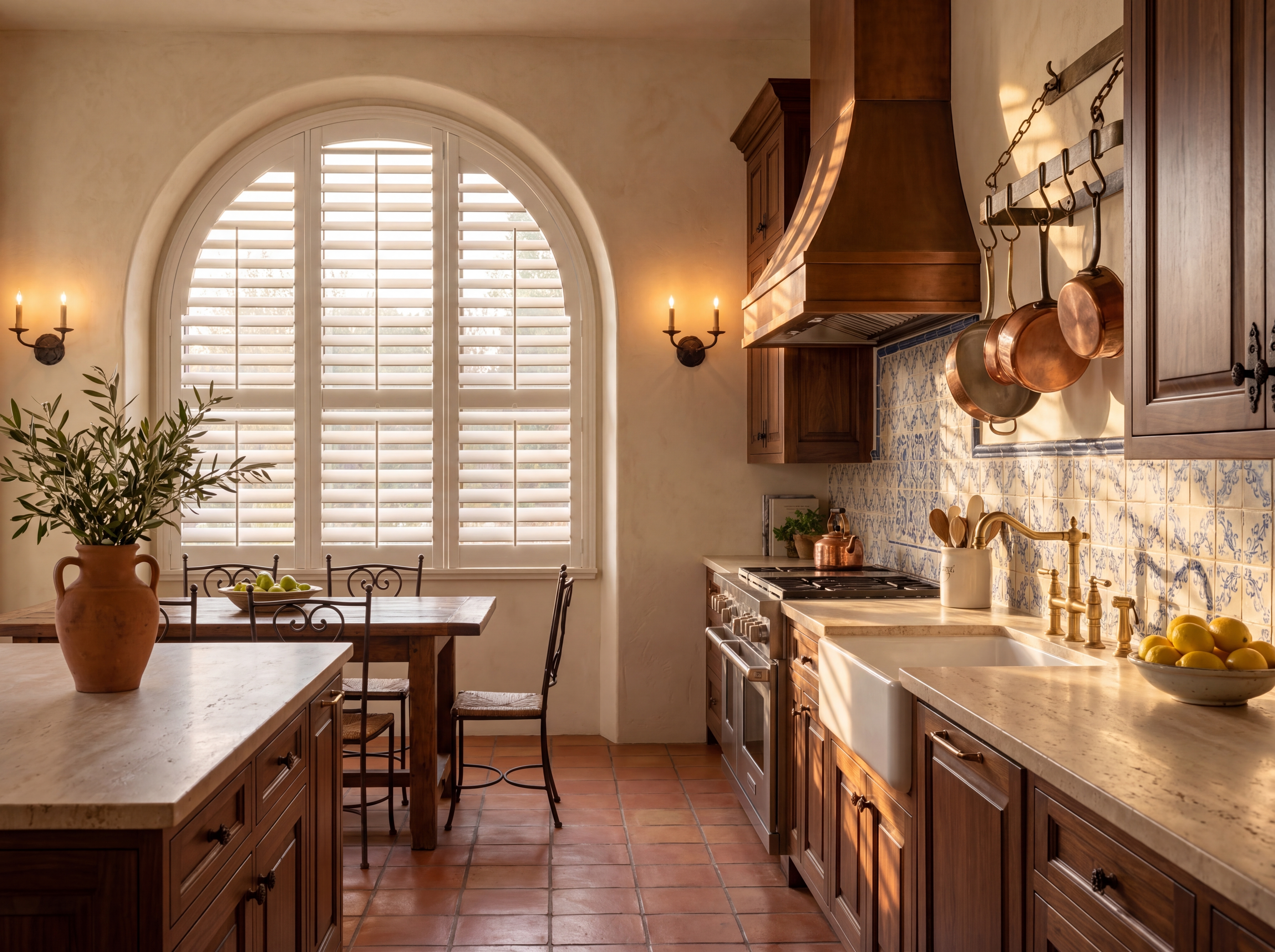
Eyebrow Window Shutters: Designed to Follow the Curve
Author: Nigel Harris.
July 20, 2026.
Eyebrow windows can bring softness and architectural character to a room, but they also create one of the biggest challenges when choosing window coverings. Their curved shape makes standard solutions difficult, especially when you want something that looks clean, balanced, and functional.
Custom eyebrow window shutters are designed to follow the unique curve of the window while still providing light control, privacy, and a finished appearance. Depending on the size, arch depth, and placement of the window, several different design approaches may work well.
In this guide, you will learn how shutters for eyebrow windows are made, what limitations to expect, and which options may help you achieve the right balance between appearance and practicality.
Why Eyebrow Window Shutters Require a Custom Fit
Unlike rectangular windows, eyebrow windows have a curved top that usually stretches across a wide horizontal span. Because of that shape, off-the-shelf products rarely align properly with the arch.
Custom-fit eyebrow arch window shutters are typically built after precise measurements are taken from the exact curve of the window. This helps ensure:
Smooth alignment with the arch
Consistent panel spacing
Better light management
A cleaner finished appearance
Proper operation of movable sections
Even small differences in curvature can affect the final fit, which is why specialty-shaped shutters are usually measured individually.
How Shutters for Eyebrow Windows Are Made
The manufacturing process for shutters for eyebrow windows is more detailed than standard shutter construction. Each curved section is designed specifically for the window opening rather than adapted from a standard frame.
Before exploring the different styles, it helps to understand how the curved shape influences the construction process.
Template-Based Measurements
For many eyebrow windows, specialists create a physical or digital template of the arch. This captures the exact radius and symmetry of the curve.
The template helps ensure the finished shutter follows the window line closely without uneven gaps.
Custom Frame Construction
The outer frame is built to mirror the shape of the eyebrow arch. Depending on the window design, the shutter may include:
A fixed curved top section
Adjustable lower louvers
Split-function designs with independent movement
Specialty tilt systems for unusual angles
This approach allows the shutters to maintain a clean appearance while still supporting usability.
Material Considerations for Curved Shutters
Not every material performs equally well in specialty shapes. Curved sections may require additional structural support depending on the width and depth of the arch.
Material selection often affects:
Panel weight
Durability over time
Precision of curved cuts
Stability in larger window openings
The shape of the window itself may influence which shutter configuration is most practical.
Common Design Options for Eyebrow Arch Window Shutters
Eyebrow arch window shutters can be configured in several ways depending on how much light control, privacy, and flexibility you want from the space.
Some homeowners prefer a decorative approach, while others prioritize daily functionality.
Fixed Arch With Adjustable Lower Panels
One of the most common solutions uses a fixed curved section at the top with operable louvers below.
This setup allows the arch to maintain its shape visually while giving you flexible control over daylight and privacy in the lower portion of the window.
Full Custom Louver Alignment
Some custom shutters are designed so the louvers visually align across both the curved and rectangular portions of the window.
This creates a more continuous appearance, especially in rooms where symmetry is important.
However, alignment options may depend on the height and angle of the arch.
Sunburst-Style Designs
For certain eyebrow windows, radial or sunburst-style inserts may be used within the curved section.
These decorative layouts can emphasize the architecture of the window while still softening incoming light.
Limitations to Consider With Eyebrow Window Shutters
Although custom shutters can work beautifully on curved windows, some limitations are important to understand before choosing a design.
The shape itself may influence how much adjustability or visibility you can maintain.
Reduced Louver Movement in Curved Areas
In many curved sections, the louvers may remain fixed rather than fully adjustable. This is common because the narrowing geometry of the arch limits how movable panels can operate smoothly.
Partial Light Gaps Around Tight Curves
Eyebrow windows with unusually tight or asymmetrical curves may show small light gaps along portions of the frame. Precise measurements help minimize this, but some variation can still occur due to the shape of the opening.
Larger Windows May Need Divided Sections
Wide eyebrow windows sometimes require multiple shutter panels or divided frame sections for structural stability and easier operation.
This can slightly change the visual appearance compared to a single uninterrupted design.
Where Eyebrow Window Shutters Work Best
Custom shutters for eyebrow windows are often used in spaces where architectural detail is a focal point.
They are especially popular in:
Living rooms with large front-facing windows
Entryways with decorative arches
Bedrooms that need privacy without heavy coverings
Staircases with high specialty windows
Transitional and traditional interior styles
Because the shutters are fitted to the exact window shape, they can help the architecture feel intentional rather than difficult to decorate.
Choosing the Right Configuration for Your Space
The best eyebrow window shutter design depends on several factors, including the depth of the curve, the amount of light exposure, and how often you need adjustability.
When evaluating options, it helps to consider:
Whether privacy is needed throughout the day
How much direct sunlight enters the room
If the arch is symmetrical or irregular
Whether the window is primarily decorative
The overall style of the surrounding space
A custom consultation and precise measuring process can help determine which configuration best supports both appearance and practicality