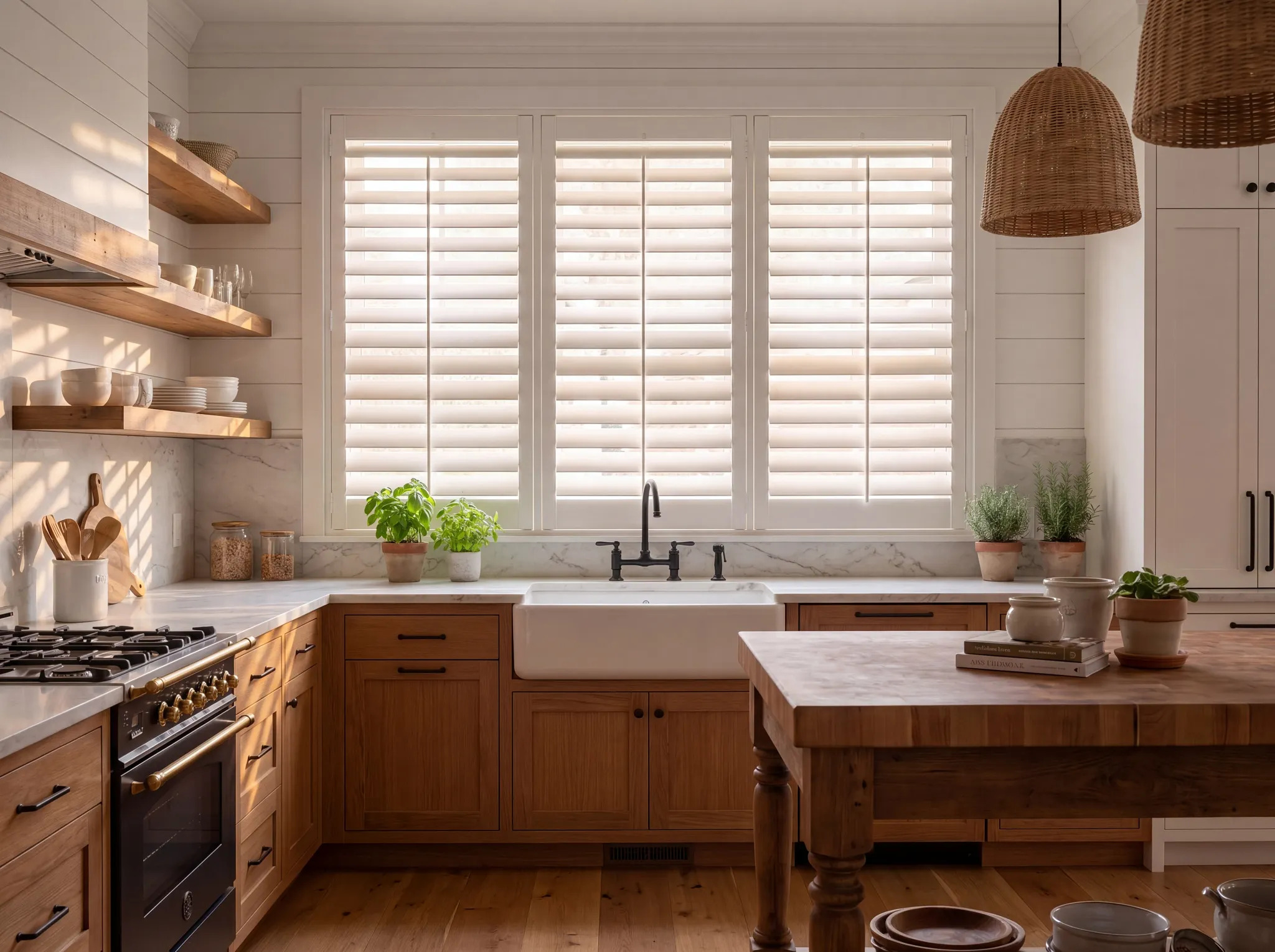
Farmhouse Style with Shutters: Color, Trim and Hardware Ideas
Author: Nigel Harris.
June 10, 2026.
Farmhouse style remains one of the most popular ways to make a home feel warm, welcoming, and lived in. It blends simplicity with character, which is exactly why shutters work so naturally in this design approach. Their clean lines, custom fit, and architectural feel can support everything from classic farmhouse interiors to more refined modern farmhouse spaces.
When chosen carefully, farmhouse style shutters do more than cover a window. They help shape the mood of the room, reinforce the trim details around the window, and create a finished look that feels intentional rather than overly decorated.
Why farmhouse style shutters work so well
Farmhouse interiors tend to balance comfort and structure. That usually means natural textures, practical details, and design elements that feel timeless instead of trendy. Farmhouse shutters fit into that formula because they bring order to the window while still feeling warm and approachable.
They often work especially well in farmhouse-inspired spaces because they offer:
clean, framed lines that make windows look more finished;
a tailored look that complements rustic and modern interiors alike;
flexible light control for bright but comfortable rooms;
privacy without making the space feel heavy;
a timeless appearance that does not depend on short-term trends.
For many homeowners, farmhouse window shutters also help bridge the gap between decorative styling and everyday function. They look polished, but they still support the way people actually live in the space.
How to choose the right farmhouse shutters look
The best farmhouse shutters usually feel simple at first glance. The overall effect is not about adding as many decorative features as possible. It is about choosing a few design details that work together: color, trim, panel layout, and hardware accents when appropriate.
Start with the overall farmhouse style direction
Not every farmhouse interior looks the same. Some homes lean more rustic and traditional, while others follow a modern farmhouse approach with cleaner contrasts and a more edited palette. Defining that direction first makes the shutter design easier to narrow down.
In more traditional farmhouse rooms, shutters often pair well with:
warmer whites and soft creams;
visible wood tones elsewhere in the room;
chunkier trim details;
classic, understated finishes.
In modern farmhouse interiors, the look is often slightly sharper. That can include:
crisp white or off-white finishes;
slimmer, cleaner trim profiles;
black or dark metal accents in nearby fixtures;
a more restrained mix of decorative elements.
This is why modern farmhouse shutters do not need to look overly rustic. In many homes, a simpler shutter design actually feels more current and more consistent with the rest of the room.
Keep the panel configuration visually balanced
Farmhouse style tends to feel relaxed, but the design still depends on visual proportion. Shutters should look balanced within the window opening and consistent with the architecture around them.
That usually means considering:
how wide the window is;
whether multiple panels will create a cleaner layout;
how the rail placement aligns with the window shape;
how the shutter frame works with the existing trim.
A well-proportioned design tends to feel more authentic than a highly decorative one. In farmhouse interiors, that quiet balance often matters more than added ornament.
Read also:
Window Shutter Ideas by Home Style: Modern, Farmhouse & Coastal
Choosing Shutter Colors & Finishes: White, Stained Wood & Painted Options
Best colors for farmhouse style shutters
Color plays a major role in defining whether shutters feel more rustic, more classic, or more modern. In most farmhouse settings, the goal is not bold contrast for its own sake. It is creating softness, warmth, and cohesion with the rest of the home.
White farmhouse shutters for a clean, classic look
White remains one of the most common choices for farmhouse shutters because it works across so many interpretations of the style. It can feel bright and clean in a modern farmhouse room or soft and familiar in a more traditional setting.
White shutters are especially effective when the room already includes:
neutral walls;
natural wood furniture;
black iron or matte metal accents;
layered textures such as linen, woven materials, or painted millwork.
This type of finish helps the shutters blend into the architecture while still making the window look intentional and complete.
Soft neutrals for a warmer farmhouse interior shutters palette
Not every farmhouse room needs bright white. Soft neutrals can create a gentler, more lived-in look, especially in spaces with warmer flooring, creamier wall paint, or vintage-inspired details.
Good options often include:
warm white;
ivory;
greige;
soft taupe;
muted beige-toned neutrals.
These shades can make interior farmhouse shutters feel less stark and more integrated into the room, especially when the goal is comfort and subtle character.
Darker finishes for modern farmhouse shutters
Darker shutters can work well in modern farmhouse interiors, but they usually look best when used intentionally. Instead of feeling heavy, they should echo other dark details already present in the room.
This might include:
black window hardware;
dark light fixtures;
iron bed frames;
darker furniture accents;
stronger contrast in the trim or wall palette.
When the rest of the room already includes those cues, darker farmhouse style shutters can create a grounded, high-contrast look that still feels cohesive.
Farmhouse trim ideas that help shutters feel built in
Trim can make a major difference in how shutters read within a farmhouse space. Even a beautiful shutter design can feel disconnected if the surrounding frame details do not support the style of the room.
Why trim matters for farmhouse window shutters
One of the reasons shutters work so well in farmhouse interiors is that they feel architectural. Good trim selection reinforces that effect by making the shutters look like a natural part of the window instead of an afterthought.
The right trim approach can help:
define the window more clearly;
connect the shutters to baseboards, doors, and other millwork;
add subtle character without overcomplicating the design;
support either a rustic farmhouse or modern farmhouse look.
Use simple, substantial trim profiles
Farmhouse styling usually favors trim that feels straightforward and grounded. Overly ornate profiles can work against the simplicity that gives the style its appeal.
Simple, slightly more substantial trim often feels most appropriate because it adds definition without making the window feel formal. This works especially well when the home already includes visible casing, paneled walls, or other classic architectural details.
Match or coordinate with surrounding millwork
In many interiors, shutters look best when their finish and trim feel connected to the rest of the room. That does not always mean every painted surface has to match exactly, but the elements should feel intentional together.
A few examples:
white shutters with white window casing for a seamless look;
warm neutral shutters paired with cream trim for a softer effect;
darker shutters balanced by matching accents elsewhere in the space.
This coordination helps farmhouse shutters feel integrated rather than added on later.
Hardware ideas for farmhouse shutters
Hardware is not always necessary, but in some farmhouse interiors it can add a useful finishing touch. The key is restraint. The goal is to support the style, not turn the shutters into a theme piece.
Choose hardware that feels functional, not overly decorative
Farmhouse design usually responds best to details that look practical and honest. If hardware is visible, it should feel like a natural extension of the window design.
That often means finishes such as:
Silk White;
Black;
Brushed Nickel;
Stainless Steel.
These finishes tend to work well because they echo the kinds of accents already common in farmhouse spaces, such as cabinet pulls, lighting, or door hardware.
Let nearby room details guide the choice
The best hardware decisions usually come from the room, not from the shutters alone. A black metal pendant, iron shelf bracket, or rustic door handle can all help determine whether visible shutter hardware makes sense and what finish will feel most cohesive.
In some rooms, the cleanest decision is to keep the shutters visually simple and let the surrounding farmhouse details do the styling work.
Room-by-room farmhouse shutter ideas
Farmhouse style can shift slightly from one room to another. The shutters should still feel consistent throughout the home, but small adjustments in finish or mood can make each room feel more intentional.
Farmhouse shutters in living rooms
Living rooms often benefit from shutters that feel bright, comfortable, and welcoming. White and warm neutral finishes are especially common here because they support natural light and work well with layered textures, wood furniture, and soft upholstery.
This is often a good place for farmhouse window shutters that feel classic and versatile rather than highly contrasting.
Interior farmhouse shutters in kitchens
In kitchens, farmhouse style often leans practical. Shutters with a clean painted finish usually work well because they support the tailored, easy-to-maintain look many homeowners want in the space.
Depending on the kitchen design, the best fit may be:
crisp white shutters for a fresh look;
warm neutrals for a softer farmhouse palette;
simple trim that does not compete with cabinetry or backsplash details.
Farmhouse style shutters in bedrooms
Bedrooms usually call for a softer interpretation of farmhouse style. Here, shutters often work best when they feel calm, understated, and comfortable.
Interior farmhouse shutters in bedrooms often pair well with:
warm white finishes;
soft neutral wall colors;
natural bedding textures;
black or bronze accents used sparingly.
The result should feel restful and layered, not overly styled.
Read more:
7 Benefits of Shutters for Your Home
Styling mistakes to avoid with farmhouse style shutters
Farmhouse style is popular partly because it feels easy, but that does not mean every design choice supports the look equally well. A few small missteps can make the shutters feel disconnected from the rest of the room.
Common issues include:
choosing a finish that clashes with the room’s undertones;
adding overly ornate trim in a space that calls for simplicity;
forcing rustic details into a clearly modern farmhouse interior;
using dark shutters without repeating dark accents elsewhere;
treating hardware as decoration instead of a supporting detail.
In most cases, farmhouse style shutters look best when the design feels edited and cohesive.
Bringing warmth and structure into the same window design
The strongest farmhouse shutter designs usually do two things at once: they soften the room and make it feel more finished. That balance is what makes shutters such a natural fit for farmhouse interiors, whether the home leans rustic, classic, or modern farmhouse.
When color, trim, and hardware are chosen with the rest of the room in mind, the shutters stop feeling like a standalone feature. They become part of the architecture, part of the mood, and part of what makes the space feel complete.