Round Shutters for Round Windows: What Homeowners Should Know Before Choosing Them
Author: Nigel Harris.
June 22, 2026.
Round windows can add character, symmetry, and architectural detail to a home. They may appear above an entry door, in a hallway, on a stair landing, in a bathroom, or as a decorative feature in a vaulted space. But because they do not follow a standard rectangular shape, they can be difficult to cover in a way that looks intentional.
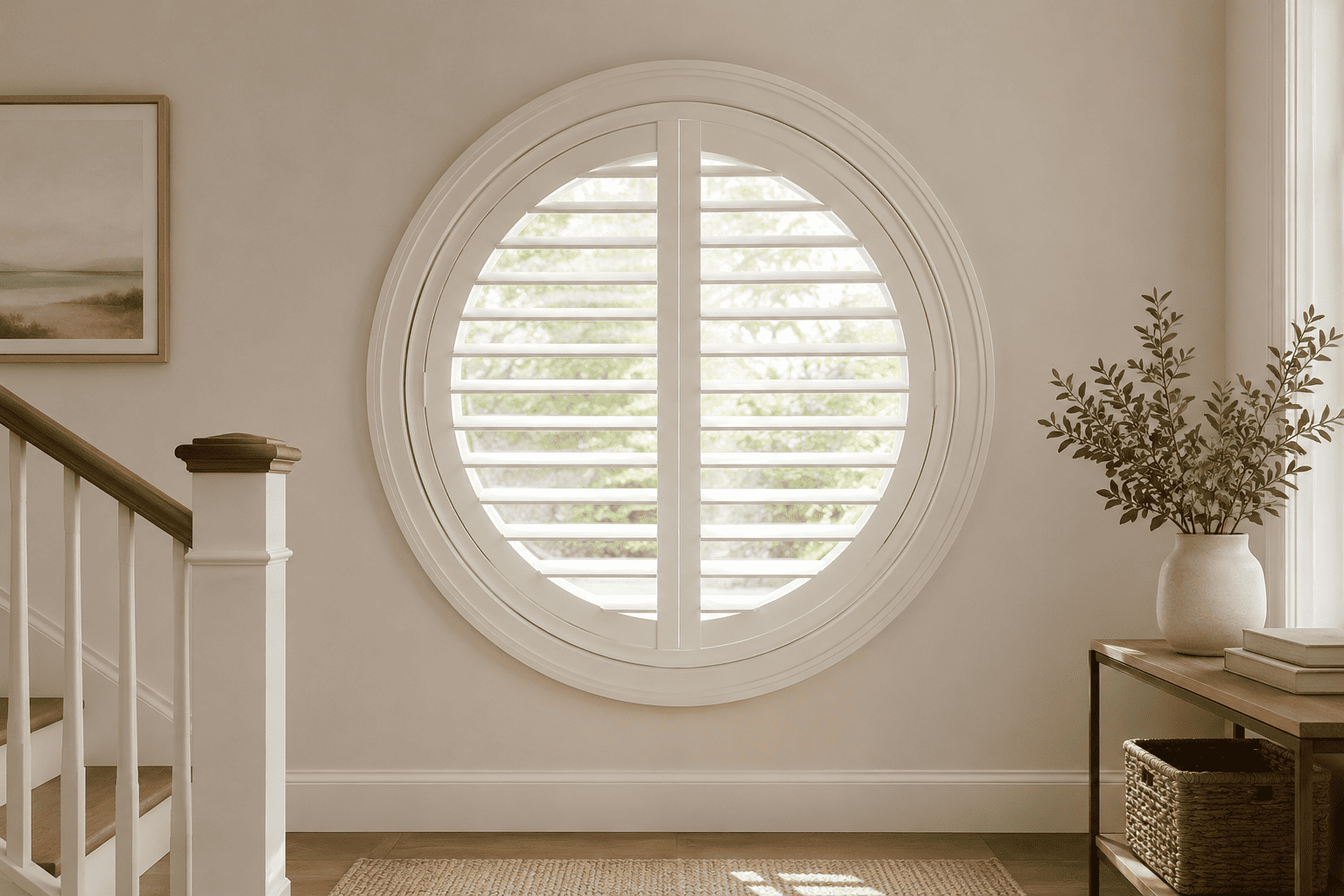
That is where round shutters for round windows can make sense. When they are custom measured and designed for the exact opening, shutters can follow the circular shape of the window instead of covering it up. They can help with privacy, soften incoming light, and give the window a more finished look without taking away from the architecture.
Can You Put Round Shutters on Round Windows?
Yes, you can put shutters on round windows, but they usually need to be custom made. A round window cannot be treated like a standard rectangular opening because the curve, diameter, depth, trim, and surrounding wall space all affect how the shutter should fit.
A properly designed round shutter should feel like part of the window, not an afterthought. That usually means the frame, panel layout, louver direction, and mounting method all need to be planned around the exact shape of the opening.
For many homes, shutters are especially useful when the round window is visible from the street, brings in strong sunlight, or feels unfinished compared with the rest of the room.
How Round Shutters for Round Windows Are Usually Designed
Round shutters need a different design approach from standard window shutters. The goal is not only to cover the glass, but also to preserve the shape that makes the window special.
Custom circular frame
Most round shutters start with a frame that follows the exact curve of the window. This frame helps create a clean transition between the shutter and the opening, especially when the window sits inside a recessed area or has surrounding trim.
A custom frame can also help the shutter look built in. Without that tailored fit, a round window covering may look bulky, uneven, or visually disconnected from the window itself.
Radial or shaped louver layout
The louver layout is one of the biggest design decisions for shutters for round windows. Depending on the size and style of the window, the louvers may be arranged in a radial pattern, a shaped layout, or another configuration that works with the circle.
The best layout should balance appearance and usability. On some round windows, the design may emphasize symmetry. On others, the priority may be light control, privacy, or matching nearby shutters in the same room.
Fixed, adjustable, or partially operable design
Not every round shutter operates the same way. Some designs may allow adjustable louvers, while others may be fixed or limited in movement because of the size and shape of the window.
This is important to understand before choosing round shutters for round windows. If you want daily light control, the design needs to support that. If the window is mainly decorative or very high on the wall, a fixed or simpler configuration may still provide the finished look you want.
Read also:
Using Shutters to Cover your Specialty Shaped Windows
Internal Shutters: The Complete Buyer’s Guide (2026)
What Affects the Fit of Shutters for Round Windows?
A round shutter depends heavily on precise measurement. Even small differences in the curve or depth can affect how the final shutter sits inside the opening.
Window diameter and shape accuracy
A round window may look perfectly circular at first glance, but the actual opening may not be perfectly even. Older homes, custom framing, and trim details can all create slight variations.
That is why measuring the full diameter and checking the curve matters. A made-to-measure shutter should account for the actual opening rather than assuming the window is a perfect circle.
Frame depth and mounting space
Depth affects whether the shutter can sit inside the opening or needs another mounting approach. If the window is shallow, has prominent trim, or includes handles or other details, the shutter design may need to be adjusted.
The right mounting method should allow the shutter to sit securely while still looking balanced. This is especially important on round windows because the shape draws attention to any gaps, uneven edges, or awkward projections.
Surrounding trim and wall details
Round windows are often used as architectural accents, so the surrounding trim can be part of the design. Thick casing, decorative molding, deep recesses, or textured walls may all affect the final shutter plan.
Before choosing shutters, you should consider how the shutter will relate to the full window area, not just the glass. A good fit should respect both the opening and the surrounding architectural detail.
When Round Shutters Make Sense
Round shutters are not just a decorative choice. They can solve practical problems while keeping the window’s original shape visible.
When you want privacy without covering the window shape
Some round windows are placed in bathrooms, entryways, staircases, or front-facing rooms where privacy matters. A standard covering can hide the circular design, while a custom shutter can follow the shape more naturally.
This makes round shutters useful when you want privacy but do not want the window to look blocked off.
When the window brings in too much direct light
Round windows can bring in beautiful natural light, but that light may become harsh at certain times of day. This is common in upper walls, stair landings, and rooms with strong sun exposure.
Shutters can help filter light while keeping the window visually clean. Depending on the design, adjustable louvers may give you more control over brightness and glare.
When the window feels unfinished
A bare round window can look beautiful in some rooms, but in others it may feel incomplete, especially when nearby windows have custom shutters. Adding a round shutter can make the opening feel more intentional and connected to the rest of the space.
This can be especially helpful in rooms where design consistency matters, such as living rooms, entryways, dining areas, and primary suites.
What to Decide Before Choosing Round Shutters for Round Windows
Before moving forward, it helps to think through how you want the shutter to function and how visible the window is in everyday life.
Key decisions include:
Whether the shutter needs to provide privacy, light control, or mainly a finished look;
Whether you want adjustable louvers or a more decorative fixed design;
Whether the shutter should match nearby custom shutters;
Whether the window is easy to reach or mainly viewed from a distance;
Whether the round window is a focal point or a smaller supporting detail;
How the shutter frame should relate to the trim, wall color, and room style.
These decisions help shape the final design. A small round window in a hallway may need a different solution from a large round window above an entry door.
Read more:
6 Unexpected Ways Interior Shutters Add Home Value
How Much Do Window Shutters Cost? Key Pricing Drivers Explained
Common Limitations to Understand Before Installation
Round shutters can be highly effective, but they are not the right fit for every situation. The shape creates design constraints that you should understand before installation.
For example, very small round windows may not have enough space for a fully functional louver layout. Some windows may be too shallow for certain frame styles. Others may sit so high that daily operation is less practical.
You should also expect the final shutter to be designed around the window’s real dimensions, not just its general shape. That may affect panel layout, louver size, and how much movement is possible.
The goal is to choose a design that looks intentional and works realistically for the window you have.
How a Custom Measurement Helps Avoid Fit Issues
A round window needs more than a basic width-and-height measurement. The specialist should evaluate the full opening, including curve, diameter, depth, trim, wall conditions, and the way the window is used.
During a shutter measurement appointment, it is helpful to discuss:
How much privacy you want;
Whether direct sunlight is a problem;
Whether the shutter needs to be adjustable;
How often you expect to operate it;
Whether nearby windows already have shutters;
Whether the room has a modern, traditional, rustic, or transitional style.
This step helps prevent mismatched proportions, awkward mounting, or a design that looks good in theory but does not work well in daily use.
Bringing a Round Window Into the Overall Room Design
Round shutters for round windows work best when they feel connected to the room around them. That does not always mean they need to stand out. In many cases, the best result is subtle: the shutter follows the window shape, matches the surrounding style, and gives the opening a clean, finished appearance.
If your round window is a focal point, the shutter can enhance that feature. If it is a smaller accent window, the shutter can help it blend more naturally with the rest of the room. Either way, a custom approach gives you more control over proportion, privacy, light, and the final architectural effect.