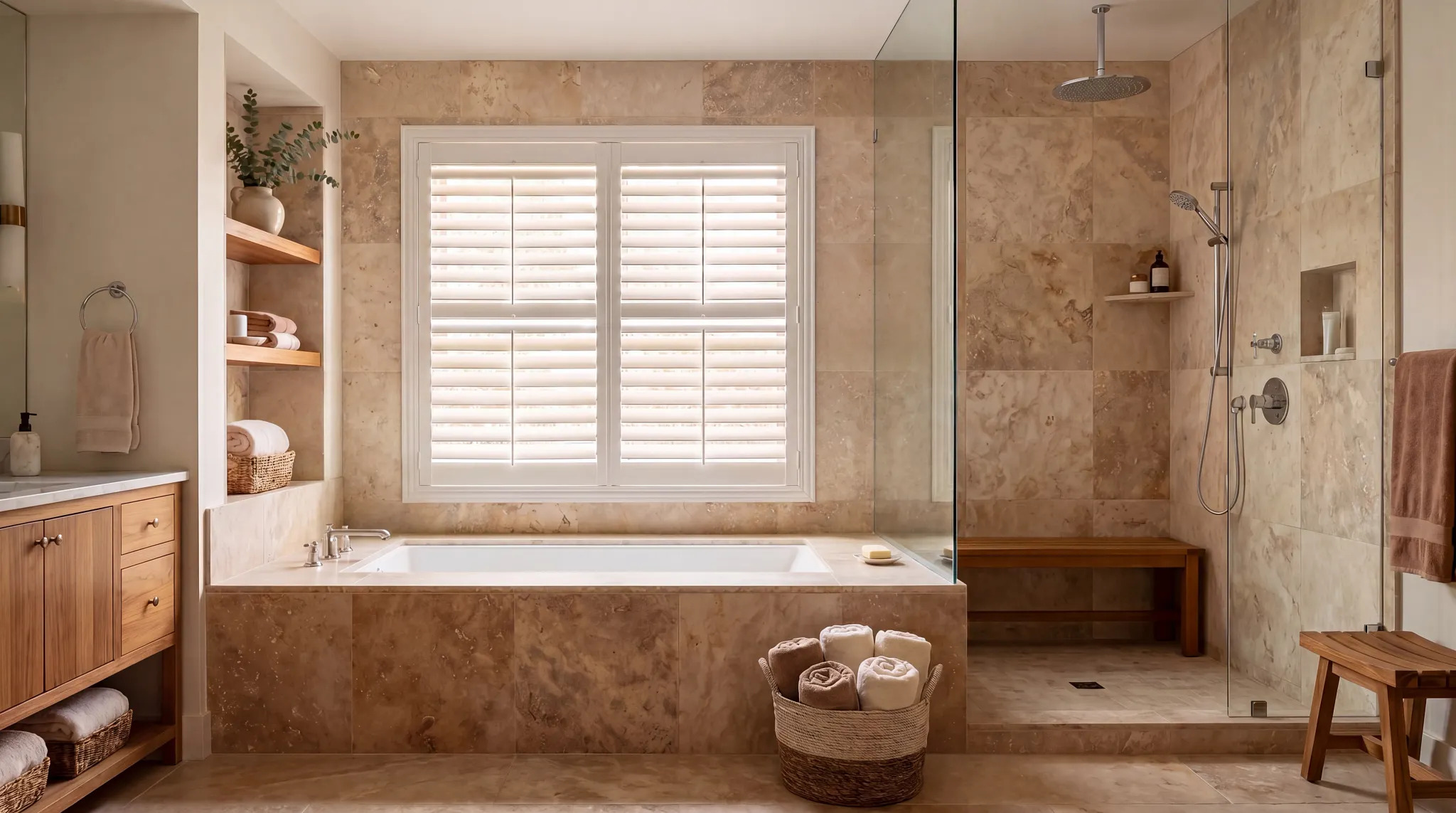
Shutters by Room: Kitchen, Bathroom, Bedroom and More
Author: Nigel Harris.
June 10, 2026.
Choosing shutters is easier when you start with the way a room is used every day. Some spaces need more privacy. Others need better light control, moisture resistance, or a cleaner design that supports the overall style of the home.
That is why thinking about shutters by room can be more useful than starting with color or finish alone. A bathroom window, a bedroom opening, and a living room focal point all ask for something slightly different. The right solution depends on how much sunlight the room gets, how private it needs to feel, and how the shutters should function throughout the day.
This guide walks through the best ways to think about bathroom shutters, kitchen shutters, bedroom shutters, living room shutters, and home office shutters so you can compare what matters most in each space.
Why Shutters by Room Is a Smarter Way to Choose
Every room in the home has its own practical priorities. In some spaces, privacy comes first. In others, airflow, brightness, or a more polished architectural look may matter more.
Looking at shutters by room helps narrow your decisions faster because it connects design to real daily use.
What changes from room to room
The best shutter choice often depends on factors like:
moisture and humidity exposure;
morning or afternoon sun;
privacy needs;
screen use and glare control;
furniture placement near the window;
whether the window is a focal point or a secondary feature.
When you evaluate the room first, it becomes easier to decide on panel configuration, louver size, and the balance between privacy and natural light.
Read also:
Window Shutter Ideas by Home Style: Modern, Farmhouse & Coastal
Choosing Shutter Colors & Finishes: White, Stained Wood & Painted Options
Bathroom Shutters: Privacy, Moisture Resistance, and Easy Upkeep
Bathrooms usually require one of the most functional shutter setups in the home. Privacy matters, but so does the ability to let in daylight without making the room feel exposed.
That is why bathroom shutters are often chosen for their combination of structure, light control, and low-maintenance appeal.
What to prioritize with bathroom shutters
In a bathroom, shutters should help you manage:
privacy at eye level;
natural light during the day;
moisture-prone conditions;
easy cleaning in a smaller space.
Many homeowners prefer configurations that allow the louvers to tilt for light while still keeping the room comfortable and private.
Where bathroom shutters work especially well
Bathroom shutters are especially practical for:
primary bathrooms facing neighboring homes;
guest bathrooms that need a neat, finished look;
smaller bathrooms where fabric treatments may feel bulky;
windows near tubs where durability and clean lines matter.
In these spaces, shutters can create a more permanent and tailored look while still supporting everyday function.
Kitchen Shutters: Light Control, Clean Lines, and Everyday Practicality
The kitchen is one of the busiest rooms in the home, so window treatments need to look good without feeling delicate or hard to maintain. Good kitchen shutters should support daylight, maintain a crisp appearance, and work well around sinks, counters, and breakfast areas.
This is one reason shutters in kitchen windows remain such a popular design choice.
What makes kitchen shutters a strong fit
In kitchens, shutters are often valued for:
adjustable light control throughout the day;
a streamlined appearance that suits both classic and modern spaces;
easier upkeep compared with softer, more high-maintenance alternatives;
a fitted look that works well in high-use areas.
They can also help maintain visual consistency when the kitchen opens into a dining area, breakfast nook, or family room.
Best places to use shutters in the kitchen
Kitchen window shutters are especially effective on:
windows above the sink;
breakfast nook windows;
side-facing kitchen windows that need privacy;
open-plan kitchens where the window treatment should feel intentional and architectural.
For many homeowners, the appeal of indoor kitchen window shutters is that they make the room feel more finished without overpowering the space.
Bedroom Shutters: Comfort, Privacy, and Better Light Management
Bedrooms need a softer balance between privacy and light. During the day, you may want sunlight and openness. At night, you may want a more protected and restful feel.
That makes bedroom shutterss a strong option for homeowners who want more control without sacrificing style.
What matters most in bedroom shutters
When choosing shutters for a bedroom, consider:
privacy from nearby homes or the street;
how much morning light enters the room;
whether the room is used for sleep only or also for reading and dressing;
the visual mood of the space.
Bedrooms often benefit from shutters that feel substantial and calm, especially when the goal is to create a more serene environment.
When bedroom shutters make the biggest impact
They work especially well in:
primary bedrooms with street-facing windows;
guest bedrooms that need a clean, hotel-like finish;
children’s rooms where durability matters;
bedrooms with tall or wide windows that benefit from a more structured treatment.
Because shutters look integrated with the window itself, they can make the room feel more intentional and complete.
Living Room Shutters: Style, Flexibility, and a Finished Focal Point
Living rooms often have some of the most visible windows in the home. These are the spaces where design impact matters just as much as function, especially when the windows help define the room’s character.
That is why living room shutters are often selected for both aesthetics and flexibility.
Why shutters work well in living rooms
A living room usually benefits from a shutter solution that can:
let in generous daylight;
reduce harsh glare when needed;
preserve views while adding privacy;
complement the room’s trim, furniture, and architectural lines.
This balance is especially valuable in rooms that are used throughout the day for relaxing, entertaining, or spending time with family.
Living room shutter ideas to consider
Shutters can be a great fit for:
front-facing living room windows;
large windows that act as a design feature;
bay windows or picture windows that need a tailored solution;
transitional spaces that connect to dining rooms or entryways.
In these settings, shutters can add structure and polish while still feeling timeless.
Home Office Shutters: Glare Control, Focus, and Professional Style
A home office has its own window-treatment priorities. In many cases, the goal is not just privacy or style, but also comfort during screen time and a cleaner work environment.
That makes home office shutters especially useful in multifunctional spaces.
What to look for in home office shutters
The right setup can help with:
glare reduction on screens;
controlled daylight for video calls and work sessions;
privacy during the day;
a cleaner visual background for meetings.
Shutters can be especially helpful when the office is visible on camera or when the room needs to feel more composed and distraction-free.
Where home office shutters perform best
They are often a smart choice for:
offices facing the street;
rooms with strong direct sun;
dual-purpose guest room offices;
study spaces where clean design supports concentration.
For homeowners who want a window treatment that feels polished and practical, shutters can be a natural fit for a workspace.
Read more:
Shutters for Floor-to-Ceiling and Tall Windows: Design & Light Control Tips
Shutter Styles: Bi-Fold, Tri-Fold & Single
How Privacy and Light Control Change from One Room to Another
Even when the overall home style is consistent, the ideal shutter setup may vary depending on how each room uses privacy and daylight
This is where room-based planning becomes especially helpful.
A simple way to think about room priorities
Here is a practical way to compare needs:
Bathroom shutters: highest privacy priority, with moisture awareness.
Bedroom shutters: privacy plus rest-friendly light control.
Kitchen shutters: daylight, cleanability, and everyday convenience.
Living room shutters: balance of openness, design, and glare control.
Home office shutters: screen comfort, privacy, and visual neatness.
Thinking in these terms can make it easier to choose a solution that looks cohesive across the home without treating every room exactly the same.
How to Create a Cohesive Look Across Multiple Rooms
Many homeowners do not want each room to feel disconnected. Even if different spaces have different needs, the home should still feel visually consistent from one area to the next.
That is why the best approach is often to create variation in function while keeping the overall design language unified.
Ways to keep shutters consistent throughout the home
A more cohesive result usually comes from repeating a few core choices, such as:
similar frame styling;
coordinated panel proportions;
consistent color direction;
louver sizes that feel balanced from room to room;
room-specific adjustments only where function truly requires them.
This approach helps each room perform well without making the house feel mismatched.
Finding the Right Fit for Each Space
When homeowners compare shutters by room, they are usually trying to solve two things at once: how the shutters should look and how they should work in everyday life.
The best choice often comes down to understanding the room first. Bathroom shutters should support privacy and moisture-prone conditions. Kitchen shutters should feel practical and easy to live with. Bedroom shutters should create comfort and control. Living room shutters should elevate the visual impact of the space. Home office shutters should support focus and screen comfort.
When each room is approached with its own priorities in mind, the final result feels more intentional, more functional, and more naturally connected to the way the home is actually used.