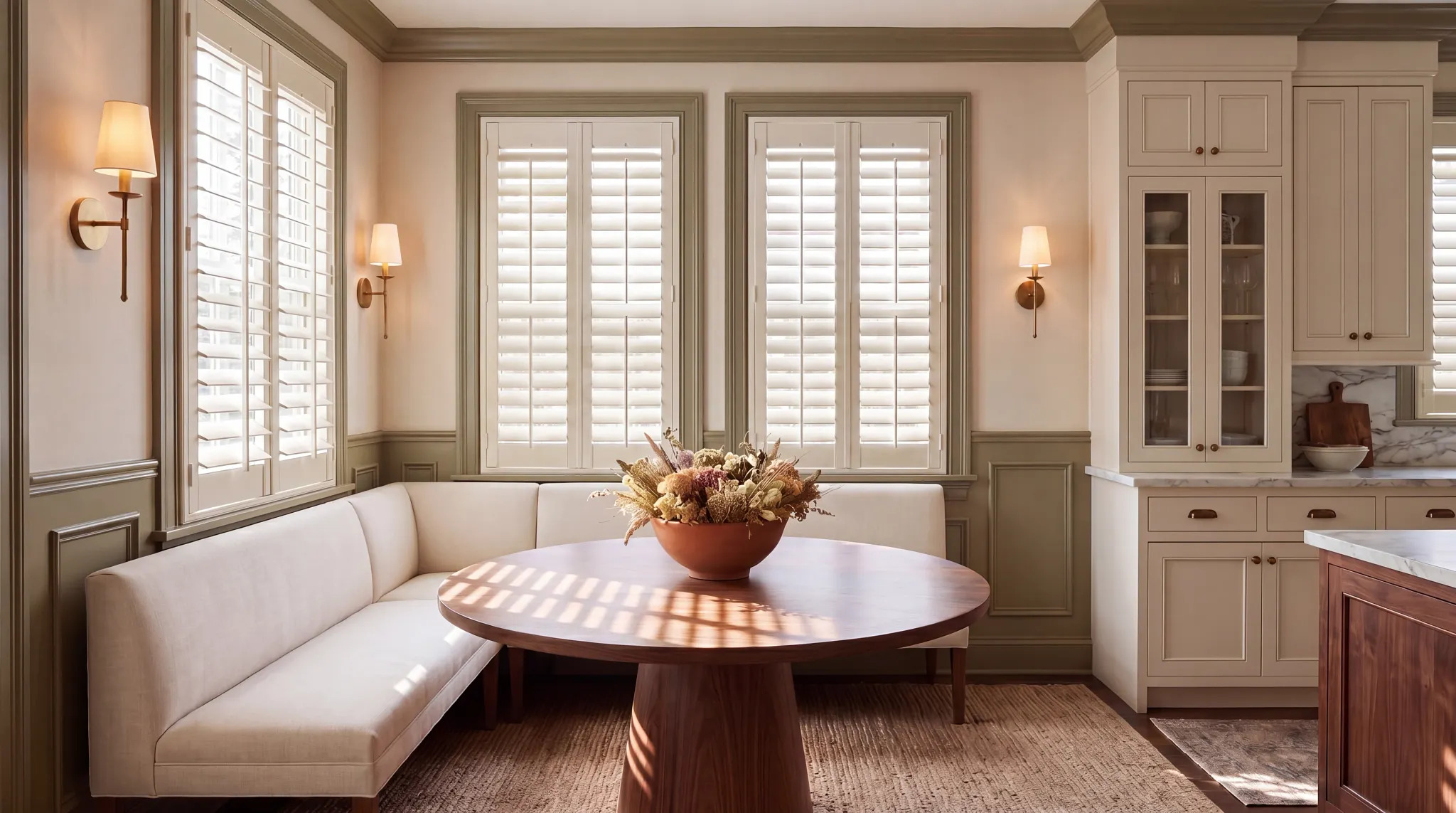
What Are Shutters? A Simple Overview for Homeowners
Author: Nigel Harris.
June 10, 2026.
If you have ever looked at custom window shutters and felt unsure about the terminology, you are not alone. Many homeowners know the style they like, but not always the names of the individual components. That can make it harder to compare options, ask the right questions, or understand what affects appearance, function, and durability.
This glossary breaks down the most common parts for shutters in plain language. Whether you are researching parts of shutters, trying to understand window shutters parts, or simply want to feel more confident before choosing a design, this guide gives you a practical foundation.
Why knowing the parts of shutters matters
Understanding the main parts of shutters helps you do more than learn industry vocabulary. It also makes it easier to evaluate quality, compare designs, and understand why some shutters perform differently from others.
When you know the terminology, you can:
understand how a shutter is built;
compare panel configurations more clearly;
ask better questions during design and measurement discussions;
recognize which details affect light control, privacy, and operation;
read product pages and buying guides with more confidence.
In other words, knowing the language behind shutters parts makes the buying process feel much less overwhelming.
Parts for shutters: the core structure
Before looking at smaller components, it helps to understand the main structural parts that give shutters their shape and stability. These are the foundation of most interior shutter panels.
Frame
The frame is the outer structure that surrounds the shutter panel or panels. It is mounted to the window opening or around it, depending on the installation style.
The frame plays a major role in the overall look because it affects how finished, built-in, or architectural the shutters appear. It also helps support the panel and creates the base for hinges and proper alignment.
Stile
A stile is one of the vertical side pieces of a shutter panel. Every panel typically has two stiles, one on each side.
Stiles help hold the panel together and connect with other parts such as louvers and rails. They also contribute to the visual proportions of the shutter.
Rail
Rails are the horizontal pieces that connect the stiles. You will usually find a top rail, a bottom rail, and sometimes a divider rail depending on the design.
Rails add structure and can also affect the look of the panel. Wider rails may create a more substantial appearance, while divider rails can help separate upper and lower louver sections for more flexible light and privacy control.
Panel
A panel is the full shutter section that swings open or stays fixed in place, depending on the design. One window may have a single panel or multiple panels.
Panel configuration affects both aesthetics and practicality. Wider windows, for example, often need more than one panel to keep the shutters easy to use and visually balanced.
Window shutters parts that control light and privacy
Some of the most important window shutters are the ones that let you adjust light, privacy, and airflow throughout the day. These moving parts are often what homeowners interact with most.
Louver
Louvre are the horizontal slats inside the panel. They can usually be tilted open or closed to control visibility, daylight, and ventilation.
Louver size has a big impact on the overall look of the shutter. Smaller louvers tend to feel more traditional, while larger louvers often create a cleaner, more open, more contemporary appearance.
Tilt rod
The tilt rod is the vertical bar connected to the louvers so they move together. When you adjust the tilt rod, the louvers open or close as a group.
Some shutters use a visible front tilt rod, while others use a hidden mechanism for a more streamlined look. Both options serve the same purpose, but the visual effect is different.
Divider rail
A divider rail is a horizontal rail that separates one louver section from another within the same panel. This allows the top and bottom sections to move independently.
For example, you might keep the lower louvers closed for privacy while opening the upper louvers to let in daylight. That makes divider rails especially useful in street-facing rooms, bathrooms, and other spaces where privacy matters.
Shuttering parts that affect movement and fit
When people search for shuttering parts, they are often trying to understand how shutters open, close, and sit within the window. These functional details are just as important as the visible design elements.
Hinge
A hinge connects the shutter panel to the frame and allows it to swing open. Hinges may be more visible or more subtle depending on the style.
They are an essential operating component, especially for shutters that need to open regularly for cleaning, window access, or flexible light management.
Mount
The mount refers to how the shutters are installed in relation to the window. In general terms, shutters may be mounted inside the opening or outside it, depending on the depth, trim, and design goals.
Mount choice influences the overall fit, how built-in the shutters look, and how the frame interacts with handles, molding, and surrounding architecture.
Closure mechanism
Some shutters include magnets or other closure details that help keep panels neatly shut when not in use. These components may be small, but they contribute to ease of everyday use and a tidy finished appearance.
Parts of shutters that shape the finished look
Not all parts of shutters are equally visible at first glance, but several details have a strong impact on style. These are often the elements that make shutters feel more traditional, more modern, or more tailored to a specific room.
Top rail and bottom rail proportions
The width of the top and bottom rails can subtly change the character of the shutters. Heavier proportions may look more classic or architectural, while slimmer proportions can feel simpler and more contemporary.
Frame profile
Some frames are more minimal, while others are more decorative. The profile you choose affects how strongly the shutters stand out as a design feature within the room.
Hidden vs. visible control details
Features like a hidden tilt mechanism can give shutters a cleaner, less interrupted appearance. Visible components, on the other hand, can reinforce a more traditional shutter look.
Common questions about window shutters parts
If you are new to shutters, a few terms tend to cause the most confusion. Here are some simple answers to common questions homeowners ask when learning the vocabulary.
What is the difference between a stile and a frame?
The frame surrounds the entire shutter installation at the window. The stile is a vertical piece within an individual shutter panel.
Are louvers the same as slats?
In everyday conversation, many people use those words interchangeably. In shutter terminology, “louver” is the more precise term.
What does a divider rail do?
A divider rail splits the panel into separate louver sections so the top and bottom can be adjusted independently.
Does every shutter have a tilt rod?
No. Some shutters use a visible tilt rod, while others use a hidden mechanism.
Why do panel count and frame style matter?
They affect how the shutters look, how they operate, and how well they suit the window size and shape.
Read more:
Shutters for Floor-to-Ceiling and Tall Windows: Design & Light Control Tips
Using Shutters to Cover your Specialty Shaped Windows
How to use this shutters glossary when comparing options
Once you know the basic parts for shutters, it becomes much easier to read specifications, compare layouts, and understand what you are seeing in photos or during a consultation.
A good way to use this glossary is to pay attention to:
panel layout;
frame style;
louvre size;
visible or hidden control systems;
divider rail placement;
how the shutter configuration fits the size and shape of the window.
These details work together to influence both the appearance and the day-to-day usability of the shutters.
A clearer way to talk about your window shutters
Learning the names of common window shutters parts does not mean you need to become an expert overnight. It simply helps you describe what you want more clearly and understand which features matter most for your space.
When you know the difference between a frame, stile, rail, and louver, you can move from “I like this look” to “I understand why this design works.” And that makes every next step easier, from inspiration and comparison to measuring and final selection.