Wider Louvers: When a Larger Louver Size Works Best
Author: Nigel Harris
August 24, 2026.
Louver size affects how much of the window you can see through, how daylight enters the room, and how visually detailed the finished installation feels.
Wider louvers are often chosen for a cleaner, more open look. They can work especially well on large windows and in interiors where too many horizontal lines would feel busy. However, the largest size is not automatically best for every opening.
Window dimensions, recess depth, panel proportions, privacy needs, and room style all influence the decision.
What Wider Louvers Change on a Shutter
Wider louvers are horizontal slats with a larger face height than narrower alternatives. Depending on the product configuration, available sizes may include options such as 2½, 3½, and 4½ inches.
As louver size increases, fewer slats are needed to fill the panel. That changes the view through the shutter, the pattern of light and shadow, and the overall scale of the design.
Wider Louvers Can Create a More Open View
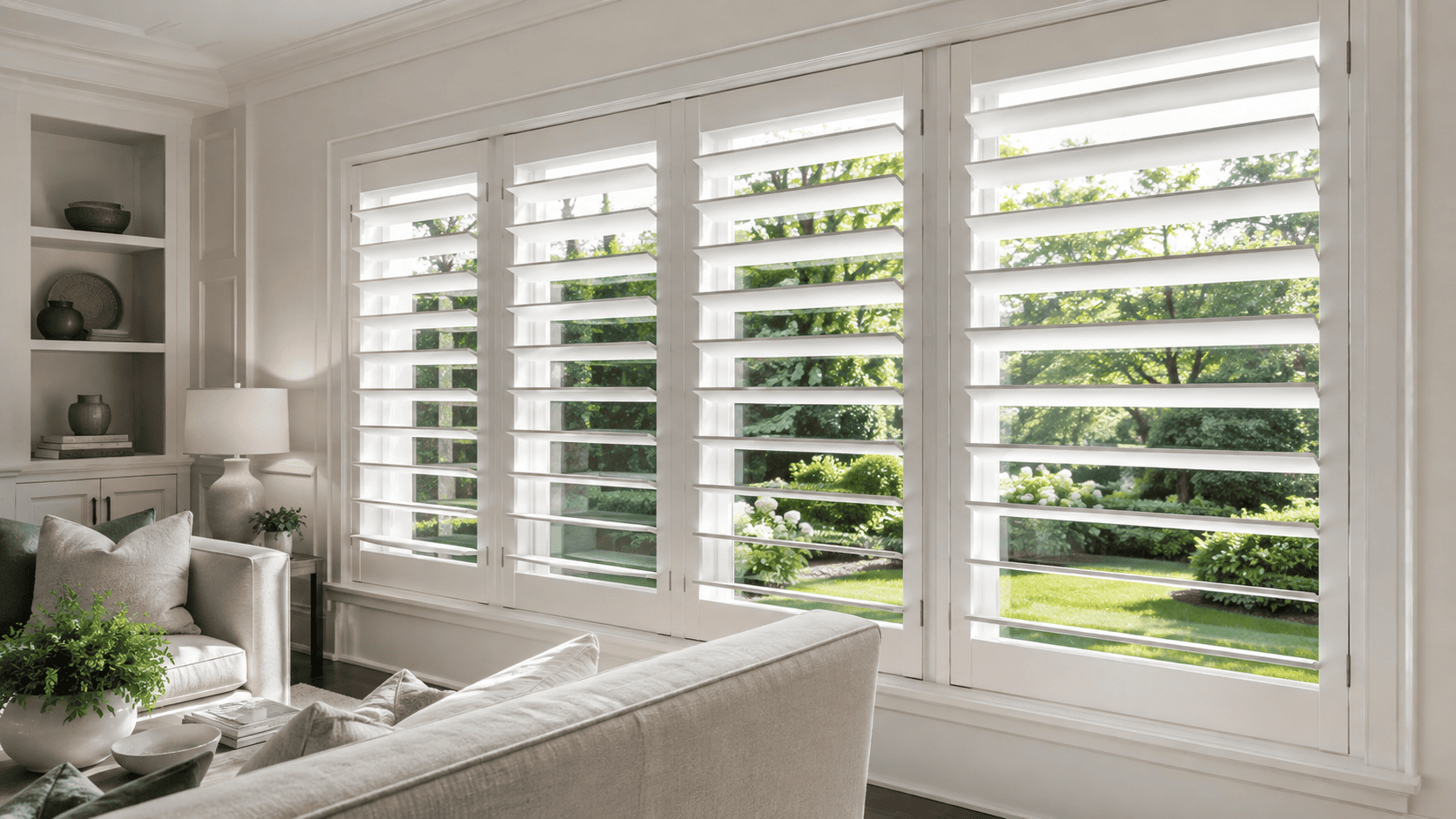
When wide louvers on shutters are tilted open, the spaces between them are generally larger. This reduces the number of horizontal elements crossing your sightline and can make the view beyond the window feel less interrupted.
The frame, stiles, rails, and open louvers remain visible, but the window can feel more open than it would with a denser arrangement of narrow slats.
This is most noticeable when the window faces a yard, garden, or skyline.
Larger Shutter Louvers Create Broader Light Openings
Wider louvers form larger openings when tilted, so daylight may enter in broader bands instead of being divided by many closely spaced slats.
Brightness still depends on window direction, time of day, exterior obstructions, glass area, and louver angle. Wider louvers do not guarantee a brighter room.
Wide Louver Shutters Look Less Visually Busy
Because a panel needs fewer wide louvers, it usually has fewer repeated lines and a simpler appearance.
In a room with clean trim, broad furniture, or contemporary details, wider louvers can reinforce that sense of scale. In a highly traditional space with delicate architectural features, a narrower size may feel more closely aligned with the surrounding detail.
When Wider Louvers Work Best
Wider louvers work best when their scale supports both the window and the room.
Larger and Taller Windows
Large panes of glass provide more visual space for larger shutter louvers. On a tall or wide opening, broader slats can feel proportional rather than oversized.
They may also prevent a tall panel from looking crowded with horizontal lines.
The full panel design still matters. Very wide windows may require multiple panels, rails, or a tracked configuration, so louver size should be considered alongside panel number and width.
Windows With a View You Want to Preserve
A wider louver can be practical when the outward view matters. With the louvers tilted open, larger spacing may make it easier to see through the shutter without swinging the entire panel away.
This can work well when the window faces landscaping or an open view. Privacy still needs attention because clearer sightlines can work in both directions.
Bright Rooms With Strong Daylight
Rooms that receive substantial natural light can often accommodate wide louver shutters well. The larger openings let you redirect or reduce the light while keeping the shutter visually open.
You may tilt the louvers to soften glare near a television, desk, or seating area. The best angle changes as the sun moves.
Contemporary and Transitional Interiors
Wider louvers often complement modern, contemporary, and transitional rooms because they introduce fewer lines and a stronger sense of visual simplicity.
They pair particularly well with:
Large windows and open floor plans;
Simple casing and streamlined trim;
Broad furniture profiles;
Restrained color palettes;
Interiors that favor scale over small decorative detail.
They can also work in traditional homes when the proportions feel intentional.
Read also:
Cafe Shutters: When Half-Window Coverage Makes Sense
Full Height Wooden Shutters: Benefits, Style and What to Consider
How Wider Louvers Affect Different Window Sizes
Window size matters, but recess depth, frame style, panel configuration, and nearby obstructions also affect the choice.
Wider Louvers on Small Windows
A wide louver on a small window can create a bold, simple appearance, but the scale needs careful review. If only a few louvers fit within the panel, the shutter may look heavy or compressed.
Small windows can also have limited recess depth. Larger louvers need room to rotate, so they may come close to the glass, locks, handles, screens, or other components.
A wider size may still work when the opening has enough depth. Evaluate the complete panel rather than choosing from a sample alone.
Wider Louvers on Standard-Size Windows
On an average rectangular window, wider louvers can offer a balanced combination of view, light control, and simplicity. A 3½-inch option, for example, may provide a noticeably more open look without feeling too large for many common openings.
Two similarly sized windows can have different trim depths, hardware, or privacy conditions, so review louver size in the actual room.
Wider Louvers on Large or Floor-to-Ceiling Windows
Large and floor-to-ceiling windows are where wide louvers often feel most natural. A larger size can match the scale of the glass and keep the shutter from looking overly segmented.
The design should also account for panel width, divider rail placement, and how the panels open.
For very tall windows, separately controlled louver sections may help you maintain privacy at one level while adjusting daylight at another, depending on the available design.
Light Control, Privacy, and View With Larger Shutter Louvers
Wider louvers can support all three priorities, but the result depends on how you position them.
Light Control With Wide Louvers on Shutters
When wide louvers are open, larger gaps can admit a broad flow of daylight. As you rotate them, the slats redirect that light and reduce the direct line between the room and the glass.
Small angle changes may help manage glare while preserving brightness. The amount of light around the panel edges, through the louvers, or between sections will still depend on fit and the complete shutter design.
Shutters provide adjustable light management, not a perfectly sealed blackout condition.
Privacy With Wider Louvers
Wider louvers can provide strong privacy when closed or angled to interrupt the line of sight. The most useful angle depends on whether the concern is a sidewalk, neighboring home, upper-story view, or interior lighting after dark.
At night, a bright interior and dark exterior can make visibility into the room more noticeable. You may need to close or angle the louvers more fully than during the day.
For street-facing rooms, consider the eye level of people outside as well as your preferred seated and standing views.
Outward View Through Wide Louver Shutters
The open view is one of the main reasons to choose wider louvers. Fewer slats and larger spaces can create a clearer sightline than a dense arrangement of narrow louvers.
The tilt rod, panel stiles, divider rails, window mullions, and screens will still affect the view. If preserving it is a priority, review the louver size together with the full elevation of the proposed shutter.
Choosing Wider Louvers for Different Rooms
The same louver size can feel different depending on ceiling height, trim, furniture scale, and the number of windows.
Living Rooms and Dining Rooms
Wider louvers are often a strong fit in social spaces because these rooms commonly have larger windows and benefit from flexible daylight.
In a living room, they can reduce glare while maintaining an outward view. In a dining room, broader louvers can make the window feel clean and substantial without adding a delicate pattern behind the table.
When several windows appear together, a consistent louver size and panel layout usually create a calmer result.
Bedrooms and Bathrooms
In private rooms, begin with sightlines. Wider louvers can work well, but you may keep them at a more closed angle more frequently.
Consider window height, nearby homes, and whether you need privacy while standing, sitting, or moving around the room. If the opening is small or shallow, clearance may also limit the practical louver size.
The goal is not to select the largest slat, but to choose one that gives you comfortable control without making the panel feel out of scale.
Kitchens and Home Offices
In kitchens, wide louver shutters can complement larger windows and simple cabinetry, especially when you want the opening to feel uncluttered. Faucets, handles, shelves, and countertops should be considered so the panels and louvers have room to operate.
In a home office, wider louvers can redirect daylight across a desk or screen, but window orientation determines the most useful angle.
Comparing 3½-Inch and 4½-Inch Wider Louvers
Both sizes can create an open look, but they do not produce the same scale. The better option depends on the window, the room, and how strongly you want the louvers to stand out.
When 3½-Inch Louvers Make Sense
A 3½-inch louver can be a versatile middle ground. It offers wider spacing and a clearer view than a narrower option while remaining proportionate on many standard-size windows.
It may suit rooms where you want a relaxed, open appearance without making the louver itself the dominant design feature.
When 4½-Inch Louvers Make Sense
A 4½-inch louver creates a bolder architectural effect and is often most comfortable on large or tall windows.
The wider opening can help preserve the view and keep an expansive panel from looking crowded. It also needs enough depth to rotate freely, making accurate measurement especially important.
Compare the Full Shutter, Not Just the Sample
A handheld sample cannot show how many louvers will appear in the finished panel.
Compare drawings or room-level samples whenever possible, paying attention to the frame, rails, panel divisions, and surrounding trim.
What to Consider Before Choosing Wider Louvers
Louver size should be selected as part of the complete shutter design. Before deciding, compare the open look with the physical and practical requirements of the window.
Review these points:
Recess depth: Larger louvers need enough room to rotate without touching glass or hardware.
Mounting approach: An inside or outside mountchanges available clearance and the relationship to the trim.
Panel proportions: Louver size should balance with panel width, height, stiles, rails, and frame.
Window operation: Locks, cranks, handles, and screens may affect clearance.
Privacy conditions: Street level, neighboring properties, and nighttime lighting influence how often the louvers stay open.
Furniture placement: Desks, sofas, beds, counters, and televisions affect sightlines and glare control.
Consistency: Adjacent windows generally look more cohesive with coordinated louver sizes and panel layouts.
Product availability: Sizes and configurations vary, so confirm the final selection for the chosen shutter program.
Seeing a sample in the room helps you judge how trim, wall color, and natural light affect the scale.
Find the Right Louver Scale for Your Windows
Wider louvers can be an excellent choice when you want a more open outward view, broader light openings, and a less visually busy shutter design. They are particularly effective on larger windows and in rooms where the architecture can support their scale.
A small or shallow window, complex hardware, or strong privacy needs may point toward a different size.
During an in-home consultation, your design consultant can measure usable depth, review sightlines and light conditions, and compare available louver sizes.
Schedule a design appointment to see how wider louvers could look and operate in your home before finalizing your custom shutters