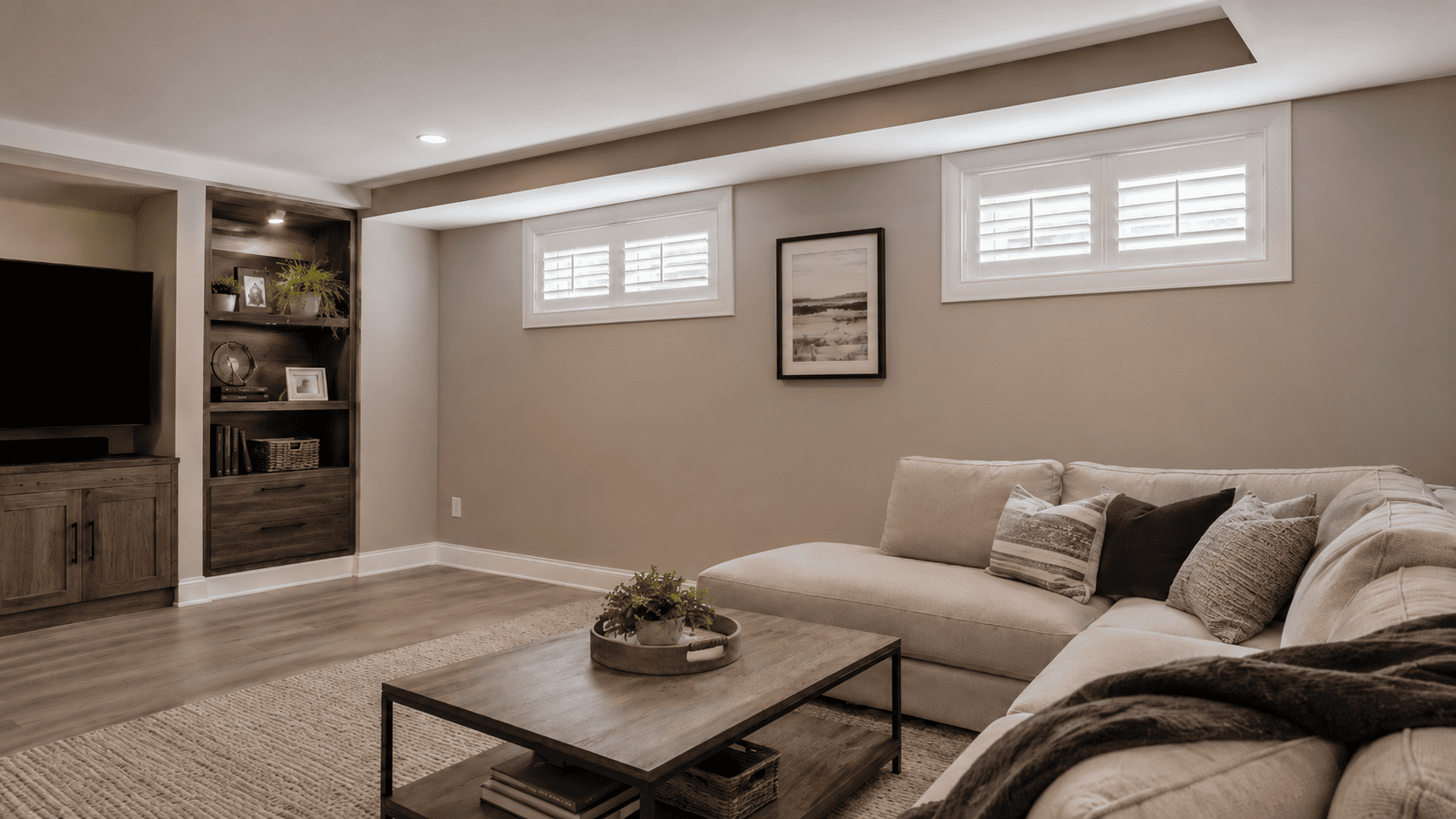
Basement Window Shutters: A Clean Look for Lower-Level Privacy
Author: Nigel Harris.
July 27, 2026.
Basement windows can be challenging to cover well. They are often smaller than the windows on the main floor, positioned close to ground level, or exposed to sidewalks, driveways, and neighboring properties. At the same time, covering them too heavily can make an already low-light room feel darker.
Basement window shutters offer a practical way to manage both concerns. Adjustable louvers help limit outside views while allowing you to make better use of the available daylight. Because the shutters are made to fit the opening, they can also give lower-level rooms a cleaner, more intentional appearance.
The right design will depend on the window’s location, size, depth, operation, and role within the room.
Why Basement Window Shutters Work Well in Lower-Level Rooms
Basement rooms have different privacy and lighting needs from many above-ground spaces. Shutters can be configured around those specific conditions rather than simply covering the glass.
Privacy for Windows Close to Ground Level
A basement window may be positioned at eye level for someone walking outside, even when it sits close to the ceiling inside your home. This can leave family rooms, offices, guest spaces, and finished lower levels feeling more exposed than expected.
Shutters allow you to adjust the louvers to interrupt direct sightlines without necessarily closing off the entire window. This is especially useful during the day, when you may want privacy but still need natural light.
Keep in mind that angled louvers do not create one-way privacy. When the room is illuminated after dark, you may need to close the louvers more fully to prevent views from outside.
Better Use of Limited Daylight
Basement windows usually provide less daylight because of their size, position, window wells, or surrounding landscaping. A fixed, fully closed covering can reduce that light even further.
With shutters, you can change the louver angle as the light changes. You can also open the panels completely when privacy is not a concern. This flexibility helps you balance privacy and light control instead of having to choose one over the other.
A Cleaner, More Finished Appearance
Small basement windows can sometimes look disconnected from the rest of the room, particularly when they sit high on the wall or within a deep recess.
Custom-fit basement shutters create a defined frame around the opening. Their structured lines can help the window feel like part of the room’s design rather than an unfinished architectural detail.
This can be especially valuable in a remodeled basement where the flooring, walls, lighting, and furniture have been updated but the windows still need a more considered finish.
Read also:
Shutters by Room: Kitchen, Bathroom, Bedroom and More
Shutters for Small Windows: Design Ideas That Make a Big Impact
What to Check Before Choosing Shutters for Basement Windows
Not every basement opening has the same dimensions or constraints. Before choosing a configuration, consider how the window is positioned and how you use it.
Window Position and Outside Sightlines
Start by looking at the window from both inside and outside.
Consider whether the glass faces:
A public sidewalk or shared outdoor area;
A driveway or side yard;
A neighboring home;
A private backyard;
A window well that already limits visibility.
A highly exposed window may benefit from greater coverage and more flexible louver positioning. A window facing a private section of your property may allow you to prioritize daylight and an open appearance.
Frame Depth, Handles, and Opening Direction
Some basement windows are installed within deep recesses, while others have shallow frames or prominent trim. Handles, locks, cranks, and inward-opening sections can also affect how shutters should be mounted.
The shutter design needs enough clearance for the window to function as intended. Depending on the opening, the frame may be fitted within the recess or positioned around it.
Professional custom measuring helps identify these details before the shutters are ordered. This reduces the risk of panels interfering with handles, hardware, trim, or the window itself.
Moisture and Ventilation
A basement that feels damp, has recurring condensation, or shows signs of water intrusion should have those conditions addressed separately. Shutters can improve privacy and appearance, but they are not a solution for leaks, excess humidity, or inadequate ventilation.
Room conditions should also inform the material and finish selection. A design consultant can help you evaluate the window area and recommend an option that suits how the lower level is used.
Egress and Clear Window Access
Some basement windows serve as emergency escape or rescue openings. If this applies to your home, the shutter layout must preserve clear and practical access to the window.
Panels should be easy to open, and the design should not obstruct locks, handles, or the required opening area. Local requirements vary, so any egress window should be evaluated carefully before the final shutter configuration is selected.
Which Basement Shutter Configuration Works Best?
The proportions of the opening will usually determine which layout feels balanced. A configuration that looks appropriate on a tall main-floor window may not work as well on a short basement window.
Full-Height Shutters for Small or Exposed Windows
For many lower-level openings, full-height shutters provide the cleanest solution. The panels cover the complete window, giving you control across the entire glass area.
This configuration often works well when:
The opening is short or narrow;
The window is highly visible from outside;
Complete evening privacy is important;
You want the simplest and most unified appearance.
Even though the shutters cover the full opening, the louvers remain adjustable, so you can continue using the available daylight.
Cafe Style Shutters for Taller Basement Windows
Cafe style shutters cover the lower section of a window while leaving the upper glass uncovered. They can be useful when the lower portion is exposed but the upper portion provides valuable daylight.
However, this style is not automatically the best option for every basement. Many basement windows are too short for a partial-height configuration to feel proportionate or deliver enough privacy.
Cafe style should generally be considered only when the opening is tall enough for the uncovered upper section to remain useful and visually balanced.
Panel Proportion and Louver Size
Small windows require careful proportioning. Too many narrow panels can make a compact opening feel visually busy, while an oversized panel may be less practical to operate.
Louver size also affects the overall appearance and the view through the window. A design consultant can compare the available options against the exact dimensions of the opening so the finished shutters do not look crowded or out of scale.
How to Keep a Basement Bright With Shutters
Installing shutters does not mean that your lower level has to feel enclosed. How you operate them, as well as the finish and configuration you choose, can help protect the daylight that reaches the room.
To keep the space feeling brighter:
Adjust the louvers to redirect light while limiting direct views;
Open the shutter panels fully when privacy is not needed;
Consider a lighter finish that reflects rather than absorbs light;
Avoid placing tall furniture directly in front of the window;
Keep window wells clean and clear where practical;
Coordinate the shutters with layered room lighting for darker hours.
The best louver angle will change throughout the day. Morning and afternoon light may enter from different directions, so adjustable shutters allow the room to respond without leaving the glass completely exposed.
Where Basement Shutters Can Make the Greatest Difference
Shutters can work in both finished and functional lower-level spaces, but the priorities may change from room to room.
Basement Family Rooms
A family room may need privacy from people passing outside while still feeling open and comfortable during the day. Shutters provide a structured look that can complement built-in storage, media areas, and finished wall details.
They can also help reduce distracting glare on screens by allowing you to adjust the incoming light rather than blocking it completely.
Home Offices and Guest Rooms
Privacy becomes especially important when a basement is used as an office or occasional guest room. Adjustable shutters help you create a more private environment without making the room feel disconnected from the outdoors.
Because they remain fitted neatly to the window, they also leave surrounding wall space available for desks, shelving, or bedroom furniture.
Laundry and Utility Areas
In a laundry room or utility space, the main goals may be privacy, durability, moisture resistance, and easy access to the window.
Conditions in these rooms should be evaluated carefully, particularly when humidity or condensation is present. Moisture-resistant shutters can be a practical choice for these lower-level spaces, helping the window area feel more finished while supporting everyday use. The shutter material, mounting method, and window operation should all be considered together.
Finished Multipurpose Basements
Many basements serve several functions at once, such as a play area, exercise space, work zone, and entertainment room. A consistent shutter design across multiple windows can help these different areas feel visually connected.
Made-to-measure shutters are particularly useful when the windows have slightly different dimensions but still need a coordinated appearance.
Read more:
Shutter Frame Types: L-Frame, Z-Frame and Other Options
What Is a Divider Rail on a Shutter? Understanding This Simple but Important Feature
Why a Custom Fit Matters for Basement Window Shutters
Basement openings are often less standardized than they appear. Differences in recess depth, framing, trim, window wells, mechanical hardware, and wall finishes can all affect the installation.
A custom-fit process helps account for:
Small or unusually proportioned windows;
Deep or uneven recesses;
Window cranks, handles, and locks;
Inward-opening windows;
Existing trim and sills;
Required access to egress openings;
Differences between several windows in the same room.
During an in-home shutter consultation, your design consultant can measure the openings, review how the windows operate, discuss privacy concerns, and recommend a configuration that suits the room.
This tailored approach helps the shutters look properly integrated rather than added as an afterthought.
Basement Window Shutters FAQs
Basement windows often raise questions that do not apply to larger, more conventional openings. These are some of the most common points to consider.
Will Basement Window Shutters Make the Room Too Dark?
Not necessarily. Adjustable louvers allow you to control how much light enters, and the panels can be opened when full access to the glass is preferred. The configuration, finish, and way you operate the shutters will all affect the result.
Can Shutters Fit Very Small Basement Windows?
Yes, but the panel arrangement and frame need to be proportioned carefully. Made-to-measure shutters can be designed around compact openings, provided there is adequate space for the selected configuration and window operation.
Can Shutters Be Installed Around Window Cranks?
In many cases, yes. The design must provide enough clearance for the crank and allow you to reach it comfortably. This is one reason accurate measuring and an assessment of the operating hardware are important.
Are Shutters Suitable for Basement Egress Windows?
They may be suitable when the layout preserves quick, unobstructed access to the window. The final design must account for the way the panels open, the window hardware, and any applicable local requirements.
Give Your Lower Level a More Finished Feel
Basement windows do not have to look like purely functional openings. With the right proportions and configuration, shutters for basement windows can provide privacy, preserve useful daylight, and create a more polished connection between the windows and the rest of the room.
The most appropriate design will depend on the height of the opening, outside visibility, frame depth, window hardware, moisture conditions, and whether the window provides emergency access.
A custom consultation gives you the opportunity to evaluate all of these details together and choose basement window shutters that feel practical, balanced, and intentionally designed for your lower-level space.