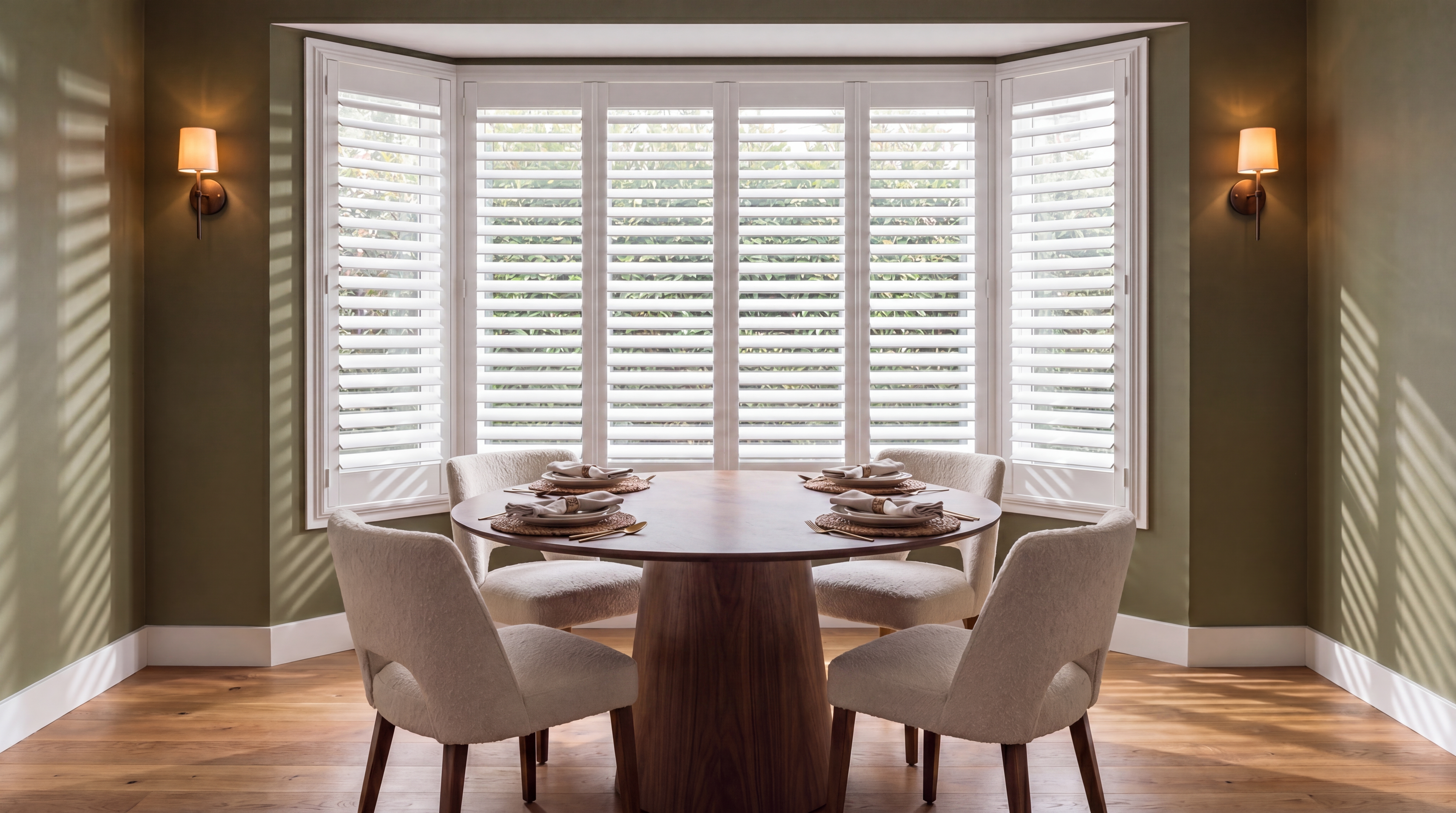
Dining Room Window Shutters for Everyday Light Control
Author: Nigel Harris.
June 22, 2026.
Dining rooms often need to do more than look polished. They need to feel comfortable during breakfast, reduce glare during afternoon meals, create privacy in the evening, and still look intentional when the room is not in use.
That is where dining room shutters can make a practical difference. Unlike soft coverings that are either open or closed, shutters give you more control over light direction, privacy, and the overall look of the room throughout the day. With the right fit and configuration, they can help your dining room feel finished without making it feel heavy or closed off.
Why dining room shutters work well for changing light
Dining rooms can receive very different light depending on the time of day, the window direction, and how exposed the room is to neighboring homes, sidewalks, or the street. Before choosing a style, it helps to think about how the room is used from morning through evening.
They help soften glare without blocking the whole window
Glare can be frustrating in a dining room, especially when sunlight hits the table directly or reflects off glassware, mirrors, or polished surfaces. With adjustable louvers, you can angle the light upward, downward, or away from the main seating area.
This means you do not always have to close off the window completely. You can keep the room bright while reducing the sharp light that makes meals, homework, or hosting uncomfortable.
They support privacy during evening meals
A dining room that feels open during the day can feel exposed at night, especially when interior lights are on. Shutters in dining room spaces help you manage that shift. You can tilt the louvers for privacy while still allowing some light movement and visual texture across the window.
This is especially useful if your dining room faces a front yard, walkway, neighbor’s window, or street-facing elevation.
They create a cleaner architectural frame
Dining rooms often include visual focal points such as a table, chandelier, built-ins, artwork, or a feature wall. Dining room window shutters can complement those details by giving the window a structured, built-in look.
Because shutters sit neatly within or around the window opening, they can make the room feel more tailored without adding unnecessary visual clutter.
What to consider before choosing dining room window shutters
The best shutter choice depends on more than the window size. Your room layout, privacy needs, trim style, and furniture placement all affect how the shutters should be designed.
Think about the view from the table
Start by sitting where you normally eat or host. From that angle, notice what the window does in the room. Does it bring in strong sun? Does it face a neighbor? Does it frame a garden or outdoor view you want to preserve?
Your answer can shape the shutter configuration. For example, if you want privacy at street level but still want daylight above, a café-style layout may make sense in some dining rooms. If you want full coverage with maximum control, full-height shutters may be a better fit.
Match the shutter layout to the window proportions
A well-designed shutter should look balanced with the window, not forced onto it. Panel width, rail placement, and frame style all influence the final result.
For wider dining room windows, multiple panels may help keep the layout proportional. For narrower windows, fewer panels can avoid a busy look. If the window has strong existing trim, the shutter frame should work with it rather than compete against it.
Account for furniture and traffic flow
Dining rooms can have limited clearance around the table, sideboard, or buffet. Before choosing how the shutters should open, consider whether there is enough space for panels to swing comfortably.
This is one reason a professional measuring appointment is valuable. The right layout should account for how the shutters look when closed, how they operate when opened, and how the room functions during daily use.
Read also:
Shutters by Room: Kitchen, Bathroom, Bedroom and More
Bedroom Shutters: Light Control Setups that Still Look Beautiful
Design choices that help dining room shutters feel polished
Shutters can feel traditional, transitional, or modern depending on the details. In a dining room, those details matter because the room is often used for hosting and is usually more formal than everyday living spaces.
Choose a finish that connects with the room
White and off-white shutters can create a crisp, classic look, especially when they match the trim. Warmer neutrals can soften the room and work well with wood furniture, textured walls, or natural finishes.
For a more contemporary dining room, a clean painted finish with simple lines can help the shutters blend into the architecture instead of becoming the main decorative feature.
Use louver size to influence the mood
Louver size affects both the look and the light control. Wider louvers can create a cleaner, more open appearance and may preserve more of the outside view when tilted open. Smaller louvers can feel more detailed and traditional.
The right choice depends on your window size, the style of the room, and how much visual openness you want when the shutters are in use.
Keep hardware and sightlines simple
Dining rooms benefit from clean sightlines. When panel divisions, rails, and hardware are planned carefully, the shutters can feel like part of the room rather than an add-on.
If the dining room has multiple windows, consistent shutter proportions can help the whole space feel more cohesive. This is especially important in open-plan layouts where the dining area connects visually to a kitchen, living room, or entryway.
Best shutter styles for different dining room needs
Not every dining room needs the same level of coverage. The right style should reflect how exposed the room is, how much light you want, and how formal the space feels.
Full-height shutters for complete coverage
Full-height shutters cover the entire window from top to bottom. They are a strong option when you want a clean, finished look and consistent privacy control across the full glass area.
They can work especially well for formal dining rooms, front-facing windows, and spaces where the window is a major architectural feature.
Café-style shutters for lower-level privacy
Café-style shutters cover the lower portion of the window while leaving the upper section open. This can be a good fit when you want privacy from the street or sidewalk but still want natural light from above.
This option works best when the window proportions support the split. If the division feels awkward against the window shape, full-height shutters may create a more balanced result.
Read more:
Best Shutters for Bathrooms: Privacy + Moisture Resistance
Shutters in the Kitchen: Design Ideas and Inspiration
How custom fit improves everyday performance
Fit is one of the biggest differences between shutters that simply cover a window and shutters that feel integrated into the room. Dining rooms often need that extra level of finish because the window is part of the room’s overall presentation.
Better fit means better light control
Small gaps around a window can affect how much light enters the room, especially when the sun is low. Custom-measured shutters can help reduce unwanted light leaks and create a cleaner, more controlled effect.
This matters in dining rooms where glare may hit the same area of the table every day.
Professional measuring helps avoid awkward operation
A dining room window may look simple at first, but details like trim depth, handles, sills, uneven openings, and nearby furniture can affect the shutter design. A specialist can check these details during an in-home visit and recommend a configuration that works with the actual space.
That can help you avoid panels that feel too wide, frames that interfere with trim, or layouts that are inconvenient to use.
Installation affects the final look
Even well-made shutters need proper installation to look right and operate smoothly. When the frame, panels, and clearances are installed correctly, the shutters should feel stable, aligned, and natural to use.
For a dining room, that precision helps the window treatment feel like part of the architecture instead of a separate layer added later.
Bring better everyday control to your dining room
The best shutters in dining room spaces are not just decorative. They help you manage light, privacy, glare, and comfort while giving the room a more complete look.
Before choosing your dining room shutters, think about when the room gets the most sun, how much privacy you need at night, what view you want to preserve, and how the shutters should work with your trim, table, and overall design. With a custom fit and the right configuration, your dining room can feel brighter, calmer, and more polished throughout the day.