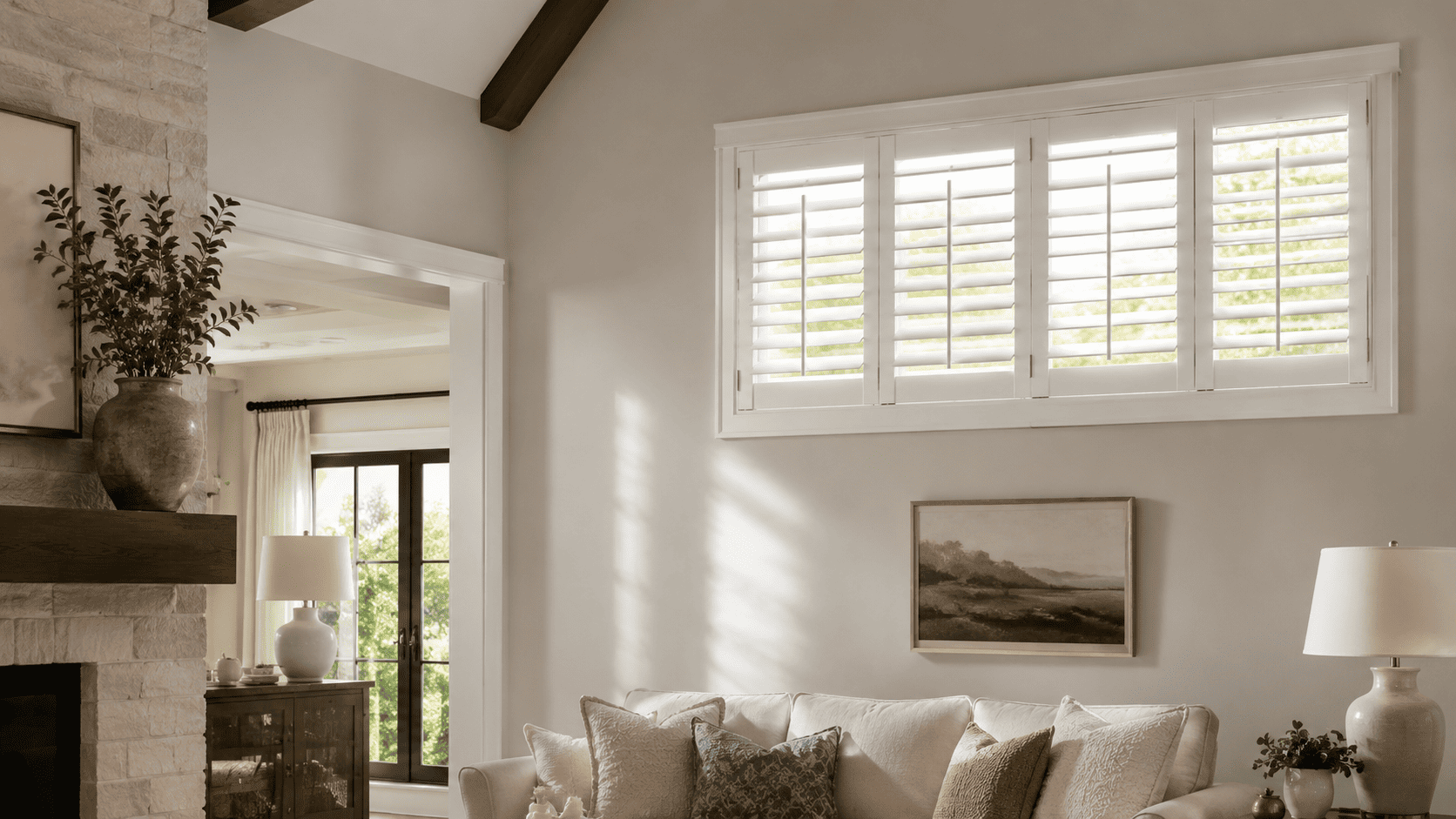
Fixed Window Shutters: When a Non-Opening Design Makes Sense
Author: Nigel Harris
September 1, 2026.
Not every shutter panel needs to open. In some rooms, fixed window shutters can create a clean, architectural look while still helping you manage light, privacy, and visual balance.
A fixed design may be useful for windows that are decorative, difficult to reach, unusually shaped, or rarely accessed. But it also changes how you clean the window, reach the glass, and use the opening over time.
Before choosing non opening shutters, it helps to understand where they work best and what trade-offs come with a stationary panel.
What Are Fixed Window Shutters?
Fixed window shutters are shutter panels that stay secured in place instead of swinging open on hinges. Depending on the design, the louvers may still tilt, or the entire shutter may remain stationary.
This distinction matters because “fixed” can refer to different levels of operation:
The panel may stay fixed while the louvers adjust.
The panel and louvers may both remain stationary.
The shutter may be used mainly for visual coverage on a decorative window.
If the louvers remain adjustable, a fixed panel can still help manage daylight and privacy; if the louvers are fixed too, the result is more decorative and less flexible. A fully fixed design is usually better suited to decorative or hard-to-reach areas where daily adjustment is not the priority.
When Fixed Window Shutters Make Sense
Fixed shutters work best when opening the panel would not add much practical value. The window’s location, shape, and function should guide the decision.
Fixed or Decorative Windows
If the window itself does not open, a hinged shutter panel may not be necessary. Fixed window shutters can mirror the purpose of the glass while giving the opening a more finished, tailored look.
This can work well for picture windows, accent windows, and architectural glass where the main goals are light control, privacy, or visual consistency.
High or Hard-to-Reach Windows
Upper windows, clerestory windows, stairwell windows, and tall entryway windows are often difficult to access. In these locations, you may not want or need to swing the shutter panel open.
Because the panel does not need swing clearance, the shutter can look more integrated on high or feature windows. The main question is whether you still need to adjust the louvers and whether the control method will be reachable.
Narrow or Specialty-Shaped Windows
Very narrow windows and certain specialty-shaped windows may not allow a hinged panel to open comfortably. Curved, angled, or unusually proportioned openings can also be harder to design around with standard panel movement.
A fixed panel can help preserve the shape of the window without adding extra breaks, hardware, or swing clearance.
Windows Where a Cleaner Look Matters
Some windows are more about architecture than daily operation. If you want the shutter to look built into the opening, a fixed configuration can reduce visual clutter and create a simpler final result.
This is especially helpful when nearby shutters need to align in finish, rail placement, or louver size
Read also:
Cafe Style Shutters Guide for Street-Level Privacy
Fixed Window Shutters vs. Opening Shutters
The main difference is access. Opening shutters give you more flexibility. Fixed shutters give you a more stationary, streamlined design.
If you open the window often, need regular access to the glass, or rely on the window for airflow, opening panels usually make more sense. If the window is mostly visual or difficult to reach, fixed window shutters may be a better fit.
What to Consider Before Choosing Fixed Window Shutters
Because custom shutters are a significant investment, the design should work beyond the initial look. Before choosing a non-opening panel, consider how the window will be cleaned, accessed, and used over time.
Access and Cleaning
A fixed panel can limit how easily you reach the glass or nearby window components, so it is important to confirm how the panel can be serviced when needed. This matters most for tall windows, dusty areas, or windows with locks, cranks, screens, or sensors behind the shutter.
Window Operation and Ventilation
Fixed shutters are usually not the best choice for windows you open regularly. If the panel blocks airflow, a sash, a crank, or another operating element, an opening shutter panel will usually be more practical.
Read more:
Rustic Window Shutters: Design Ideas, Finishes and What Creates the Look
Modern Shutters: Design Features, Finishes and What Creates a Contemporary Look
Questions to Ask Before Choosing Non Opening Shutters
Before approving a fixed design, ask your design consultant:
Will the panel be fixed, or will the louvers be fixed too?
Can I still adjust light and privacy?
How will the glass be cleaned?
Can the panel be removed for service?
Will the shutter block locks, handles, screens, or sensors?
Does the window need to open for ventilation or access?
How will the design align with nearby shutters?
Would an opening panel be more practical?
Is an inside or outside mount the better fit?
These questions help confirm whether fixed window shutters solve a real design challenge or create avoidable limitations.
A More Tailored Fit for the Right Window
Fixed window shutters can be a smart choice when a window does not need regular access, when a hinged panel would be awkward, or when the goal is a cleaner architectural look.
They are especially worth considering for decorative glass, hard-to-reach windows, narrow openings, and certain specialty shapes. They are less ideal for windows you open often, windows that need frequent cleaning access, or openings that must remain easy to reach.
An in-home shutter consultation can help you compare fixed and opening configurations based on the actual window depth, trim, shape, hardware, and room layout. With the right planning, fixed shutters can feel intentional, balanced, and practical for the way you use the space.