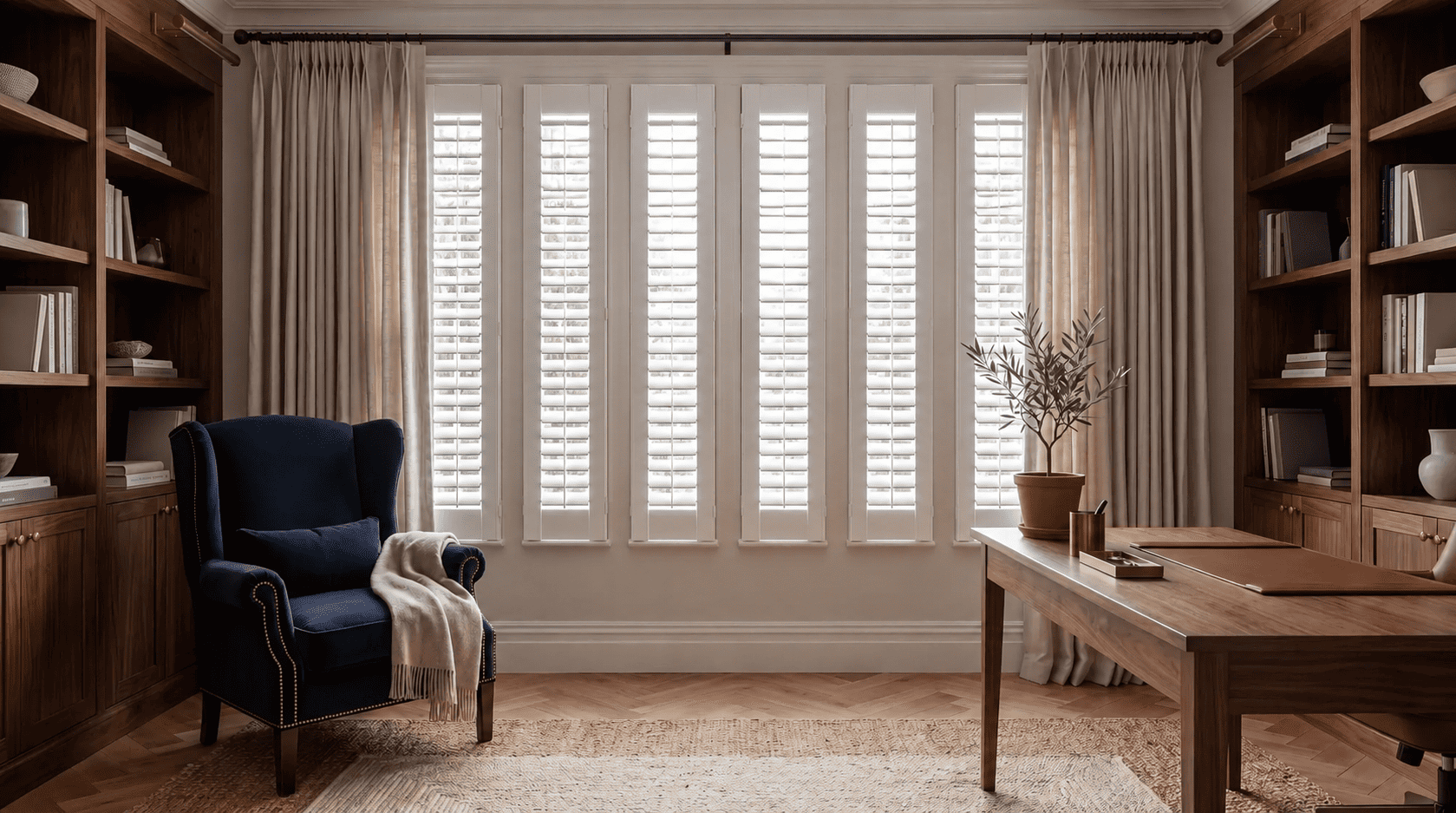
Shutters for Narrow Windows: What to Consider for a Better Fit
Author: Nigel Harris.
June 25, 2026.
Narrow windows can be charming, but they are not always easy to dress well. Because the opening is slimmer than a standard window, every design choice becomes more noticeable: panel width, frame depth, louver size, divider rail placement, and how the shutter opens.
The good news is that shutters for narrow windows can work beautifully when they are designed around the actual proportions of the opening. Instead of making a small or slim window feel like an afterthought, a custom-fit shutter can help it look balanced, intentional, and connected to the rest of the room.
Can You Use Shutters for Narrow Windows?
Yes, shutters for narrow windows can be a strong option, especially when the goal is to create a clean, built-in look without overwhelming the opening. The key is making sure the shutter is designed for the window itself, not forced into a standard configuration.
For narrow windows, fit matters more than almost anything else. A shutter that is too bulky can make the window feel cramped. A layout with too many divisions can make the opening look busy. A design with the right frame, panel configuration, and louver proportion can make the window feel more refined.
This is especially useful for:
Slim side windows near doors
Tall narrow windows in living rooms or stairways
Narrow bathroom or hallway windows
Smaller bedroom windows that need privacy
Long narrow windows that need light control without visual clutter
Why Proportion Matters for Narrow Shutters for Windows
Narrow windows have less surface area to work with, so small design decisions can have a big visual impact. Before choosing narrow shutters for windows, it helps to think about how the shutter will look when open, closed, and tilted for light.
Avoiding a heavy look
A narrow window can quickly feel crowded if the shutter has thick visual lines, wide framing, or too many panel breaks. The goal is to preserve the shape of the window while adding structure.
A more restrained configuration usually works best. Clean panel lines, balanced louver spacing, and a frame that suits the depth of the window can help the finished result feel lighter and more architectural.
Matching the window’s height
The taller the narrow window is, the more important the vertical proportion becomes. Shutters for tall narrow windows should support the height of the opening rather than interrupt it too much.
For example, a very tall and slim window may benefit from a panel layout that keeps the eye moving vertically. Depending on the window, a divider rail may help with function, but too many horizontal breaks can make the window feel shorter.
Keeping the room in mind
A narrow window does not exist by itself. Its shutter should feel connected to nearby windows, trim, doors, and furniture. In some rooms, a simple shutter design helps a slim window blend in. In others, the shutter can make the window feel like a deliberate design feature.
Read also:
Shutters Glossary: Frame, Stile, Rail, Louver and More
Shutters for Every Window Type & Shape: Bay, Arched, Doors & More
Choosing Shutters for Long Narrow Windows
Shutters for long narrow windows need to balance height, access, and visual rhythm. These windows can appear elegant, but they can also look awkward if the shutter configuration does not follow the shape of the opening.
Panel configuration
Panel configuration is one of the most important choices for narrow windows. In many cases, fewer panels work better because they reduce visual interruptions and help the window feel less segmented.
A single panel may work for some narrow openings, while a taller or more functional window may need a different arrangement. The best layout depends on the window width, height, surrounding trim, and how often you plan to open the shutter fully.
Divider rail placement
A divider rail can separate sections of the shutter so you can adjust light and privacy in different zones. On narrow windows, placement matters because the rail becomes a strong visual line.
For long narrow windows, a divider rail may be useful when you want privacy on the lower section and daylight above. However, the rail should be positioned carefully so it supports the window’s proportions instead of cutting the opening in an awkward place.
Clearance and operation
A shutter should not just look right; it should be easy to use. Narrow windows are often located near corners, doors, cabinets, or walls, which can affect how panels open.
Before finalizing the design, consider whether the panel will have enough clearance to swing open and whether nearby features will interfere with daily use. A custom-fit solution can account for these details during measurement and configuration.
Privacy and Light Control on Narrow Windows
One reason shutters for narrow windows work so well is that they can provide privacy and light control without covering the window in a way that feels bulky. This is especially valuable for smaller openings where every inch of glass matters.
Adjusting daylight without closing the room off
Louvers let you manage daylight while keeping the window visually open. On a narrow window, this flexibility can be more useful than a fully open-or-closed treatment because you can fine-tune brightness throughout the day.
For example, you can angle the louvers to soften direct sunlight, reduce glare, or protect privacy while still allowing natural light into the room.
Creating privacy where the window faces a walkway
Narrow windows often appear in areas where privacy matters: bathrooms, bedrooms, entryways, and street-facing spaces. Shutters can help you control visibility without making the window feel blocked.
For tall narrow windows, you may be able to angle the lower section for privacy while keeping upper louvers more open for daylight, depending on the final configuration.
Supporting smaller rooms
In compact spaces, narrow windows can be important sources of light. A well-fitted shutter can help you preserve that light while giving the window a finished look.
Instead of making the room feel darker or more crowded, the right shutter design can help the opening feel crisp and tailored.
Frame, Louver Size, and Finish Considerations
The frame, louver size, and finish all affect how shutters for narrow windows look once installed. Because the window is slim, these details should be chosen with proportion in mind.
Shutter frame choice
The shutter frame creates the finished edge around the window. On narrow windows, the wrong frame can take up too much visual space or make the opening look smaller than it is.
The best frame depends on the window’s depth, trim style, and installation requirements. A measured approach helps ensure the frame supports the window rather than competing with it.
Louver size
Louver size affects both appearance and function. Larger louvers can create a cleaner, more open look, but they may not suit every narrow window. Smaller louvers can feel more traditional and may fit better in some compact openings.
The right choice depends on the scale of the window and the surrounding room. The goal is to keep the shutter functional without making the narrow opening feel busy.
Color and finish
A finish close to the surrounding trim can help narrow shutters for windows blend into the architecture. A darker or more contrasted finish can make the window stand out, but it should be used carefully so the narrow shape does not feel too heavy.
For most slim windows, a clean and coordinated finish helps create the most balanced result.
Read more:
Using Shutters to Cover your Specialty Shaped Windows
Top 10 Tips to Care for your Indoor Shutters
Where Shutters for Tall Narrow Windows Work Best
Shutters for tall narrow windows can suit many parts of the home, especially where you need a combination of privacy, light control, and a more finished architectural look.
Entryways and sidelights
Narrow windows near entry doors often need privacy without losing natural light. Shutters can give these windows a more polished appearance while letting you control visibility from outside.
Bathrooms
Bathroom windows often require privacy, and many are smaller or narrower than windows in main living areas. A custom shutter can help the window feel tailored while making daily light control simple.
Hallways and stairways
Tall narrow windows in hallways and stairways can be beautiful, but they can also feel unfinished if left untreated. Shutters can add structure and make these transitional spaces feel more designed.
Bedrooms and home offices
In bedrooms and work areas, shutters can help with glare, privacy, and comfort. For narrow windows, the key is choosing a configuration that gives you control without overwhelming the wall.
How a Custom-Fit Solution Helps Narrow Windows Feel Balanced
Standard sizing rarely works well for narrow windows because small measurement differences can change the final look. A custom-fit solution allows the shutter to be designed around the actual opening, not an assumed size.
This helps with:
Proportion between frame, panel, and glass
Panel configuration that suits the window’s width and height
Louver size that feels appropriate for the room
Clearance around walls, handles, trim, and nearby features
Privacy and light control based on how the room is used
For narrow windows, the details are not minor. They are what make the finished shutter feel intentional.
A Better Fit for a Smaller Opening
Narrow windows do not need to feel difficult, unfinished, or visually awkward. With the right shutter configuration, they can become one of the most polished details in a room.
The best narrow shutters for windows are designed around proportion, operation, privacy, and light control. When the fit is measured carefully and the design is tailored to the window, even a small or slim opening can feel balanced, practical, and beautifully integrated into your home.