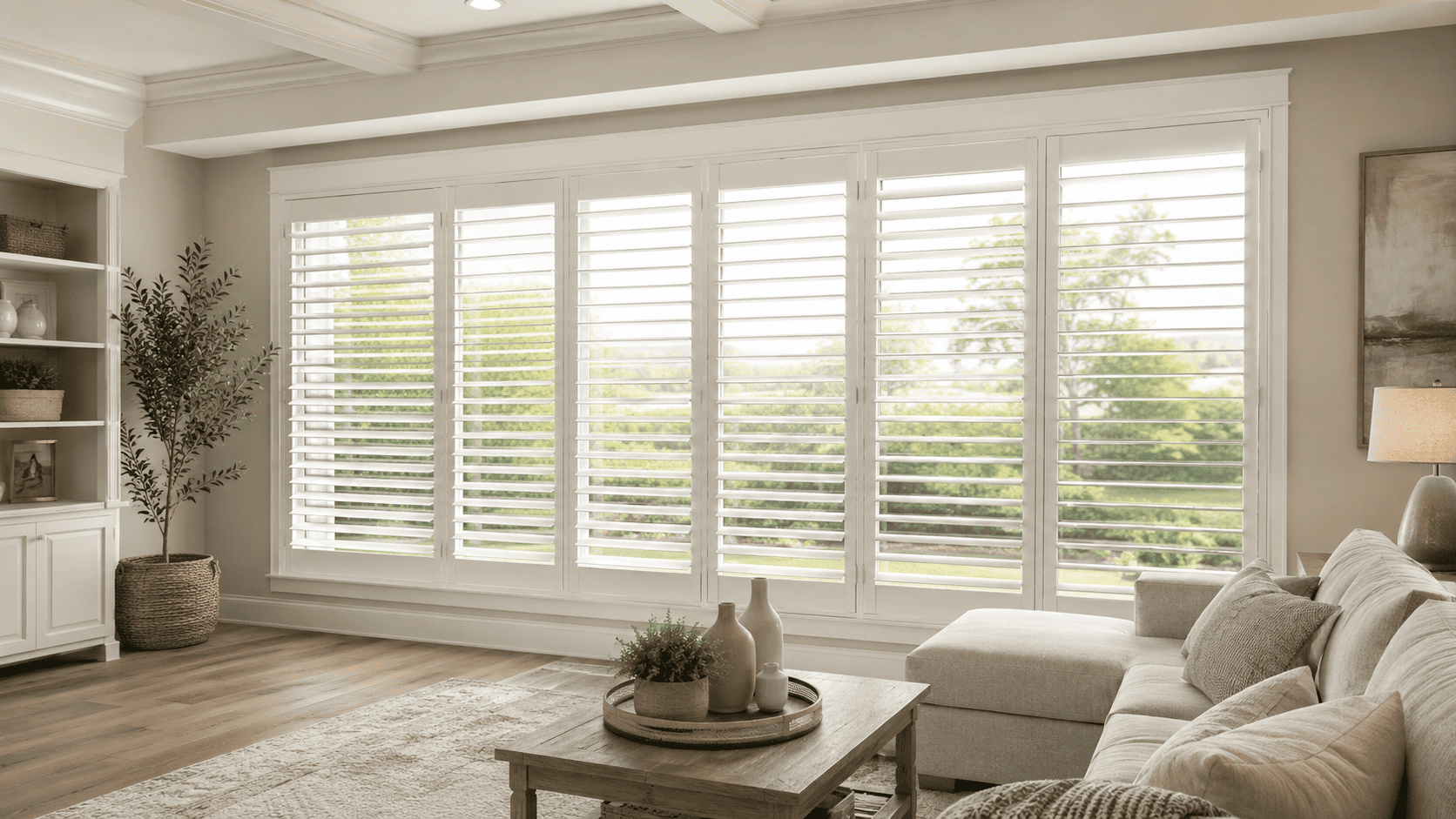
Picture Window Shutters: Best Ways to Handle Extra-Wide Glass
Author: Nigel Harris
September 1, 2026.
Picture windows are designed to bring in natural light and create a wide, open view. That scale is what makes them appealing, but it also makes them more complex to cover well.
With picture window shutters, the goal is not just to place shutters over a large pane of glass. The panel layout, frame style, louver size, and mounting approach all need to work together so the window still feels open, balanced, and intentional.
A well-planned shutter design can help you manage glare, privacy, and brightness while giving extra-wide glass a more finished architectural look.
Why Picture Window Shutters Need Careful Panel Planning
Picture windows are usually fixed, meaning the glass itself does not open. Even so, the shutter panels may still need to open for cleaning, access, or a clearer view.
Extra width changes how the panels work
A single oversized shutter panel may look simple in theory, but it can be difficult to operate in everyday use. Very wide panels need more swing space, may feel heavier, and can put more stress on the hardware.
That is why shutters for picture windows are often divided into multiple panels. Smaller, balanced panels can make the design easier to use while helping the full window feel more proportioned.
A good layout should consider:
The total width and height of the window
How much space the panels need when opened
Whether furniture sits in front of the glass
How often you want full access to the window
How visible the panel divisions will be from across the room
The view should guide the design
Because picture windows are often chosen for the view, shutter divisions should be placed carefully. Too many panel breaks can make the glass feel busy, while panels that are too wide may be less practical.
The best configuration preserves the broad feel of the window while adding enough structure for the shutters to operate comfortably.
Best Configurations for Picture Window Shutters
There is no single panel formula that works for every wide picture window. The right configuration depends on the window size, surrounding wall space, and how you want the shutters to function.
Multiple hinged panels
A multi-panel layout is one of the most common approaches for . Instead of one large panel, the opening is divided into narrower sections that are easier to open and extra wide window shutters close.
This approach can work especially well when the panels are similar in width and arranged with a clear visual rhythm. If the window already has built-in vertical divisions, the shutter layout may be planned to follow those lines so the finished result feels integrated.
Folding panel groups
For some large picture windows, folding panel groups can make operation more practical. Instead of each panel swinging out separately, panels can fold together to reduce the amount of space needed in front of the window.
This can be helpful when:
A sofa, console, or table sits near the window
You want to open a larger portion of the glass at once
A single wide panel would project too far into the room
The wall beside the window can accommodate folded panels
The folded panels still need space, so the room layout should be reviewed before the final design is selected.
Panels aligned with nearby windows
Some picture windows are part of a larger window arrangement, with smaller side windows or other glass sections nearby. In that case, the shutter layout should be planned with the whole window wall in mind.
Panel heights, rail placement, louver size, and frame style should feel consistent across the full area. This is especially important in living rooms, dining rooms, and other spaces where the picture window is a major design feature.
Read also:
Shutter Styles: Bi-Fold, Tri-Fold & Single
Using Shutters to Cover your Specialty Shaped Windows
How to Keep Shutters for Large Picture Windows Balanced
Large picture windows already draw the eye. Shutters should support that scale rather than overpower it.
Keep panel divisions simple
Every vertical panel line becomes more noticeable across wide glass. A clean design usually avoids unnecessary divisions and focuses on a layout that feels calm and deliberate.
The panel count should balance two priorities: making each panel practical to operate and preserving the open character of the window.
Use consistent proportions
Panels do not always need to be identical, but they should look related. A layout with one unusually narrow or unusually wide panel can feel accidental unless it reflects the window’s structure.
Consistent proportions help shutters for large picture windows look custom rather than crowded.
Coordinate the finish with the room
The larger the window, the more visible the shutter finish becomes. White, off-white, or soft neutral shutters can keep a wide window feeling bright and architectural, while deeper finishes can create a stronger design statement.
The right choice depends on your trim, wall color, flooring, furniture, and the amount of natural light in the room.
Managing Light Across a Large Picture Window
A wide pane of glass can bring in strong sunlight, especially when it faces direct morning or afternoon exposure. Picture window shutters help soften that light without forcing you to choose between a fully open window and complete coverage.
By adjusting the louvers, you can reduce glare while still allowing natural light into the room. This can be useful near a television, computer screen, seating area, street-facing window, or any space where you want daylight with more privacy.
For especially tall or extra-wide picture windows, motorization may also be worth discussing during your consultation. If available for your selected shutter design, it can make daily adjustments easier, especially when the window is hard to reach or when you want a more convenient way to manage changing sunlight throughout the day.
Inside or Outside Mount for Picture Window Shutters
The mounting style affects how the shutters sit around the window and how finished the installation feels.
Inside mount picture window shutters
An inside mount places the shutter frame within the window opening. This can create a clean, built-in look when the window has enough usable depth.
Before choosing this option, your consultant should evaluate the depth of the recess, the shape of the opening, any trim details, and whether the louvers will have enough room to move freely.
Outside mount picture window shutters
An outside mount places the shutter frame on or around the surrounding wall or trim. This can be useful when the window recess is too shallow, uneven, or interrupted by hardware.
For extra-wide glass, an outside mount can also create a more substantial frame around the window. The key is making sure the frame feels proportioned to the opening instead of too heavy for the room.
If you are comparing an inside or outside mount, the decision should be based on both appearance and function.
What to Review Before Ordering Picture Window Shutters
Because picture windows are large and highly visible, small planning details can have a big impact on the final result.
Before ordering, review:
Overall window width and height
Available mounting depth
Existing trim and window structure
Panel width and opening direction
Furniture placement near the window
Sun exposure throughout the day
Desired level of privacy
Whether nearby windows need to coordinate
Access for cleaning and maintenance
A shutter consultation can help confirm which panel layout, mount type, and louver configuration will work best for your window. Your design consultant will help you schedule installation during your consultation when placing your order.
Read more:
Hardwood vs Faux Wood vs Composite Shutters: Which Is Best?
Shutters for Every Window Type & Shape: Bay, Arched, Doors & More
Common Picture Window Shutter Planning Mistakes
Several design decisions can make an extra-wide shutter installation less practical or visually balanced.
Using one oversized panel
A single broad panel may appear to preserve the view, but it can require substantial swing clearance and may be less practical to operate. Dividing the opening into balanced panel sections is often more functional.
Choosing panel count by width alone
Width is important, but it is not the only factor. Height, frame type, furniture placement, hinge positions, and the intended opening pattern should also influence the panel count.
Ignoring the window’s existing lines
Shutter divisions that conflict with mullions or rails can create visual clutter. Existing architectural lines should be reviewed before panel positions are finalized.
Planning only for the closed position
Shutters should look considered when closed, but you also need to evaluate them with the louvers open and the panels folded back. Each position creates different sightlines and space requirements.
Forgetting the surrounding room
An attractive shutter layout can still feel inconvenient if it interferes with furniture or circulation. The design should account for the complete room, not just the dimensions of the window.
Frequently Asked Questions About Picture Window Shutters
The following questions can help you prepare for a shutter consultation and compare possible configurations.
Are shutters suitable for picture windows?
Yes. Custom picture window shutters can help manage light, privacy, and glare while giving a large fixed window a more finished look. The most important factor is choosing a panel layout that fits the scale of the glass.
Do shutters make a picture window look smaller?
They add visible structure to the window, but a balanced design does not have to make the window feel smaller. Clean panel proportions, simple divisions, and a finish that works with the room can help preserve the open feel.
Can picture window shutter panels open?
They can often be designed as hinged or folding panels, depending on the dimensions, mount type, and available clearance. The glass itself may be fixed, but opening shutter panels can provide access for cleaning and a less obstructed view.
How many panels should an extra-wide picture window have?
There is no standard number. The right panel count depends on the width, height, mount type, panel operation, and room layout. A custom measurement is the best way to avoid panels that feel too wide, too narrow, or visually uneven.
Can you control the upper and lower louvers separately?
Certain configurations may allow separate louver sections or a divider rail. This can help you maintain privacy through the lower part of the window while admitting more light above.
Available options should be confirmed during your shutter consultation because the final arrangement depends on the dimensions and selected design.
Find the Right Shutter Solution for Extra-Wide Glass
Picture window shutters work best when they are designed around the full scale of the opening. The panel layout should feel balanced, the louvers should support the way you use the room, and the mount should fit both the window and the surrounding architecture.
When these details are planned carefully, shutters can help solve the challenges of extra-wide glass, from glare and privacy to proportion and everyday use.
Schedule a consultation to compare panel layouts, review mount options, and find the best shutter solution for your picture window.