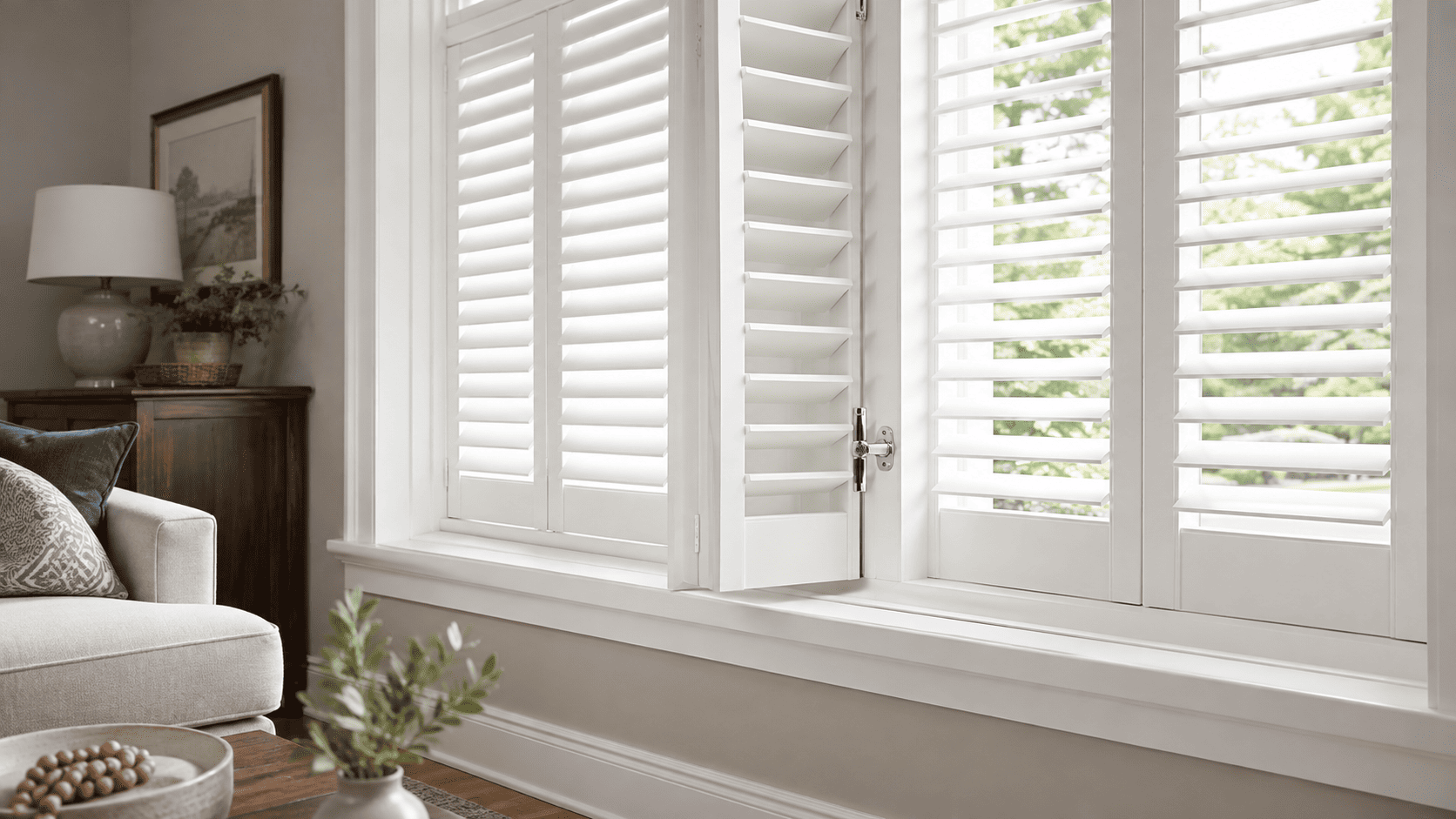
Shutter Panel Locks: When They Matter for Everyday Use
Author: Nigel Harris
August 24, 2026.
Small hardware choices can noticeably affect how custom shutters feel from day to day. Panel locks are usually discreet, but they help determine whether a shutter panel closes with the right resistance, stays in position, and feels stable.
Despite the name, shutter panel locks are not security locks. Their purpose is practical: they help hold hinged panels closed within the shutter frame. Some systems also allow minor adjustment so a panel can sit level and close consistently.
Their value depends on the panel configuration, frame, window, and how often you expect to open the panels.
What Are Panel Locks on Custom Shutters?
Panel locks are closure components positioned where a shutter panel meets its frame or sill. A common design combines a spring-loaded plunger in the panel with a small ramp or receiving point in the frame. As you close the panel, the plunger moves over the ramp and settles into position, creating enough tension to keep the panel closed. Some shutter systems place panel locks at both the top and bottom of the panel.
This hardware works on the panel itself, not on the louvers. You can still tilt the louvers to manage light and privacy while the panel remains closed. When you need full access to the window, you pull the panel open against the holding tension.
That distinction matters because a shutter has two separate movements:
The louvers tilt within the panel.
The panel swings on its hinges.
Panel lock hardware for shutters controls the second movement. It helps the hinged panel remain seated in the frame until you intentionally open it.
It is also important not to confuse panel locks with keyed locks, child-safety devices, or exterior storm hardware. Locking shutter panels in this context simply means holding the interior panels in their normal closed position.
How Shutter Panel Locks Affect Everyday Use
The value of panel locks is easiest to understand through daily operation. Their contribution is subtle, but it can make the shutters feel more finished and predictable.
They Create a More Deliberate Closing Action
A well-adjusted panel lock gives you a clear sense that the panel has reached its closed position. Instead of resting loosely against the frame, the panel meets light resistance and stays in place.
That can be useful when you regularly open the panels for cleaning, window access, or a clear view. The closure hardware helps guide each panel back into its intended resting point.
The tension should not feel excessive. You should be able to open the panel without straining the stile, hinges, or frame. At the same time, the panel should not release so easily that normal contact causes it to drift open.
They Help Panels Stay Stable When Closed
A shutter panel may be touched during routine louver adjustment, cleaning, or use of a nearby window. Properly set panel locks help keep that contact from moving the entire panel out of position.
This stability can be especially noticeable with larger hinged panels. A tall or wide panel has more surface area and leverage than a small one, so the way it is held closed becomes more important to the overall feel of the installation.
Panel locks do not correct every source of movement. Loose hinges, an out-of-square opening, incorrect clearances, or an unsuitable configuration require separate attention.
They Can Support Minor Panel Leveling
Certain adjustable panel lock systems can provide limited support when a panel needs a small leveling correction. The spring-loaded component may be extended or recessed to change how the panel meets the receiving ramp and how firmly it closes. Manufacturer guidance treats this as a fine adjustment after the panel and frame have already been aligned.
Panel locks should not compensate for inaccurate measurements or poor installation. The opening, frame, and hinges still need to support correct alignment. Think of the lock as a finishing adjustment.
Read also:
Window Shutter Ideas by Home Style: Modern, Farmhouse & Coastal
Choosing Shutter Colors & Finishes: White, Stained Wood & Painted Options
When Locking Shutter Panels Matters Most
Not every window places the same demands on shutter hardware. Panel locks tend to matter more when panels are used frequently, have more height or width, or need to remain consistently seated in a defined frame.
Frequently Opened Panels
If you often swing the panels open, you will interact with the closure hardware more than someone who mainly adjusts the louvers. This may apply when you regularly open the window, clean the glass, reach a lock or crank, or want the entire opening exposed.
In these situations, the panel should return to its correct position without several small adjustments each time.
A shutter panel pull may also be considered when you want a more obvious grip point. Panel pulls and panel locks solve different problems: the pull gives your hand a place to start the movement, while the lock supplies the holding tension when the panel is closed.
Tall or Wide Hinged Panels
Larger panels need a configuration that balances appearance, weight, hinge support, and access. Shutter panel locks can help the closed panels feel settled within the frame, but they should be evaluated with the number of panels and the way those panels fold or swing.
A single oversized panel may not be the most practical answer for a large opening. Multiple panels, a T-post, or another configuration may work better. Your design consultant should assess the layout and panel dimensions.
Windows in Active Areas
In a busy family room, kitchen, hallway, or home office, shutters may be touched more often than expected. You might adjust the louvers several times throughout the day, clean nearby surfaces, or use the window for ventilation.
A stable closure helps prevent incidental contact from changing the panel’s position too easily.
For a window near a frequently used door or walkway, panel swing also deserves attention. Panel locks hold the panel closed; they do not control where an open panel projects into the room. Furniture clearance, handles, trim, and traffic paths should be reviewed as part of the layout.
Openings That Need Fine Alignment
Windows and trim are not always perfectly square. Custom measurement and professional installation help account for those variations, while adjustable closure hardware may assist with the final fit.
If one panel appears slightly lower than another, rubs at an edge, or does not meet the frame consistently, the solution may involve hinge adjustment, frame correction, panel lock tension, or a combination. The cause should be diagnosed rather than hidden by tightening the lock.
When Panel Locks May Be Less Important
Panel locks are useful, but they are not equally important in every configuration.
If the panels are rarely opened and remain closed most of the time, you may interact mainly with the louvers. In that case, the difference between one closure method and another may be less noticeable.
Some shutter designs use magnets or catch plates instead. They can also hold a panel closed, but they create a different feel and may offer different adjustment options.
Track-mounted panels are another category. Bypass and bi-fold systems rely on tracks, carriers, pivots, or guides to control movement, so their stability should not be evaluated in the same way as an individually hinged panel.
Specialty-shaped shutters may use a combination of holding methods. The goal is to select a closure method that fits how the panel needs to move and rest.
Panel Locks vs. Other Shutter Hardware
Panel locks are only one element in the hardware package. Comparing their role with other components helps prevent unrealistic expectations.
Hinges carry the panel and allow it to swing. Panel pulls give you a defined place to grip the panel. Magnets or catches hold the panel against the frame. Panel locks can also hold it closed, often through adjustable spring tension. A divider rail separates louver sections but does not secure the panel itself.
Because these parts perform different jobs, one cannot automatically replace another. Adding a pull does not improve alignment. Tightening a panel lock does not repair a loose hinge. Changing the divider rail position does not alter how the panel engages with the frame.
The best hardware combination supports the complete operation: comfortable opening, reliable closure, appropriate louver movement, window access, and a clean appearance.
Read more:
Tilt Rod vs Hidden Tilt: What’s the Difference?
How Shutters Improve Privacy and Light Control in Your Home
What Proper Panel Lock Adjustment Should Feel Like
A correctly adjusted panel lock should be noticeable through function, not effort. The panel should close firmly, remain seated, and open with controlled pressure.
Several signs may indicate that the tension or alignment needs attention:
The panel will not stay fully closed.
The panel requires excessive force to open.
The top engages, but the bottom sits away from the frame.
The panel rubs before the lock engages.
Neighboring panels do not appear level when closed.
The closure feels changes noticeably over time.
These symptoms do not point to one cause. Rubbing may require hinge or frame adjustment, while an easy release may call for a small plunger adjustment. A visible gap could relate to the frame, panel dimensions, or opening.
This is why panel lock hardware should be set as part of the installation rather than treated as a do-it-yourself correction. Your design consultant can account for the opening during measurement, and installation services can be coordinated when the order is placed. The installer can then check panel alignment, closure pressure, and louver clearance as part of the final setup.
Questions to Ask About Shutter Panel Locks
A few practical questions can help you understand how the proposed design will work.
Ask your design consultant:
Will this configuration use panel locks, magnets, or another closure method?
Where will the hardware be located?
Will it be visible when the shutters are closed?
How much pressure should it take to open the panel?
Can the tension be adjusted during installation?
Does the panel size or frame style affect the closure method?
How will I reach the window lock, crank, or screen?
Would a panel pull make frequent opening more convenient?
These questions connect the hardware choice to your routine. A rarely opened bedroom window may need a different approach from a kitchen window you access every day.
It is also worth discussing how an inside mount or outside mount affects the frame, clearance, and panel swing. Panel locks are a small component, but they operate within a larger design that must fit the window and the surrounding room.
A Small Detail That Helps the Whole Shutter Work Better
Panel locks matter when they make the shutter easier to use without drawing attention to themselves. They help hinged panels close with intention, remain stable, and return to a consistent position after you open them.
Their value depends on proper specification and adjustment. The hardware should match the frame and panel configuration, while installation should address alignment, hinge support, clearance, and closure tension as one system.
During an in-home consultation, you can review how often each panel will be opened, what access the window requires, and whether shutter panel locks will improve the everyday function of your custom shutters. A thoughtful hardware choice can make the finished installation feel simpler, steadier, and more natural to use.