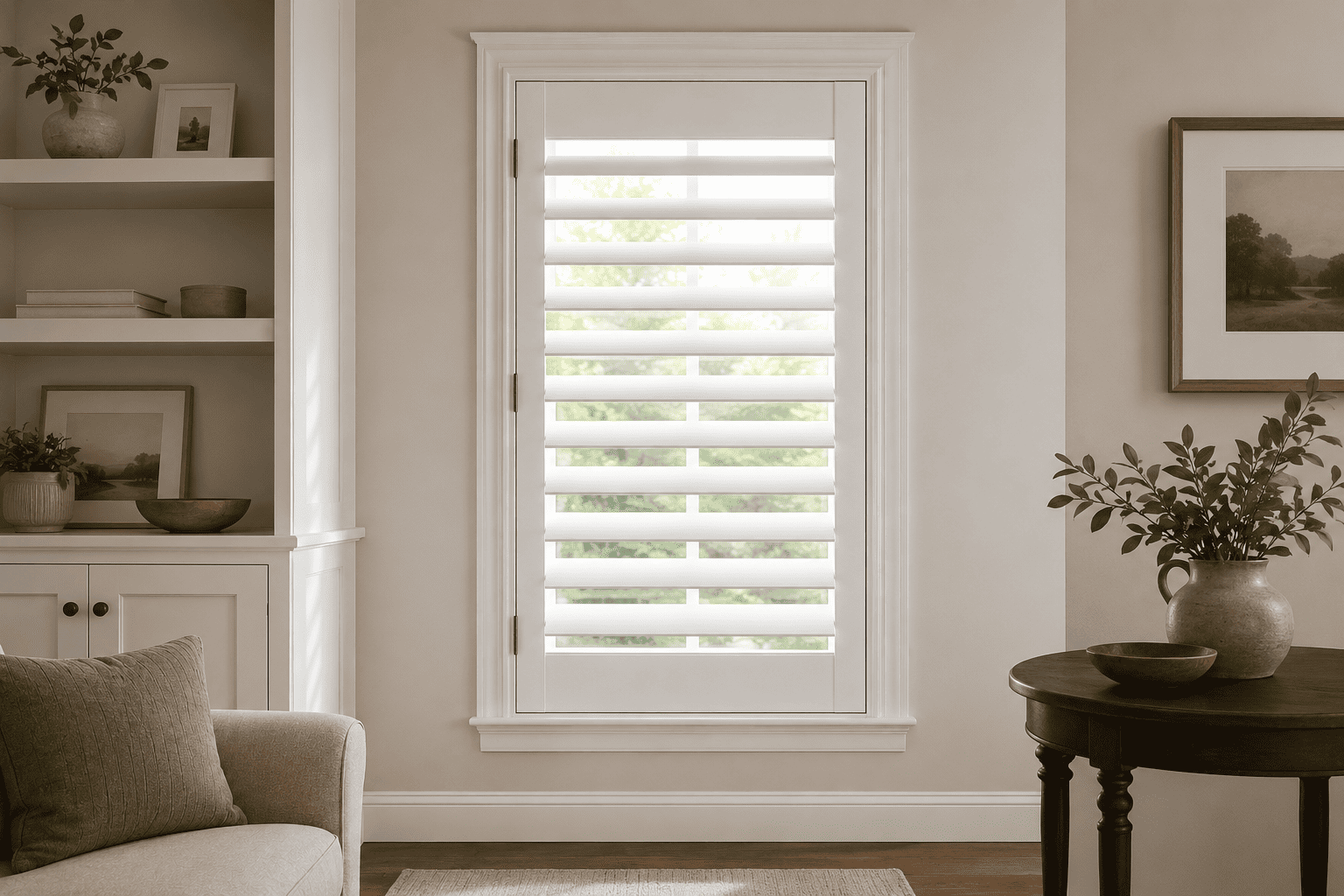
Single-Panel Shutters: When One Panel Is the Right Choice
Author: Nigel Harris.
July 16, 2026.
Single-panel shutters can be a smart choice when you want a cleaner, simpler look around the window. Instead of dividing the opening into two or more panels, this configuration uses one full panel across the window or window section, creating a more continuous appearance.
For some windows, one panel feels more balanced than multiple smaller panels. For others, the size, shape, trim, or swing clearance may make a different layout more practical. The key is knowing when single panel shutters support the design of the room and when they may feel too wide, heavy, or visually off-balance.
Below, you will find the main situations where single panel window shutters make sense, what they change visually, and what to evaluate before choosing this configuration.
What Are Single-Panel Shutters?
Single-panel shutters use one shutter panel for a window opening or for a defined section of the window. This layout is often considered when the window is narrow, compact, or better suited to a simpler visual structure.
The right layout depends on more than width alone. Proportion, frame style, mount type, window access, and the way the panel opens all affect whether one panel shutters will feel natural in your space.
Single panel window shutters vs. multi-panel layouts
A multi-panel shutter layout divides the window into two or more panels. That can work well for wider openings because each panel is easier to handle and the vertical divisions can help the shutter look proportionate.
Single panel window shutters do the opposite. They reduce visual breaks and create one clean panel face. This can make the window feel less busy, especially in smaller rooms, on narrow windows, or in spaces where the surrounding design is already detailed.
How one panel shutters open
A single panel shutter typically opens as one unit. That means the panel needs enough space to swing comfortably without hitting walls, furniture, window handles, or nearby trim.
This is one of the most important functional checks. A single-panel shutter may look right when closed, but it also needs to work well when you open it for cleaning, ventilation, or access to the window.
When Single-Panel Shutters Make the Most Sense
Single-panel shutters are not automatically better or worse than other configurations. They are best when the window proportion, room layout, and desired look all support one clean panel.
In many cases, the choice comes down to balance. You want the shutter to look intentional, not like a standard layout was forced onto a window that needed a more tailored approach.
Narrow or compact windows
Single-panel shutters often work well on narrow windows because there may not be enough width for multiple panels to feel useful or visually balanced. Dividing a narrow window into two small panels can sometimes make the design look crowded.
A single panel shutter can preserve the full height and width of the opening with fewer interruptions. This helps the window feel cleaner while still giving you privacy, light control, and a finished architectural look.
Windows where simplicity matters
Some windows benefit from a quiet design. If the room already has detailed trim, patterned flooring, built-ins, or strong furniture lines, a single panel can keep the window from feeling too busy.
This is especially useful when you want the shutters to complement the room rather than become the main visual feature. One panel creates a more restrained look while still adding structure to the window.
Smaller rooms that need fewer visual breaks
In compact rooms, every line matters. Too many panel divisions can make the wall feel more segmented, especially if the window is already small.
Single-panel shutters can help the space feel calmer because the eye reads the window as one clean shape. That can be helpful in powder rooms, hallways, small bedrooms, offices, or any room where a simpler window treatment makes the design feel more open.
Specialty windows that need a cleaner layout
Some specialty windows look better when the shutter design follows the window’s shape without adding unnecessary divisions. While not every shaped window is suited to one panel, the goal is often to make the shutter feel custom to the opening.
For unusual proportions, a made-to-measure approach matters. The panel layout should work with the shape, not compete with it.
Read also:
6 Unexpected Ways Interior Shutters Add Home Value
Top 10 Tips to Care for your Indoor Shutters
What Single-Panel Shutters Change Visually
Choosing single-panel shutters affects more than how the shutter opens. It changes the way the window is framed, how many lines appear across the opening, and how the finished design feels in the room.
That visual impact can be subtle or significant depending on the size of the window and the surrounding architecture.
A cleaner shutter face
The main visual advantage of a single panel shutter is simplicity. With fewer vertical breaks, the shutter face looks more continuous and less divided.
This can be especially appealing if you prefer a clean, tailored style. The window still has depth and structure, but it avoids the busier rhythm that multiple panels can create.
A stronger sense of proportion
Single-panel shutters can make a narrow window look more intentional. Instead of splitting the window into small sections, the single panel keeps the full proportion intact.
However, proportion works both ways. If the window is too wide, one large panel may feel heavy or awkward. In that case, a two-panel or multi-panel layout may look more balanced and function more comfortably.
A simpler view from inside and outside
Window shutters influence how a home looks from both sides of the glass. From inside, single-panel shutters can give the room a cleaner frame. From outside, they can help keep the window appearance more uniform when viewed from the street or yard.
This is worth considering if several windows appear together on the same wall. One single-panel shutter may look right on its own, but the full room or exterior view should also feel consistent.
How to Decide if One Panel Will Feel Balanced
A single panel shutter should feel proportionate, easy to use, and visually aligned with the window. Before choosing this layout, it helps to evaluate how the panel will look open, closed, and partially adjusted.
The best choice usually comes from looking at the whole window area, not just the glass.
Check the window width and panel scale
Width is the first thing to review. A single-panel shutter generally makes more sense on narrower openings. If the panel becomes too wide, it may feel visually oversized and less convenient to operate.
A balanced panel should look substantial without feeling bulky. The goal is to create a clean window design, not a panel that overpowers the space.
Look at trim, casing, and wall space
The area around the window matters. Thick trim, shallow recesses, nearby corners, or limited wall space can all affect whether one panel works well.
For some windows, inside mount shutters may create the cleanest result. For others, outside mount shutters may make more sense because of the window depth or trim conditions. The panel layout should be considered together with the mount style so the finished shutter looks intentional.
Consider how the panel will swing
A single panel needs room to open. Before choosing this layout, consider nearby furniture, faucets, counters, doors, artwork, and wall returns.
If the panel cannot open comfortably, it may become less practical over time. In that case, a different panel configuration may give you a better day-to-day experience while still preserving the look you want.
Single-Panel Shutters and Everyday Function
A shutter layout should support the way you actually use the room. Single-panel shutters can look beautiful, but they also need to make sense for privacy, daylight, ventilation, and access.
This is where a custom shutter design can make a major difference. The panel size, frame, louver size, and mount style all work together to affect how the shutter performs.
Light and privacy control
Single-panel shutters still give you adjustable control over light and privacy. The difference is not usually in the control itself, but in the visual layout surrounding it.
Because the panel face is less divided, the window can look calmer when the louvers are adjusted. This may be especially appealing in rooms where you want privacy without adding a visually heavy treatment.
Access to the window
Think about how often you open the window, clean the glass, or reach the lock. A single-panel shutter may provide straightforward access because you open one panel instead of several.
However, that only works if the panel has enough swing space. If access becomes awkward, a divided configuration may be more practical.
Frame and mount considerations
The frame and mount style can make a single-panel shutter look refined or slightly off. A narrow window with the right frame can look crisp and tailored. A shallow or uneven opening may need a different approach to achieve the same clean effect.
This is why measuring and design guidance are important. Small differences in depth, trim, and panel clearance can change which configuration makes the most sense.
Read more:
What to Expect During a Shutters Consultation and Measurement Visit
Shutter Maintenance Guide: Cleaning, Repairs and Lifespan
Single Panel Shutters vs. Other Panel Layouts
Single-panel shutters are one option within a broader set of shutter configurations. The best layout is the one that fits the window, supports daily use, and creates the right visual balance.
A single panel may be the most elegant choice for one window, while another window in the same home may need two panels, full height shutters, or a different custom configuration.
Choose single-panel shutters when
Single-panel shutters are usually worth considering when:
The window is narrow or compact
You want fewer vertical divisions
The surrounding design already has a lot of detail
The panel has enough room to swing open
A simpler window face feels more balanced
You want the window to look clean and tailored
Consider another layout when
Another panel configuration may be better when:
The window is wide
One panel would feel too large or heavy
There is limited swing clearance
You want independent access to different sections
Multiple windows need to align visually across the room
The window shape or frame calls for a more structured layout
Choosing a Panel Layout That Looks Intentional
Single-panel shutters work best when they feel like a deliberate design choice. The panel should match the scale of the window, open comfortably, and support the way you use the room every day.
If you are comparing single panel shutters with other shutter layouts, focus on three questions: Does one panel look balanced? Will it function well when opened and closed? Does it create the clean visual effect you want?
When all three answers are yes, a single panel shutter can be the right choice. It can give your window a simpler, more tailored look while still supporting privacy, light control, and long-term everyday use