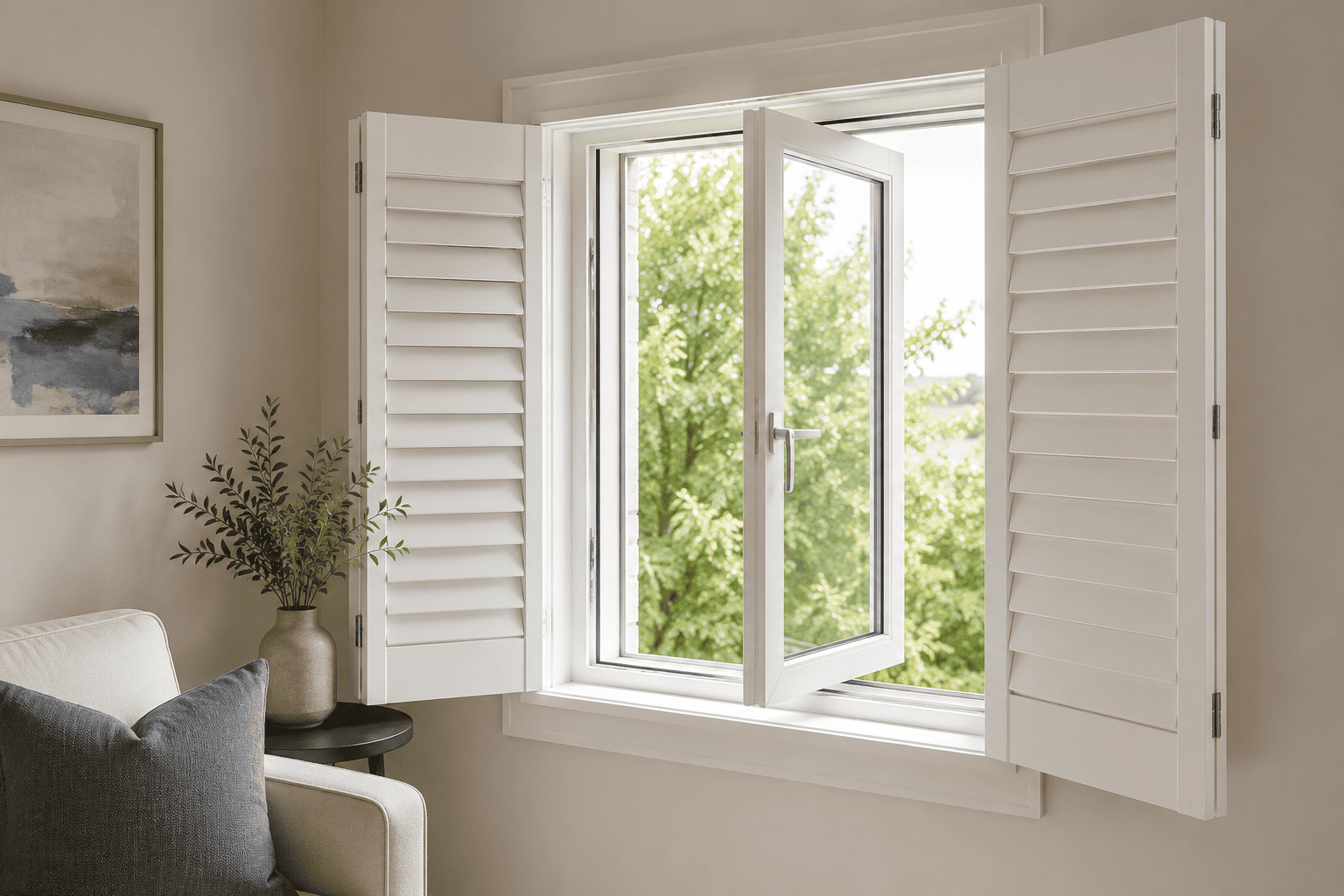
Shutters for Casement Windows: What to Check Before You Choose
Author: Nigel Harris.
July 16, 2026.
Casement windows are designed for movement. They usually open outward with a crank, handle, or lever, which means any window treatment you choose needs to work around that hardware without making the window harder to use.
That is why casement window shutters require a closer look at fit, clearance, frame depth, and opening direction. When they are designed around the actual way your windows operate, shutters can give casement windows a clean, tailored look while still keeping daily use practical.
Before you decide on shutters for casement windows, here is what to check.
Can You Put Shutters on Casement Windows?
Yes, you can use shutters on casement windows, but the final design depends on the window’s hardware, frame, and available mounting space.
Casement windows are different from fixed windows because you need access to the crank, latch, handle, and opening path. The shutter design should not block the parts you use every day. It should also allow the shutter panels to open comfortably when you need to reach the window.
Why Casement Window Shutters Need Custom Planning
Casement windows often have hardware that projects into the room. A crank handle, lock, or lever may sit close to the glass, on the side of the sash, or near the lower frame. If a shutter is placed too close to that hardware, it may interfere with normal use.
A custom-fit approach helps account for:
Handle and crank projection
Window depth
Frame shape
Trim details
Panel swing
Louver clearance
How often you open the window
The goal is not only to make shutters fit the window. It is to make sure the window still works the way you expect it to.
When Shutters on Casement Windows Work Best
Shutters on casement windows usually work best when there is enough depth or frame space to keep the shutter structure clear of the hardware. They can also work well when the opening direction and panel layout are planned together.
For example, a narrow casement window may need a single panel, while a wider casement window or pair of casement windows may look more balanced with two panels. The right choice depends on proportion, access, and the amount of space around the window.
Read also:
Shutters Glossary: Frame, Stile, Rail, Louver and More
What Are Shutters? A Simple Overview for Homeowners
Check Handle Clearance Before Choosing Casement Window Shutters
Handle clearance is one of the most important details for casement window shutters. Even a small crank or latch can affect how the shutters sit, open, and operate.
Before choosing a final design, look closely at where the handle is located and how far it extends into the room.
Crank Handles and Projection
Many casement windows use a crank at the bottom of the frame. This crank may fold down, but it still takes up space. If the shutter frame or panel sits too close to it, you may not be able to turn the crank comfortably.
You should check:
Whether the crank folds flat or stays raised
How far the crank projects from the window
Whether your hand has enough room to turn it
Whether the shutter panel can close without touching it
A custom survey can help identify whether the shutter needs additional clearance, a different frame style, or a layout that keeps the crank accessible.
Side Handles, Locks, and Levers
Some casement windows use side handles or locking hardware instead of a bottom crank. These can also affect shutter placement, especially if they sit near the edge of the sash.
If the handle is positioned where the shutter frame would normally sit, the design may need to be adjusted. In some cases, the best solution may be a different mount position or a frame that allows more usable space around the hardware.
Everyday Access Matters
It is easy to focus on how shutters will look when closed, but casement windows also need to remain easy to open. If you use the window regularly for ventilation, the shutter design should make that routine simple.
Ask yourself:
Will I need to open the shutter panel every time I use the window?
Can I reach the crank or handle comfortably?
Will the shutter panel swing into furniture, counters, or walls?
Does the layout make sense for how I use this room?
The best interior shutters for casement windows are planned around real use, not just appearance.
Consider Window Opening Direction and Panel Swing
Casement windows usually open outward, but the shutter panels open inward into the room. That means two types of movement need to work together: the window sash outside and the shutter panel inside.
The shutter should give you access to the window without making the room feel awkward or cramped.
Single Casement Windows
For a single casement window, one shutter panel may feel natural if the window is narrow. This can create a simple, clean look and make the panel easy to open.
However, one wide shutter panel can sometimes feel heavy or awkward. If the window is wider, two panels may offer better balance and easier movement. The right configuration depends on the window width, room layout, and how much clearance you have on each side.
Paired Casement Windows
Paired casement windows often need a layout that respects the center meeting point between the windows. Two shutter panels may mirror the window design and create a balanced look.
If there are cranks or handles on both sides, the panel layout should allow access to each one. This is especially important when both windows are used for ventilation.
Nearby Walls, Furniture, and Built-Ins
Panel swing is not only about the window. You also need to think about what is around it.
A casement window above a kitchen counter, beside a built-in cabinet, or near a corner may have limited space for panels to open. In these situations, the shutter configuration should be planned carefully so the panels do not feel inconvenient in everyday use.
Measure Frame Depth for Interior Shutters for Casement Windows
Frame depth affects whether interior shutters for casement windows can sit neatly within the window opening or need a different mount approach.
Depth is especially important because casement window hardware often takes up usable space inside the recess.
Why Depth Changes the Fit
An inside mount usually creates a clean, built-in look because the shutter sits within the window opening. But it requires enough depth for the shutter frame and louvers to operate without hitting handles, locks, or the glass.
If there is not enough depth, the shutter may need to be positioned differently. The goal is to preserve both the finished look and the function of the window.
What to Look For in the Window Recess
When reviewing frame depth, check for:
Shallow window recesses
Projecting crank handles
Uneven trim
Decorative molding
Locks or latches near the shutter frame
Obstructions at the top, bottom, or sides
These details can change the best shutter configuration, even when two casement windows look similar at first glance.
Inside Mount vs. Outside Mount for Casement Windows
Inside mount shutters can look very streamlined when there is enough depth and clearance. Outside mount shutters may be more practical when the window recess is shallow, the trim is unusual, or the hardware needs more room.
Neither option is automatically better. The best choice is the one that gives you the right balance of appearance, clearance, and daily usability.
Think About Light, Privacy, and Room Function
Casement window shutters are not only about fit. They also affect how the room feels throughout the day.
Because casement windows are often used for airflow and natural light, your shutter design should support the way you use the space.
Light Control for Casement Window Shutters
Shutters allow you to adjust light without fully exposing the window. This can be especially useful in rooms where bright light shifts throughout the day.
For casement windows, louver size and panel layout can influence how open or structured the window feels. Wider louvers may create a cleaner view when open, while smaller louvers may create a more detailed look. The best option depends on the room’s style, privacy needs, and window size.
Privacy Without Losing the Window’s Function
Casement windows may face sidewalks, neighbors, patios, or side yards. Shutters can help you manage privacy while still allowing daylight into the room.
The key is to choose a configuration that lets you adjust visibility without making the window hard to access. If you need privacy most of the day, the design should make frequent adjustment easy.
Rooms Where Casement Window Shutters Make Sense
Shutters for casement windows can work especially well in:
Living rooms where you want a more finished architectural look
Bedrooms where privacy and light control both matter
Kitchens where a wipeable, tailored finish is useful
Bathrooms where privacy is important
Home offices where glare control can improve comfort
The same shutter style may not be right for every room. A window that is opened daily may need a different configuration than a window that is mostly used for light.
Use a Custom-Fit Approach for Shutters on Casement Windows
Casement windows have more moving parts than many other window types. That makes precise measuring and design guidance especially important.
A custom-fit solution helps make sure the shutters work with the window instead of competing with it.
Why Standard Assumptions Can Create Problems
Two casement windows can have the same width and height but different hardware, trim, or depth. One may have a folding crank. Another may have a side lever. One may sit in a deep recess, while another may have shallow framing.
If the shutter design does not account for those differences, you may end up with panels that look right in theory but feel awkward in daily use.
What a Custom Survey Should Review
A detailed in-home survey should review:
Exact window measurements
Handle and crank clearance
Frame depth
Trim and molding
Panel swing space
Window opening direction
Room layout
Light and privacy goals
This step helps connect the shutter design to the actual conditions of your home.
How Custom Guidance Helps With Design Choices
Custom guidance can help you decide whether your casement windows need a single panel, multiple panels, an inside mount, an outside mount, or another adjustment for clearance.
It also helps you avoid choosing based only on photos. A shutter style that looks good in one room may not function the same way on your window if the handle, recess, or frame details are different.
Choose Casement Window Shutters Around Real Use
The best casement window shutters should look intentional, fit neatly, and let you keep using your windows comfortably.
Before you choose, focus on the practical details: handle clearance, opening direction, frame depth, panel swing, and how often you use the window. These factors make the difference between shutters that simply cover the window and shutters that feel like they belong there.
When your shutters are measured and designed around your actual casement windows, you can get a cleaner finish, better light control, stronger privacy, and a layout that supports everyday use.