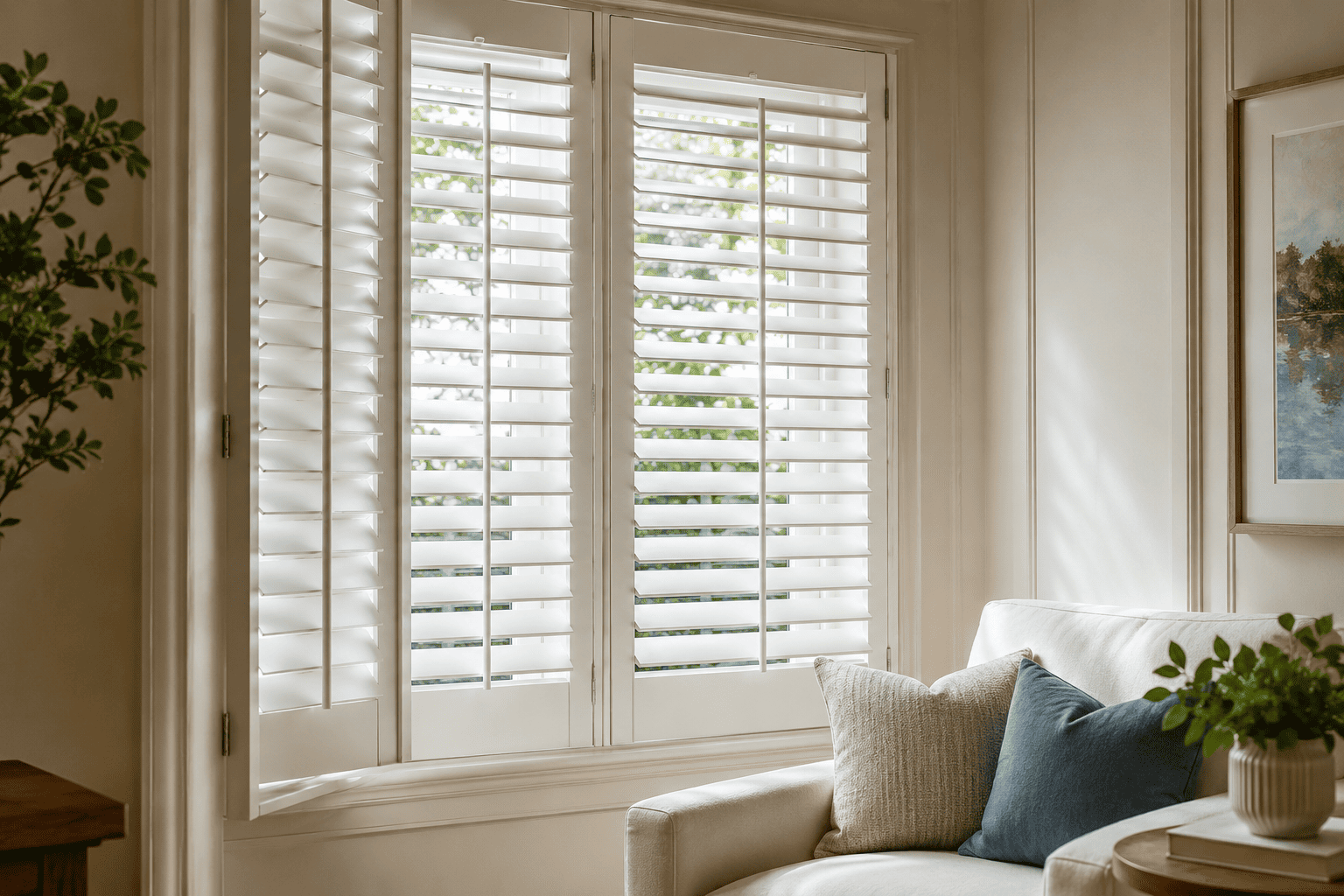
Tighter Louvers: When a Closer-Spaced Look Makes Sense
Author: Nigel Harris
August 24, 2026.
Louver size changes more than one detail on a shutter panel. It affects how much glass you see between the blades, how the shutter relates to the scale of the window, and whether the finished design feels open and contemporary or more detailed and traditional.
Tighter louvers—often created with smaller shutter louvers—place more horizontal blades within the same panel height. That closer-spaced pattern can be a strong choice when you want a structured look, when the opening is relatively small, or when privacy matters more than preserving the widest possible outward view.
The tradeoff is that more louvers create more visual lines across the glass. Compared with wider louvers, they may admit less unobstructed light at a similar tilt angle and provide a more interrupted view outdoors. The right choice depends on proportion, room style, window location, and how you expect to use the shutters each day.
What Tighter Louvers Look Like on Window Shutters
Tighter louvers create a denser rhythm across the shutter panel. Because each blade is smaller, more blades are needed to fill the panel from top to bottom. This gives the window a more layered, architectural appearance.
The term describes the louver configuration chosen for the shutter. It does not simply mean tilting standard louvers farther closed. Once the shutters are made, the number and scale of the louvers remain part of the panel design, while the blades can be adjusted for light, privacy, and view.
On a small or moderately sized window, narrow louvers on shutters can look carefully proportioned. They may echo compact panes, detailed trim, divided-light windows, or other smaller architectural elements. On a very large opening, the same close spacing can introduce many horizontal lines and make the shutter look busier.
Louver size should therefore be evaluated as part of the complete window rather than selected from a sample alone.
When Smaller Shutter Louvers Make Sense
Tighter spacing works best when it supports a specific functional or visual goal. These are the situations where a closer-spaced design often feels most intentional.
You Have Smaller or Narrower Window Openings
Small windows need components that feel appropriately scaled. A broad louver can dominate a short or narrow panel, especially when only a limited number of blades fit within the opening.
Smaller shutter louvers create a more continuous pattern because the panel contains enough repeated lines to look complete. This can suit compact bedroom windows, bathroom openings, sidelights, small kitchen windows, and other areas where the glass dimensions are limited.
The frame, stiles, rails, and panel divisions also influence proportion. A closer-spaced pattern cannot correct an awkward layout by itself, but it can help the internal scale of the panel feel more compatible with a small opening.
You Prefer a More Traditional or Detailed Look
Wide louvers often create a simplified, open appearance. Tighter louvers move in the opposite direction by adding visual detail and a stronger horizontal rhythm.
That character can work well in traditional, cottage-inspired, classic, or transitional interiors. It may also complement rooms with detailed casing, paneled doors, substantial baseboards, or furniture with a crafted profile.
Color and finish affect the result. Light painted shutters can keep tight louver shutters from feeling visually heavy, while a stained finish may emphasize the repetition and depth of each blade. Your choice of shutter colors and finishes should support the detail already present in the room rather than compete with it.
Privacy Matters More Than an Open View
Tighter louvers can create a more screened appearance because more blades sit across the window. When the louvers are partly tilted, the closer pattern may break up direct sightlines more than a design with larger openings between wider blades.
This can make sense for street-facing windows, rooms close to a neighboring property, first-floor bedrooms, or spaces where you want daylight without making the window feel fully exposed.
Louver size alone does not guarantee privacy. The blade angle, window height, viewer position, and difference between indoor and outdoor lighting all matter. Still, if you prefer a window to look more covered when the shutters are not completely closed, a tighter configuration may better match that expectation.
Read also:
Shutters for Floor-to-Ceiling and Tall Windows: Design & Light Control Tips
Window Shutter Ideas by Home Style: Modern, Farmhouse & Coastal
How Tighter Louvers Affect Privacy
Privacy is one of the main reasons you may consider tighter louvers, but the effect changes with viewing angle and time of day.
Partial Tilt Can Disrupt Direct Sightlines
When louvers are angled, each blade overlaps part of the opening behind it from certain viewpoints. With more blades across the panel, the window may appear more visually screened than it would with a wider louver configuration.
Small changes in the tilt angle can direct attention upward or downward while reducing eye-level visibility. The most effective angle depends on the relationship between the window, nearby sidewalks or homes, and the places where you sit or move inside the room.
Closed Louvers Provide the Strongest Coverage
Regardless of louver size, the most complete privacy comes when the blades are fully closed and properly aligned. Tighter louvers may create a denser surface, but they still rely on correct closure and a well-fitted shutter panel.
Small gaps around the frame, unusual window geometry, or operating components that restrict movement can affect the result. Accurate measurement and the right mount style therefore matter as much as the louver choice. An iinside or outside mount should be selected according to usable depth, trim, clearance, and window operation—not appearance alone.
Nighttime Privacy Requires More Attention
At night, a bright interior and darker exterior make it easier to see through any available opening. Louvers that provide comfortable daytime screening may need to be tilted farther closed after dark.
Bedrooms, bathrooms, and street-facing living spaces may require a more closed evening setting. This lighting contrast matters more than the number of louvers alone.
Tighter Louvers vs. Wider Louvers for Light and View
The clearest way to choose between tighter and wider louvers is to compare how each option handles coverage, daylight, outward visibility, and visual simplicity.
Tighter Louvers Create More Visual Coverage
A panel with narrow blades contains more horizontal edges across the glass. Even when the louvers are open, the shutter may feel more present in the window.
This can be an advantage when you want the shutter itself to contribute decorative structure. It may be less suitable when the main goal is to preserve a broad outdoor view or make a large window feel as open as possible.
Wider Louvers Usually Support a More Open View
Wider louvers create larger spaces between blades at comparable tilt positions. With fewer horizontal lines crossing the window, you can generally see more of the view outside, and the panel often looks cleaner from across the room.
That quality can suit large windows, open-plan rooms, contemporary interiors, and locations where scenery is important. A wider louver may also make a tall panel feel less visually dense.
When comparing wider louvers with a closer-spaced option, look through the samples from the distance and angle you normally use the room. A view from a sofa or dining chair may produce a different impression than a view taken directly in front of the window.
Smaller Louvers Break Light Into Narrower Bands
Because tighter louvers create more narrow openings, they divide incoming daylight into smaller bands. This can make changes in the blade angle feel gradual.
More blades also mean more surfaces interrupting the glass. At a similar open angle, the room may receive less unobstructed light than it would through a wider louver design. The difference can be especially noticeable on small or shaded windows.
Window orientation matters as well. A narrow east-facing window may need a different balance than a wide opening exposed to strong afternoon sun. The best shutters for privacy and light control are configured for the actual room, not simply chosen because one sample appears more private.
The Difference Becomes Stronger on Large Panels
On a tall shutter panel, even a modest change in louver size can significantly change the number of visible blades. Tighter louvers may create a richly detailed effect, but they can also make a large surface feel busy.
For large window shutters, wider louvers are often considered because they reduce horizontal interruptions and help the opening retain a sense of scale. Smaller louvers can still work when the room has traditional detailing or privacy is the dominant goal, but the full elevation should be reviewed before making the decision.
Read more:
What Is a Shutter Panel? Understanding Panel Layouts and Configurations
Expert Shutter Services: Why a Custom Survey Helps You Get the Right Fit
How Room Style Influences Tight Louver Shutters
Louver size should feel connected to the room rather than treated as an isolated specification. Tighter louvers often suit traditional, cottage-inspired, and transitional spaces because their repeated lines complement detailed trim, paneled doors, and smaller-scale furnishings.
In a compact room, that finer pattern may also feel more proportional than a broad blade. Contemporary or open interiors usually favor fewer lines and larger visual surfaces, so wider louvers may blend more naturally. Tighter spacing can still work as an intentional texture, especially with a simple frame and restrained finish.
What to Consider Before Choosing Tight Louver Shutters
A sample shows the blade profile, but not how dozens of louvers will look across the full window. Before choosing a closer-spaced design, review these practical factors:
Window dimensions: Smaller and narrower openings often accommodate tight spacing more naturally than very wide or tall panels.
Primary goal: Decide whether privacy, filtered light, outside view, or decorative detail matters most.
Normal viewing position: Consider the window from the sofa, bed, desk, or hallway—not only from directly in front of it.
Day and night conditions: Strong indoor lighting after dark can change how much privacy a partially open louver provides.
Room style: Traditional detailing may support smaller louvers, while streamlined rooms may benefit from a wider scale.
Mount and frame: The frame profile and mounting position affect how much glass remains visible and how substantial the shutter appears.
Consistency between rooms: One louver size can create continuity, but different window scales may justify different choices.
Cleaning preference: More louvers mean more individual blade surfaces, which may affect routine dusting time.
It is also worth comparing the options in the actual room. Natural light, trim color, wall color, and the view outside can change how dense or open each sample appears.
Choose the Louver Scale That Fits the Window
Tighter louvers make the most sense when you want a more traditional, closely detailed shutter design, need a proportion that suits a smaller opening, or prefer a more screened look at the window. They can support privacy and add architectural rhythm, but they also introduce more horizontal lines and may reduce the open view and unobstructed daylight available through the panel.
Wider louvers offer the opposite balance: fewer visual interruptions, larger openings between blades, and a more expansive appearance. Neither option is universally right. The better choice is the one that matches your window size, room style, privacy needs, and everyday viewing angles.
During an in-home consultation, a design consultant can measure the opening, review mounting and clearance conditions, and compare louver proportions in the room where the shutters will be used. That context helps you choose a design that looks balanced on the full window—not just attractive as a small sample.