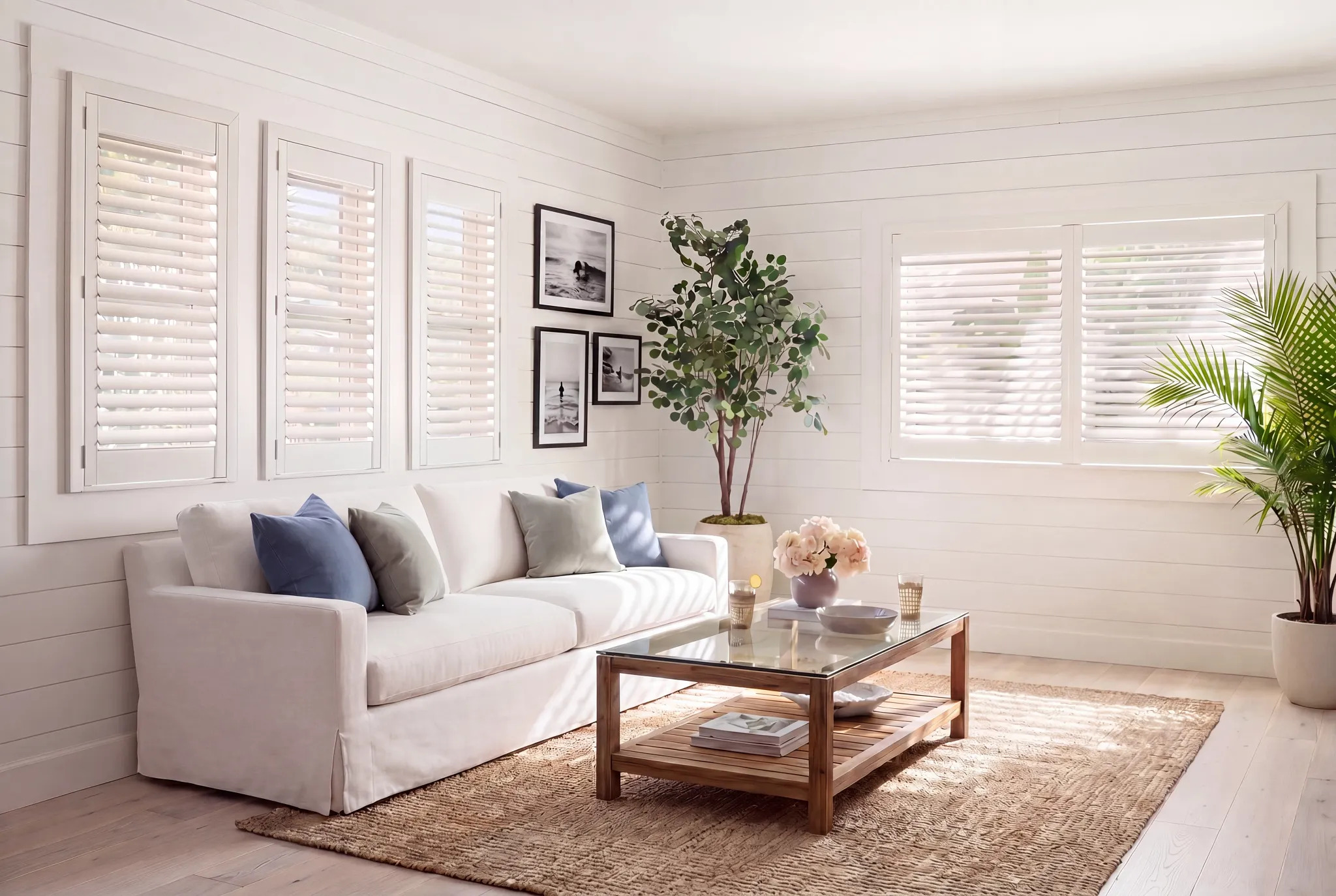
White Window Shutters: Why They Still Look Modern and Premium
Author: Nigel Harris.
June 10, 2026.
White window shutters continue to stand out because they do something few window treatments can do at once: they feel timeless, clean, architectural, and current. In older homes, they can bring order and brightness. In newer spaces, they reinforce a crisp, tailored finish that feels intentional rather than trendy.
That versatility is one reason white shutters remain such a strong design choice. They work across modern interiors, transitional homes, coastal spaces, and updated traditional rooms without feeling overdone. When the design is measured correctly and matched to the room, white window shutters can look understated in the best possible way: polished, elevated, and built to belong.
Why White Window Shutters Still Work So Well in Modern Homes
Modern design does not always mean stark or minimal. Often, it means clarity, proportion, simplicity, and materials that look refined over time. That is exactly why white window shutters continue to feel relevant.
They create visual structure around the window, help light move more evenly through a room, and pair easily with a wide range of wall colors, flooring, trim, and hardware. They also photograph well, which helps explain why they appear so often in updated kitchens, airy living rooms, calm bedrooms, and bright home offices.
White shutters create a cleaner architectural look
One of the reasons white shutters interior styles remain popular is that they read as part of the architecture, not just an accessory added later. They frame the opening, give the window more presence, and create neat lines that suit both classic and contemporary spaces.
White reflects light without feeling cold
In many rooms, white helps maintain brightness and openness. But when the shutter design includes the right frame style, louver proportion, and surrounding trim balance, the result feels warm and premium rather than flat.
White feels adaptable over time
Design trends shift, but white remains flexible. A homeowner can update paint, furniture, lighting, or hardware later without needing the shutters to be changed. That long-term versatility is part of what gives white indoor shutters such enduring appeal.
Read more:
Choosing Shutter Colors & Finishes: White, Stained Wood & Painted Options
Window Shutter Ideas by Home Style: Modern, Farmhouse & Coastal
White Shutters Interior Styling Ideas for a More Elevated Look
The success of white shutters' interior design often comes down to context. The same color can look crisp and luxurious in one room, but basic in another. The difference usually comes from how the shutters interact with walls, trim, flooring, and natural light.
Pair white shutters with warm neutrals
White shutters look especially modern when they are combined with soft greige, warm white, sand, taupe, or muted stone tones. This creates a layered palette instead of a high-contrast one, which helps the room feel more curated.
Use contrast carefully
White shutters can also work beautifully in rooms with darker wall colors, charcoal accents, matte black details, or richer wood tones. In that setting, the shutters help define the window and add brightness. The key is making the contrast feel deliberate, not accidental.
Let hardware and finishes support the look
A modern room with white indoor window shutters often looks stronger when the surrounding details are cohesive. Brushed brass, matte black, aged bronze, natural oak, and soft linen textures can all help white shutters feel more intentional and less generic.
How White Window Shutters Interior Designs Stay Current
Some homeowners worry that white shutters may feel too traditional. In practice, that usually depends less on the color and more on the execution. White window shutters’ interior design can look very current when the overall composition is clean and well balanced.
Keep lines simple
A modern result usually comes from restraint. Clean frames, balanced panel layouts, and uncluttered surrounding finishes make white shutters feel fresh and premium.
Match the shutters to the scale of the room
In small rooms, oversized visual elements can feel heavy. In larger rooms, undersized details can look underwhelming. Choosing a shutter configuration that suits the scale of the opening helps preserve the clean, tailored effect homeowners want from white shutters.
Think of shutters as part of the room design
The strongest interiors do not treat shutters as an afterthought. They are considered alongside wall tone, trim color, flooring, and furniture shape. That is often what separates a merely functional installation from a clearly elevated one.
Best Rooms for White Indoor Shutters
One reason white indoor shutters remain so widely used is that they fit naturally into many parts of the home. They can feel airy and practical in one room, calm and polished in another.
Living rooms
In living rooms, white shutters help create a bright, welcoming backdrop. They work especially well in spaces with layered neutrals, textured fabrics, natural wood, or modern coastal influences.
Kitchens
In kitchens, white shutters often feel especially at home because they echo cabinetry, trim, and clean lines. They can help the room look cohesive without drawing attention away from other focal points.
Bedrooms
In bedrooms, white indoor window shutters can feel calm, simple, and refined. They suit both classic and contemporary spaces, especially when the room uses soft materials and a limited color palette.
Home offices
In a home office, white shutters can make the room feel orderly and professional while still keeping it bright. That balance is especially useful in spaces designed for focus, video calls, and everyday comfort.
What Makes White Shutters Look Premium Instead of Basic
Color alone does not determine whether shutters feel high-end. Premium results usually come from proportion, fit, material quality, and how well the design suits the window.
Precision matters
Well-fitted shutters look integrated with the window opening. That tailored appearance is one of the biggest reasons white window shutters can feel more premium than simpler off-the-shelf alternatives.
Consistency improves the result
When shutters are visually consistent across adjacent rooms or across the front of the home, the effect is more polished. Repetition creates rhythm, and rhythm makes the design feel more considered.
The surrounding details influence perception
Shutters do not exist in isolation. Crisp trim, intentional wall colors, cohesive finishes, and a room that does not feel overcrowded all help white shutters interior styles look more sophisticated.
Read more:
Inside or Outside Mounts: Choose the Right Fit for Your Home
Photo-Led White Shutters Ideas Homeowners Can Picture Easily
Homeowners often respond best to examples they can immediately imagine in their own space. The most successful white window shutters interior looks usually fall into a few recognizable directions.
Soft modern
Think warm white walls, pale oak floors, minimal décor, and clean-lined furniture. Here, white shutters feel subtle, bright, and architectural.
Modern farmhouse
In a modern farmhouse setting, white shutters pair well with warm woods, black accents, textured textiles, and simple trim profiles. The result feels grounded and current rather than overly rustic.
Coastal and airy
In coastal-inspired interiors, white shutters support an easy, bright palette with soft blues, sandy neutrals, woven textures, and relaxed finishes. They help the room feel light without looking casual in a messy way.
Updated traditional
In more classic homes, white shutters can modernize the space when paired with fresher paint colors, lighter furnishings, and less ornate styling. They preserve character while making the room feel more current.
White Shutters and Everyday Practicality
Style is often the first reason homeowners notice shutters, but practicality helps explain why they continue to hold long-term appeal. A design feature tends to feel more premium when it also supports everyday living.
White shutters can help rooms feel brighter, more orderly, and easier to style over time. They also work well in spaces where homeowners want a solution that feels permanent and integrated rather than temporary or decorative.
That balance of visual simplicity and everyday usefulness is part of why white indoor shutters continue to feel modern, even as design preferences evolve.
A Bright Finish That Still Feels Intentional
The lasting appeal of white shutters comes from more than color. It comes from how they shape the window, support the room, and create a finish that feels tailored instead of trendy.
When chosen with the right proportions and styling direction, white window shutters can feel crisp without being stark, classic without looking dated, and premium without trying too hard. For homeowners who want a window solution that stays versatile, polished, and visually relevant, white remains one of the strongest choices.