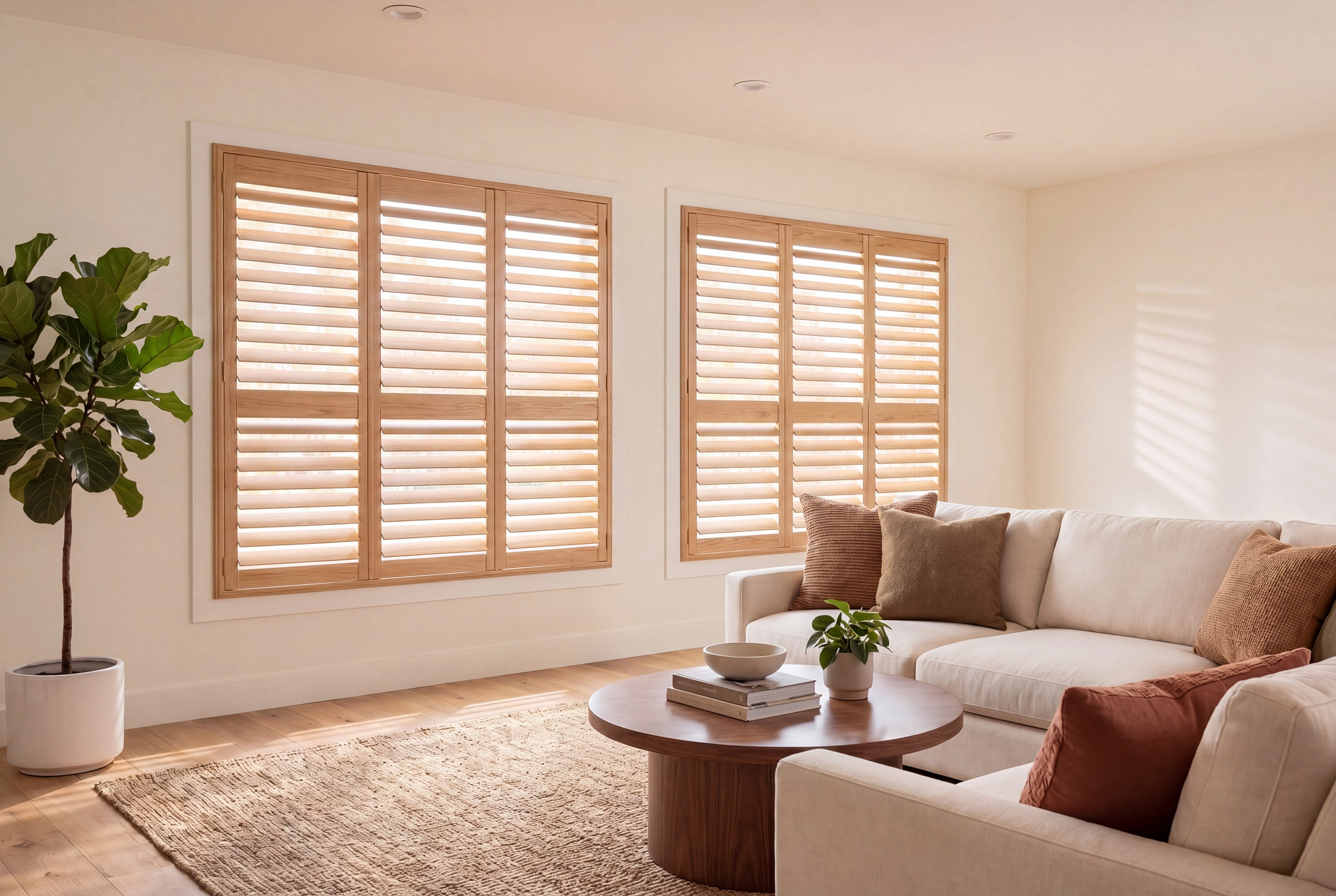
Wood Window Shutters: What to Know About Grain, Finish, and Room Fit
Author: Nigel Harris.
June 22, 2026.
Wood shutters bring a natural, tailored look to a room. They can feel warm, architectural, classic, or clean depending on the grain, finish, color, and configuration you choose. For many homes, wooden shutters are not just a window covering; they become part of the room’s built-in design.
Still, choosing wood shutters is not only about liking the look of wood. You also need to think about how much grain you want to see, whether a painted or stained finish works better, how the shutters will fit your windows, and whether real wood is the right material for each room.
This guide walks through the main considerations before choosing made-to-measure wood window shutters for your home.
What Makes Wood Shutters Different?
Wood shutters are valued for their natural character. Unlike more uniform materials, real wood shutters can show subtle variations in tone and grain, especially when you choose a stained finish. Even painted wood shutters can bring a refined, furniture-like quality because the material has depth, structure, and a crafted appearance.
Wood can work especially well when you want your window shutters to feel like part of the architecture rather than a temporary layer added to the window. Depending on the room, wood shutters interior applications may create a softer, warmer look than a purely synthetic finish.
You may be drawn to wood shutters if you want:
a natural material with visible character;
a premium, tailored finish;
a classic look that works across traditional and transitional interiors;
color and finish flexibility;
a made-to-measure solution that feels integrated with the window.
The right choice depends on the window, the room, and how you want the shutters to interact with the rest of your interior design.
Read also:
Hardwood vs Faux Wood vs Composite Shutters: Which Is Best?
Wood Grain: How Much Do You Want to See?
The grain is one of the biggest reasons to choose wooden shutters. It can be subtle, visible, warm, or almost hidden depending on the finish. Before choosing a color, it helps to decide whether you want the wood grain to be a design feature or simply want the benefits of real wood beneath a smooth painted surface.
Painted Wood Shutters for a Clean Architectural Look
Painted wood shutters are a strong choice when you want a crisp, clean appearance. White, off-white, and soft neutral finishes can make wood window shutters feel bright and architectural while still giving you the substance of a real wood product.
This option often works well when you want the shutters to coordinate with trim, molding, baseboards, or painted cabinetry. The grain is usually less visible than it would be with a stain, so the overall look feels more uniform.
Painted wood shutters may be the better fit if you want:
a bright and timeless look;
a finish that blends with existing trim;
a cleaner visual line around the window;
less visible grain variation.
Stained Wooden Shutters for Natural Warmth
Stained wooden shutters highlight the natural character of the material. Depending on the stain color, they can create a warm, traditional, rustic, or furniture-inspired effect.
A lighter stain can make the room feel natural and relaxed. A deeper stain can create contrast and make the window feel like a stronger design feature. Stained wood shutters are especially useful when you want to coordinate with flooring, beams, built-ins, doors, or other wood tones in the room.
This option works best when you want the grain to be part of the finished look, not something hidden under paint.
Subtle Grain vs. Prominent Grain
Not every wood finish feels the same. Some looks are quiet and understated, while others make the grain more noticeable. A subtle finish can support a calm, refined interior. A more pronounced grain can add texture and visual interest.
Think about how much attention you want the windows to receive. If the rest of the room already has strong patterns, bold finishes, or multiple wood tones, a quieter shutter finish may be easier to balance. If the room is simple, stained wood shutters can add warmth without adding clutter.
Finish Options for Wooden Window Shutters
The finish affects more than color. It changes how light reflects off the shutters, how the grain appears, and how connected the shutters feel to the rest of the room. For wooden window shutters, finish selection should be considered alongside trim color, wall color, flooring, furniture, and natural light.
White and Neutral Painted Finishes
White and neutral painted finishes are popular because they work with many interiors. They can make a room feel lighter, cleaner, and more open, especially when paired with lighter walls or trim.
A neutral painted finish can also help internal wood shutters blend into the architecture of the room. Instead of standing out as a separate feature, the shutters become part of the window opening.
This is often a good direction when you want the room to feel bright, balanced, and easy to update over time.
Natural and Stained Wood Finishes
Natural and stained finishes put more emphasis on the material itself. They allow the wood grain to show through and can make the shutters feel more like furniture or millwork.
When choosing a stain, compare it with other wood tones in the room. It does not always need to match perfectly, but it should feel intentional. For example, a warm stain can complement warm flooring, while a darker stain can create a defined frame around the window
Stained wood shutters may also work well in rooms where you want the window to become a focal point.
Matching or Contrasting with Trim
One of the most important decisions is whether your wood shutters should match the trim or contrast with it. Matching creates a seamless, built-in effect. Contrasting creates definition and can make the shutters stand out.
If your window trim is painted white, white painted wood shutters can look clean and integrated. If your trim is darker or natural wood, stained shutters may feel more connected to the room. If you want a stronger design statement, a contrast between shutter finish and wall color can help frame the window.
Finish Consistency in a Made-to-Measure Solution
With made-to-measure shutters, finish consistency matters. The shutters should look intentional across the full window, especially on larger openings or rooms with multiple windows.
A consultation can help you compare finish samples in the actual room. That matters because natural light, wall color, and surrounding materials can change how a finish appears throughout the day.
Where Wood Shutters Interior Applications Work Best
Wood shutters can work in many rooms, but they are not always the automatic choice for every space. Room function, moisture, heat exposure, window size, and the level of daily use should all shape the decision. The best wood shutters interior applications are usually the ones where the material supports both the design and the way you use the room.
Living Rooms and Formal Spaces
Living rooms, sitting rooms, and formal spaces are natural candidates for wood shutters. These rooms often benefit from a more finished, architectural look, especially when the windows are part of the main design view.
Wooden shutters can help control light while adding structure to the room. Painted finishes can keep the look clean and bright. Stained finishes can add warmth and make the window feel more connected to wood furniture, floors, or built-ins.
Bedrooms
Wood shutters can work beautifully in bedrooms when you want privacy, light control, and a calm finished look. The right louver size, panel layout, and frame choice can help create a balanced design that feels intentional rather than heavy.
For bedrooms, think about how much light you want in the morning, how much privacy you need at night, and whether the shutter finish should blend into the room or become a feature. Bedroom shutters often need to support comfort as much as style.
Dining Rooms, Offices, and Specialty Spaces
Dining rooms, home offices, libraries, and specialty spaces can be excellent places for real wood shutters. In these rooms, the window treatment often plays a visible role in the overall atmosphere.
A stained finish can make a dining room feel warmer. A painted finish can keep a home office bright and focused. For specialty windows, made-to-measure wood shutters can help preserve the shape of the opening while creating a tailored result.
Rooms with Moisture or Heat Considerations
Some rooms need extra material consideration. Kitchens, bathrooms, laundry areas, and rooms with higher humidity or heat exposure may require a different shutter material depending on the window location and daily conditions.
That does not mean wood is never possible in these rooms, but it does mean the choice should be reviewed carefully. If you are comparing bathroom shutters or kitchen shutters, ask how moisture, cleaning, and heat exposure may affect the best material recommendation.
Read more:
Full Height Wooden Shutters: Benefits, Style and What to Consider
Wood Window Shutters and Custom Fit
Wood window shutters are most effective when the fit is precise. A beautiful finish can lose impact if the panels feel awkward, the frame does not suit the opening, or the configuration makes the shutters difficult to use. Custom fit is where design and function come together.
Measurements Matter
Accurate measurement is essential for wood shutters. Window openings are not always perfectly square, and small differences can affect how the shutters sit, open, and close.
A made-to-measure process considers the full opening, not just width and height. Depth, trim, handles, obstructions, sill details, and window operation can all influence the final configuration.
Frame, Panel, and Louver Choices
The frame, shutter panels, and louver size affect how the finished shutters look and function. A frame can help create a clean transition between the shutter and the window opening. Panel configuration affects balance, access, and sightlines. Louver size changes the level of visibility, light control, and visual proportion.
For example, larger louvers can create a more open look on bigger windows, while smaller louvers may suit smaller openings or more traditional interiors. The best choice depends on the size of the window and the style of the room.
Why Consultation Helps
A consultation helps connect design preferences with practical requirements. You can compare finishes, review the window shape, check clearance, and discuss how the shutters should operate in the room.
This is especially useful with wood shutters because grain, finish, and fit all affect the final result. Seeing options in the room can help you choose a finish that works with your natural light, trim, flooring, and furniture.
Wood Shutters vs. Other Shutter Materials
Wood shutters are a strong option when you want natural character, finish flexibility, and a refined interior look. However, they are not the only shutter material to consider.
In some rooms, another shutter material may be recommended for easier maintenance, moisture resistance, or daily durability. That is why wood shutters vs. faux wood shutters is often a helpful comparison during the decision process.
Real wood shutters may be a strong fit when you value:
natural grain;
stained finish options;
warmth and texture;
a premium furniture-like appearance;
design flexibility for formal or highly visible rooms.
Another shutter material may be worth considering when the room has higher moisture, heavy daily use, or cleaning requirements that make a more resilient surface preferable.
The best choice is not always about which material is “better.” It is about which material is better for your window, your room, and the way you live.
What to Consider Before Choosing Real Wood Shutters
Before choosing real wood shutters, look beyond color alone. The best result comes from aligning the material, finish, layout, and room conditions.
Ask these questions before making a final decision:
Do you want visible grain or a smoother painted look?
Should the shutters match the trim or create contrast?
Is the room dry, humid, sunny, or exposed to heat?
How often will you open and adjust the shutters?
Do you want the window to blend in or become a focal point?
Does the window shape require a special configuration?
Which shutter frame will create the cleanest finished result?
What louver size feels proportional to the window?
Will the same finish be used across one room or multiple rooms?
How will the choice support long-term shutter maintenance
These questions help turn a style preference into a practical specification.
A Warmer Way to Shape Light and Style
Wood shutters can give your windows a more finished, intentional presence. With the right grain, finish, and room fit, they can soften daylight, add architectural structure, and bring warmth to your interior design.
The key is choosing wood shutters as a complete system, not as a color decision alone. Material, finish, frame, panel layout, louver size, and room conditions all work together. When those details are considered together, wood window shutters can feel natural, tailored, and built for the way you use your home.
If you are considering wooden shutters, start by looking at the rooms where warmth, grain, and a refined finish will make the biggest difference. Then use a professional consultationto compare options, confirm measurements, and choose a made-to-measure solution that fits both the window and the room.