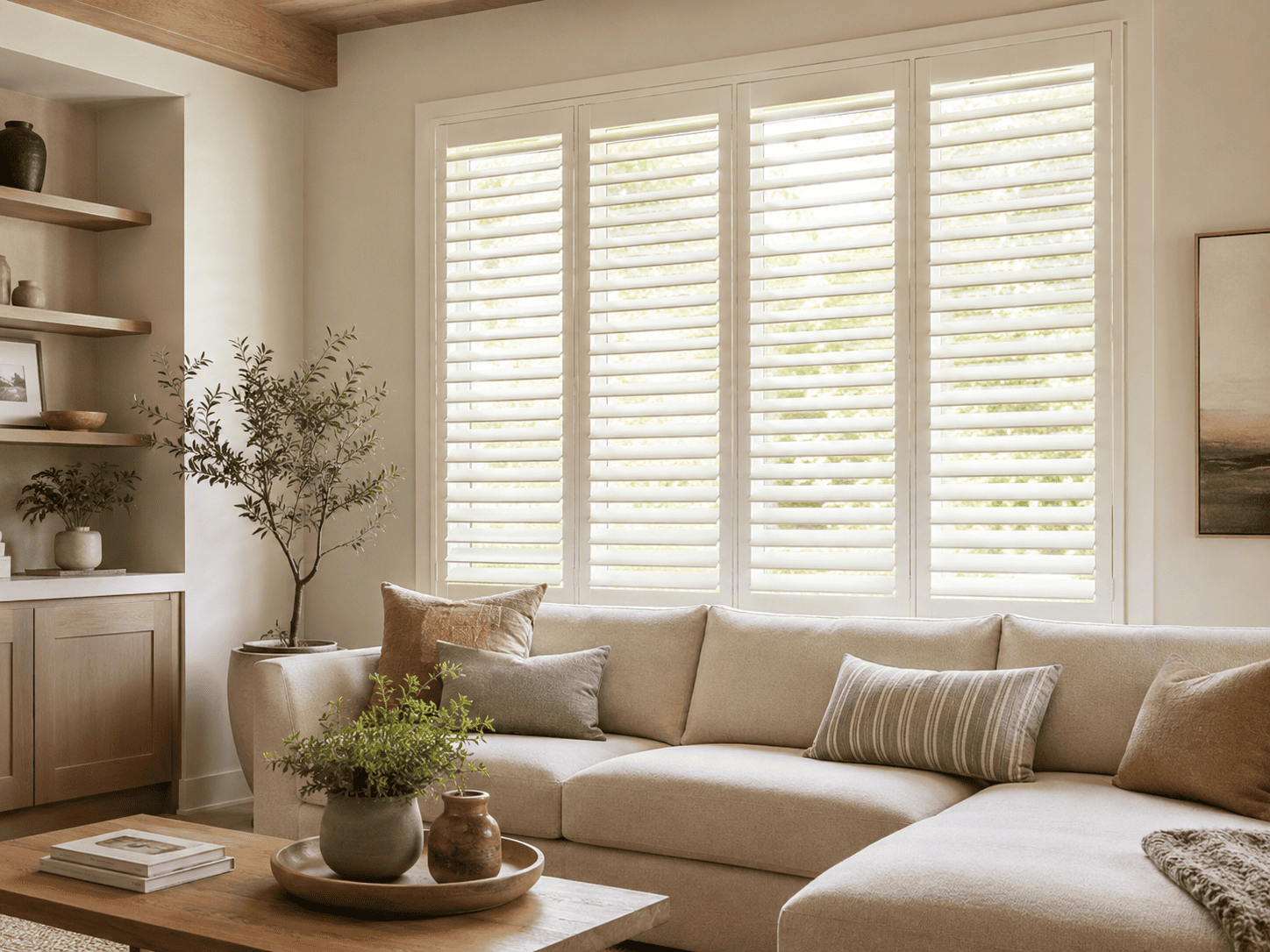
Are Shutters Outdated? What Makes Them Feel Current or Dated Today
Author: Nigel Harris
September 2, 2026.
Are shutters outdated? In most interiors, the answer is no. Their architectural appearance, adjustable louvers, and tailored proportions can work just as naturally in a contemporary renovation as they do in a traditional home.
However, shutters are not automatically timeless simply because they are a classic window feature. Color, louver size, frame profile, panel layout, and installation quality all influence whether the finished result feels current or connected to an older design trend.
The difference usually comes down to coordination. Shutters look most intentional when they relate to the window, trim, room palette, and architectural style instead of being selected as an isolated feature.
Are Window Shutters Outdated in Modern Homes?
Window shutters can still work exceptionally well in modern homes. In fact, their clean geometry and built-in appearance can support the structured, uncluttered look often associated with contemporary interiors.
The cleanest modern shutters tend to have:
Proportions that suit the size of the window
A finish that connects with nearby trim or surfaces
A frame that does not visually overpower the opening
Simple, consistent panel divisions
Louvers that provide the desired balance of light, privacy, and visibility
Modern does not always mean bright white or completely minimal. Warm neutrals, natural wood finishes, and subtle frame details can also feel current when they complement the rest of the room.
Likewise, traditional shutters do not automatically look dated. A more detailed frame or smaller louver may still feel entirely appropriate in a historic, transitional, or classically designed home. The goal is not to make every shutter look contemporary. It is to make the design feel deliberate.
Four Choices That Decide Whether Shutters Look Current or Dated
Several decisions shape the final appearance more than the age or general popularity of shutters. Considering these elements together produces a more cohesive result than choosing each option separately.
Color and Undertone
Color is often the first detail you notice, especially when shutters cover a large window or appear across several windows in the same room.
Bright white shutters can create a crisp, defined finish when the room already includes clean white trim, cabinetry, or architectural details. In a warmer interior, however, a cool white may feel disconnected from cream walls, beige upholstery, natural stone, or warm wood flooring.
In these spaces, cream window shutters, off-white finishes, or natural wood tones may feel more integrated. Gray can also work well in rooms with cooler finishes, provided the gray shares the same blue, green, or neutral undertones found elsewhere.
Matching every surface exactly is not always necessary. The more important goal is to avoid a shutter color that appears isolated from the room.
Louver Size and Window Scale
Louver size changes both the detail level of the shutter and the amount of visual activity around the window.
Larger louvers generally create broader, cleaner horizontal lines. They can be particularly effective on tall or wide windows where smaller louvers may produce a busier appearance.
Smaller louvers introduce more lines and may feel appropriate in compact windows, traditional interiors, or rooms with finer architectural detailing. However, they can make a large installation feel visually dense when the scale is not carefully considered.
Choosing the right louver size therefore depends on more than personal preference. Window dimensions, viewing distance, panel width, privacy requirements, and the style of the room should all influence the decision.
Fit, Frame, and Panel Layout
Even a well-chosen color can look dated when the shutters appear bulky, crowded, or poorly proportioned.
The frame should meet the surrounding trim cleanly, while the panel layout should relate to the window’s natural divisions. Vertical panel lines that align with window mullions generally create a more organized appearance than divisions placed without regard for the underlying architecture.
The choice between an inside or outside mount also affects how prominent the shutters look. An inside mount may create a more recessed, integrated result when the window has enough depth and no interfering hardware. An outside mount may be more practical for shallow openings or windows with obstructions, but the frame profile and surrounding wall space require careful consideration.
Understanding the available shutter frame types can help you evaluate how much visual detail the installation will add around the opening.
Overall Room Style
Shutters should support the room rather than compete with it.
In a minimalist space, a heavily detailed frame combined with small louvers and strong color contrast may introduce more visual activity than the room can comfortably carry. A simpler frame, broader louver, and restrained finish may feel more natural.
In a traditional room, the opposite may be true. An extremely plain configuration can feel disconnected from substantial molding, detailed cabinetry, or classic furnishings.
Transitional interiors offer more flexibility. You can combine clean shutter proportions with warmer colors, natural materials, and selected traditional details without making the room feel tied to one specific period.
Read also:
6 Unexpected Ways Interior Shutters Add Home Value
Shutters for Every Window Type & Shape: Bay, Arched, Doors & More
Why Do Shutters Look Outdated in Some Rooms?
When people ask, “Do shutters look outdated?” they are often responding to a specific installation rather than to shutters as a whole.
Common reasons include:
The finish has changed over time. Yellowing, uneven fading, scratches, and worn surfaces can make the shutters appear older than the surrounding room.
The color no longer relates to the interior. A finish chosen for a previous wall color or decorating style may look disconnected after the room changes.
The louvers feel out of scale. Too many narrow horizontal lines can make a large window feel busy, while very large louvers may overpower a small opening.
The frame is visually heavy. A bulky frame can reduce the apparent size of the window and compete with decorative trim.
The panel divisions interrupt the architecture. Awkward panel widths or misaligned vertical lines can make an otherwise attractive installation look less refined.
There are too many competing details. Decorative frames, prominent hardware, patterned furnishings, and substantial molding can create visual overload when they are not coordinated.
The shutters no longer operate cleanly. Misaligned panels or louvers that do not remain in position can make the installation feel neglected.
These issues do not mean shutters as a category are outdated. They indicate that the finish, proportions, condition, or surrounding design may need to be reconsidered.
Are Interior Shutters Outdated—or Simply Mismatched?
The age of the shutters alone does not determine whether they look current. Older interior shutters may still feel appropriate when they are well maintained, correctly fitted, and coordinated with the room.
At the same time, newly installed shutters can feel dated when their design does not suit the home.
Before deciding that an existing installation needs to be replaced, consider what is creating the dated impression:
Is the shutter color the only element that feels disconnected?
Are the frames too prominent for the window?
Do the panel divisions align with the glass?
Are the louvers appropriate for the size of the opening?
Does the room now have a different design direction?
Are condition or operation problems affecting the overall appearance?
If the shutters are well proportioned and in good condition, changes elsewhere in the room may create a stronger connection. Repeating the shutter color in the trim or another architectural detail, simplifying competing décor around the window, or adjusting the room palette may make the installation feel more intentional.
If the shutters are visibly worn, poorly fitted, difficult to operate, or fundamentally out of scale, changing the surrounding décor will not correct the underlying design problem. A new custom configuration may provide a cleaner result.
Read more:
Shutter Maintenance Guide: Cleaning, Repairs and Lifespan
Repair or Replace? The Signs Your Shutters Need Attention
How Custom Design Helps Prevent a Dated Look
A current-looking shutter installation is usually the result of decisions made for the specific window and room rather than a standard configuration applied everywhere.
With custom interior shutters, you can consider:
The actual width, height, and depth of the window
Existing handles, locks, sensors, and trim
The relationship between panel divisions and window mullions
The amount of frame detail the room can support
Louver proportions and desired sightlines
Color samples under the room’s natural and artificial light
How the shutters will open around furniture and nearby walls
Whether design details should remain consistent across several rooms
Shutters.com currently presents custom-made interior shutters with multiple finish, louver, frame, mounting, and operating options, allowing the configuration to be adapted to the window instead of treated as a fixed design.
This planning is especially important when several windows appear together. Small differences in panel width, frame depth, or alignment become more noticeable when repeated across an entire wall.
Consistency does not mean every window must have an identical configuration. A narrow window and a wide opening may require different panel layouts, but shared colors, louver proportions, and frame details can keep the room visually connected.
Choose Shutters That Belong in the Room
Shutters are not outdated, but certain combinations of color, scale, frame detail, and fit can make them feel disconnected from today’s interiors.
The most successful designs are not necessarily the trendiest. They are the ones that respect the proportions of the window, complement the architecture, and feel connected to the surrounding materials and colors.
During an in-home design consultation, you can compare finishes, louver sizes, frame profiles, and mounting options directly against your windows and interior. Your design consultant can also measure each opening and recommend a configuration that balances appearance with everyday operation.
A carefully planned shutter should look less like an accessory added to the room and more like an architectural feature that has always belonged there.