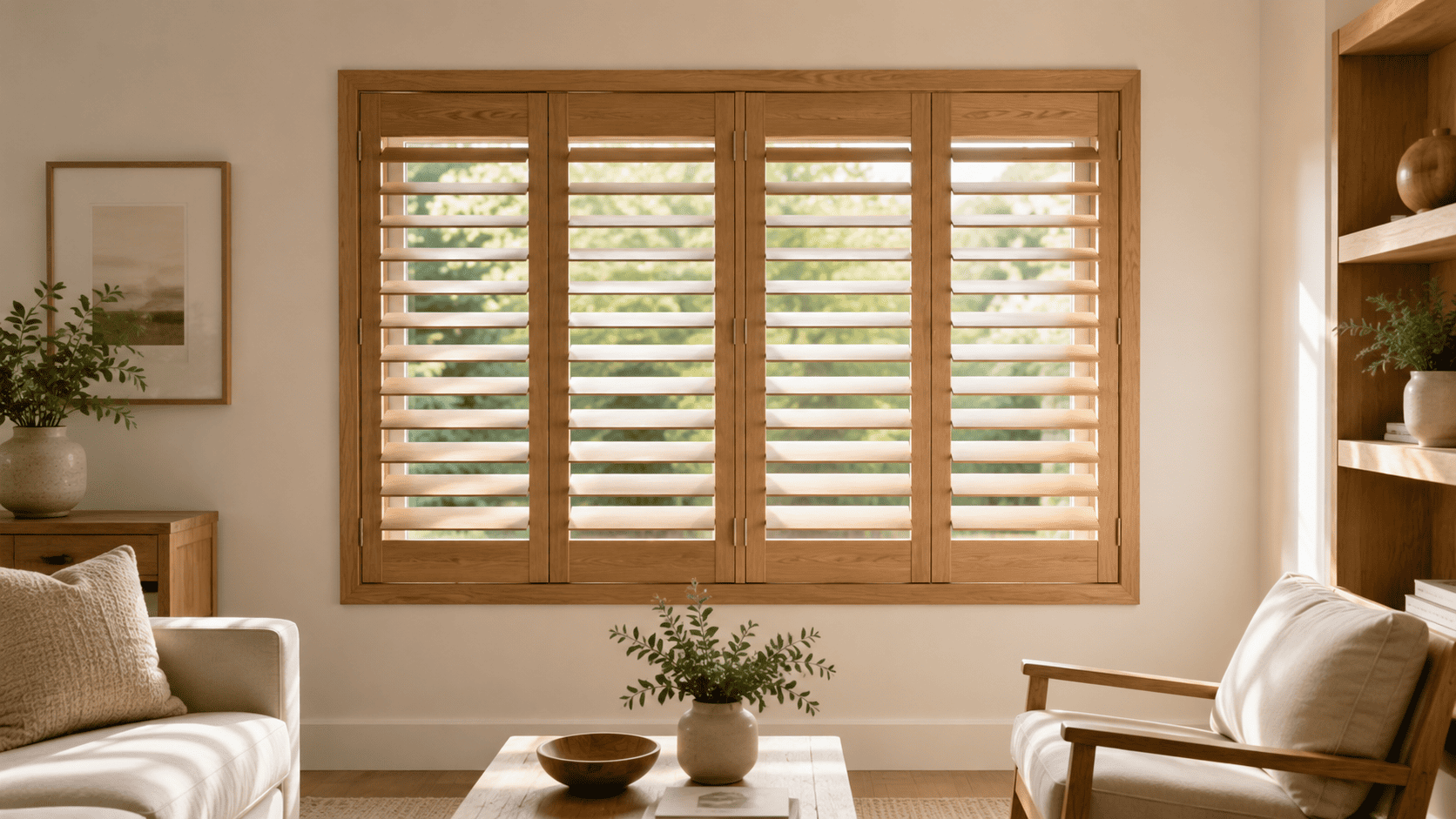
Do Wood Shutters Feel Too Heavy? How to Keep the Room Balanced
Author: Nigel Harris
September 2, 2026.
Wood shutters bring natural warmth, texture, and definition to a window. In a compact room, however, you may wonder whether that additional structure will make the space feel smaller, darker, or visually crowded.
The effect depends less on the wood itself and more on how the finish, louver size, frame, and surrounding décor work together. When wood shutters in small rooms are designed around the scale and lighting of the space, they can look tailored and inviting rather than heavy.
The goal is not to make the shutters disappear. It is to create enough visual balance that the window complements the room instead of dominating it.
Do Wood Shutters Make a Room Dark?
Wood shutters do not automatically make a room dark. The final result depends on the amount of daylight entering the window, the shutter finish, the position of the adjustable louvers and the colors used throughout the room.
It is also helpful to distinguish between actual darkness and visual weight. A room may still receive plenty of daylight while the window appears heavy because the shutters create strong contrast against the walls or introduce too many competing lines.
A deeper wood stain can absorb more light visually than a pale finish, but that does not mean you need to avoid richer tones completely. You can balance a darker finish with light walls, an uncluttered window area, and a simpler selection of furniture and accessories.
The direction of the room also matters. A bright, south-facing space may support a deeper wood tone more easily than a room with a small north-facing window. Consider the light throughout the entire day rather than evaluating the shutters under artificial lighting alone.
Wood Shutters in Small Rooms: What Makes Them Feel Heavy?
Several design decisions influence how prominent the shutters appear. Understanding these factors can help you identify where visual weight is coming from and how to reduce it.
Strong Contrast Between the Shutters and Walls
Dark wood shutters against bright white walls create a distinct outline around the window. This can be an effective statement, but it will naturally draw attention to the opening.
For a softer transition, choose a wood tone that shares an undertone with the surrounding room. Warm, pale walls tend to work well with honey, oak, or walnut-inspired finishes, while cooler neutrals may feel more coordinated with muted or less golden stains.
Contrast is not necessarily a problem. It simply needs to look deliberate. A dark shutter finish can feel balanced when the same depth appears in a few other details, such as a picture frame, side table, or cabinet.
Too Many Lines Within the Window
Every louver, panel, frame, and divider adds another line to the window. When several small components are placed within a compact opening, the result may appear busier than expected.
A cleaner arrangement with well-proportioned louvers and fewer unnecessary divisions can make the window feel more open. The right solution depends on the dimensions of the opening, so the design should be scaled to the individual window rather than selected according to a general rule.
A Frame That Overpowers the Opening
The shutter frame creates a finished transition between the window and the wall, but its width and profile also affect the visual result.
A frame that looks appropriate around a large living room window may feel too substantial around a narrow opening. In smaller rooms, a simpler frame profile can keep attention on the wood grain and louvers instead of adding another decorative element.
The surrounding trim should also be considered. Decorative molding, deep sills, and prominent casings already give the window structure. The shutter frame should work with these features rather than compete with them.
Several Unrelated Wood Tones
Wood shutters do not need to match every wooden surface in the room. In fact, trying to create an exact match can make the space feel overly coordinated.
The room can become visually unsettled, however, when the shutters, flooring, furniture, doors, and cabinets all have noticeably different undertones. Selecting one dominant wood family and limiting the number of competing tones can create a calmer result.
Read also:
Natural Wood vs Painted Shutters: Choosing the Right Look
Wood Window Shutters: What to Know About Grain, Finish, and Room Fit
Choose a Finish That Keeps Wood Shutters Balanced
Finish is one of the most important considerations when balancing wood shutters. It affects contrast, warmth, visibility of the grain, and how strongly the shutters define the window.
Consider a Lighter Wood Tone
Light and medium wood finishes can add warmth without creating a sharp visual boundary around the window. They are particularly useful when you want the grain to remain visible but prefer a softer, more casual appearance.
A light finish can also help wood shutters in small rooms coordinate with pale walls, natural flooring, and understated furniture. The wood still gives the room character, but the transition from wall to window feels less dramatic.
Use Dark Wood as a Controlled Accent
Dark wood shutters can work in a small room when they are treated as a focal point. The rest of the space should give that focal point room to breathe.
You might balance a deeper stain by using:
Light or midtone walls
Simple window trim
Pale upholstery or bedding
A limited number of dark accessories
Open space around the window
Avoid placing several large, dark pieces of furniture directly beside the shutters. Separating these elements prevents the entire side of the room from appearing visually dense.
Coordinate Undertones Instead of Exact Colors
Look at whether the wood has warm, cool, reddish, golden, or neutral undertones. These characteristics often matter more than whether two surfaces are the same shade.
For example, a medium-toned shutter and a darker floor can still coordinate when both share a warm brown base. Two similarly dark woods may clash when one has a red undertone and the other appears gray or yellow.
Reviewing finish samples inside the room can help you see these differences more accurately.
Use Louver Proportion to Keep the Window Visually Open
Louver size affects more than light control. It also changes the number of horizontal lines within the window and how much of the outside view remains visible when the louvers are open.
Wider Louvers Can Create a Simpler Look
Wider louvers generally create fewer horizontal divisions across the window. This can make the shutter feel cleaner and less visually busy, particularly when the room already contains patterned fabrics, shelving, or detailed furniture.
They can also preserve a broader view between the louvers when open. This may help a compact room feel more connected to the outdoors.
However, the largest available option is not automatically the best choice. Very wide louvers can overpower an especially narrow or short window. The proportion should feel appropriate for both the opening and the surrounding wall.
Smaller Louvers Add More Detail
Smaller louvers produce a more detailed and traditional appearance. They may suit rooms with classic trim, smaller-scale furniture, or other finely proportioned architectural elements.
Because they introduce more lines, they should be used carefully in rooms that already feel busy. A simple frame and a finish with limited contrast can help offset that additional detail.
Balancing Wood Shutters With Surrounding Design Details
The shutters are only one part of the room. Their visual weight will change depending on what you place beside, below, and across from the window.
Use the following wood shutter design tips to create a more balanced setting:
Repeat the wood tone selectively. One or two coordinating details can connect the shutters to the room without making every surface match.
Keep the nearby wall relatively quiet. Crowding the window with large artwork, shelves, or tall furniture can make the area feel congested.
Use lighter visual textures elsewhere. Pale textiles, clean surfaces, and open-legged furniture can offset the solidity of wood.
Coordinate hardware finishes. Shutter hardware, door handles, lighting, and cabinet hardware do not need to be identical, but their finishes should feel related.
Consider the flooring. When both the shutters and floor have strong wood grain, a rug can create separation and prevent the room from feeling overly wood-heavy.
Preserve space around the window. Leaving some visible wall around the shutters gives the installation a clearer outline and helps the room feel less crowded.
You do not need to apply every suggestion. Focus on the elements that have the greatest visual presence in your room.
Read more:
Choosing Shutter Colors & Finishes: White, Stained Wood & Painted Options
Hardwood vs Faux Wood vs Composite Shutters: Which Is Best?
Mounting and Panel Configuration Can Simplify the Look
Finish and louver size receive much of the attention, but the mounting method and panel layout can have an equally important effect on the finished window.
An Inside Mount Can Feel More Integrated
When the window has sufficient depth and no interfering handles or trim, an inside mount can position the shutters within the opening. This often creates a contained, architectural appearance and leaves more of the surrounding wall visible.
An outside mount may be more suitable when the opening is shallow or contains obstructions. Because it extends beyond the window opening, the frame becomes more visible and should be proportioned carefully in a small room.
The correct choice depends on the physical window rather than appearance alone. Precise measurements and a review of window operation are essential before selecting the mounting approach.
Keep the Panel Layout Purposeful
The panel configuration determines how many vertical divisions appear across the window and how the shutters open.
Fewer, wider panels may create a cleaner look, but they also require sufficient clearance when swung open. Multiple folding panels can use space differently, although too many divisions may make a small opening appear crowded.
The best layout should balance appearance with the way you plan to use the window. Consider whether you frequently open the panels completely or mainly adjust the louvers for privacy and daylight.
Wood Shutter Design Tips for Different Small Rooms
The same wood finish can produce a different effect depending on the room and the features surrounding the window.
In a small living room, keep tall cabinets and bulky seating away from the immediate window area. Repeating the shutter tone in one piece of furniture can create continuity without adding too much visual weight.
In a compact bedroom, a medium or dark finish can feel warm and comfortable when paired with light walls and simple bedding. Avoid combining heavily patterned textiles with highly detailed shutter frames.
In a dining nook, coordinate the shutters with the general undertone of the table rather than searching for an exact match. A rug or lighter seating can create visual separation between the wood surfaces.
In a home office, wider louvers and a restrained panel layout can help reduce visual clutter. Consider how the louvers will direct daylight around your screen and work area throughout the day.
See the Full Combination in Your Own Room
Wood shutters can bring warmth to a compact room without making it feel enclosed. The most balanced result comes from considering the finish, louver proportion, frame, mounting method, and surrounding décor as one complete composition.
During an in-home consultation, your design consultant can compare finishes in your actual lighting, take precise window measurements, and recommend a layout suited to the scale of the room. You can also review how the shutters will coordinate with existing trim, flooring, furniture, and hardware before making a final selection.
Installation services are available, and your design consultant will help coordinate installation details as part of the overall project experience.
With the right proportions and a considered finish, custom interior shutters can give a small room definition and natural warmth while keeping the overall space comfortable, bright, and visually balanced.