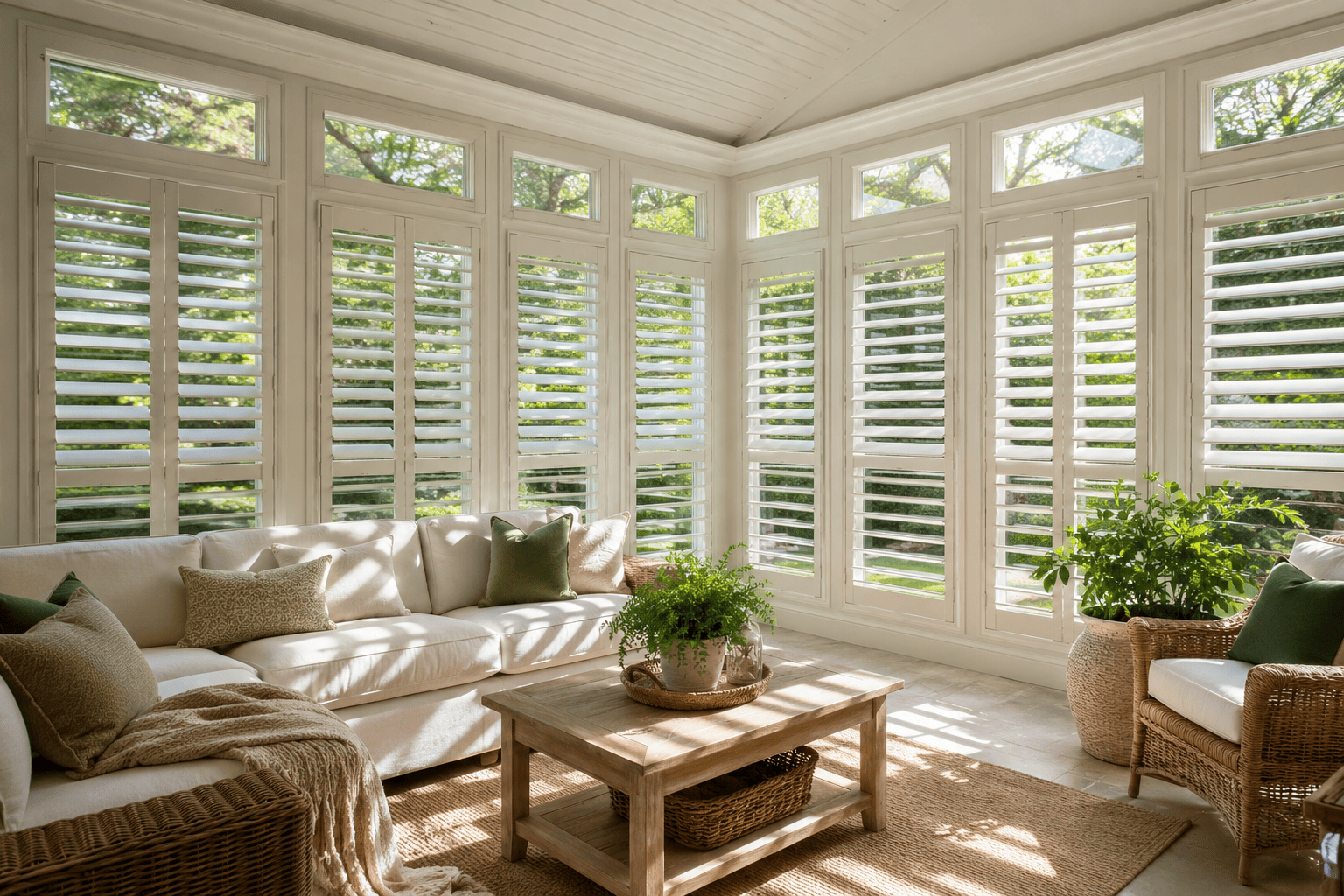
Sunroom Window Shutters: Managing Heat and Glare Through the Day
Author: Nigel Harris.
July 27, 2026.
A sunroom can feel calm and comfortable in the morning, intensely bright at midday, and noticeably warmer by late afternoon. Because light and temperature change throughout the day, choosing a window treatment for this space requires more than deciding what looks good.
Sunroom shutters give you adjustable control over direct sunlight, glare, privacy, and the view outside. Rather than covering every window in the same way, a made-to-measure design can account for the direction each window faces, when the room is used, and where the strongest sunlight enters.
Here is what to consider when choosing shutters for sunroom windows and planning a space that stays bright without becoming uncomfortable.
Why Sunroom Window Shutters Require a Different Plan
Sunrooms usually have more glass than other rooms. This is part of their appeal, but it also means that small decisions about louver position, panel layout, and window exposure can have a significant effect on everyday comfort.
Glare Changes as the Sun Moves
Glare rarely stays in one location. Morning sunlight may enter through one wall of windows, while afternoon light reaches the room from another direction.
It can reflect off:
Television and computer screens;
Glass tables and polished surfaces;
Light-colored floors;
Books, artwork, and decorative objects;
Seating areas positioned near the windows.
Sunroom shutters allow you to angle the louvers as the light changes. You can redirect harsh sunlight while still keeping part of the window open to daylight and outdoor views.
Heat Can Build Up Unevenly
Not every window contributes the same amount of heat. A wall that receives strong afternoon sun may feel much warmer than a window protected by a roof overhang, porch, tree, or nearby building.
This is why shutters for sunroom windows should be planned opening by opening. Independent panels and louver sections let you close the areas receiving the strongest sunlight without making the entire room feel closed off.
Multiple Windows Magnify Design Decisions
Panel widths, divider rails, frames, and louver sizes become more noticeable when repeated across several windows. A configuration that looks balanced on one opening may appear visually busy when installed around an entire sunroom.
Aligning panels with existing window divisions helps the finished project look intentional. It can also make the shutters easier to operate because each panel works with the structure of the window behind it.
How Sunroom Shutters Help Control Glare
The most effective shutters for sunroom glare do more than alternate between fully open and fully closed. They allow you to make smaller adjustments as sunlight shifts around the room.
Angle the Louvers to Redirect Direct Light
Tilting the louvers upward or downward can reduce direct glare while preserving general brightness. The ideal angle depends on the height of the sun, your seating position, and what you want to protect from direct light.
For example, you may angle the louvers to keep sunlight away from a television screen while allowing daylight to reach the ceiling. This can make the room feel bright without leaving the screen difficult to see.
Shutters can also provide useful privacy and light control after sunset, when a brightly lit sunroom may otherwise feel exposed from outside.
Use Separate Louver Sections for Targeted Control
A divider rail can separate the upper and lower louvers so each section can be adjusted independently. This can be helpful when the top of the window receives direct glare, but the lower part of the window still needs a softer level of daylight, privacy, or visual coverage.
The position of the divider rail should relate to the room and the window rather than being treated as a standard measurement. Useful reference points may include:
The height of nearby furniture;
A horizontal window division;
The back of a sofa or chair;
The level at which privacy is most important;
The area where direct sunlight usually enters.
Choose a Louver Size That Suits the Room
Louver size affects the view, the amount of visible structure across the windows, and the scale of the finished shutters.
Larger louvers generally create broader sightlines when open and can work well in spacious rooms with large windows. Smaller louvers create a more detailed appearance and may suit compact openings or a more traditional interior.
When choosing the right louver size, consider the dimensions of each window as well as the number of shutters that will be visible together. The goal is to create comfortable light control without making a glass-heavy room feel visually crowded.
Read also:
Shutters for Every Window Type & Shape: Bay, Arched, Doors & More
How Much Do Window Shutters Cost? Key Pricing Drivers Explained
Choosing Shutters for Sunroom Windows by Exposure
The direction your sunroom faces can help identify when glare and temperature changes are likely to be strongest. Local climate, landscaping, nearby buildings, and roof design will also affect the result.
East-Facing Sunrooms
East-facing windows typically receive stronger light in the morning. This may be welcome at breakfast but uncomfortable when the sunlight reaches a seating area or screen.
Adjustable louvers allow you to soften the first hours of direct sunlight and open the room more fully later in the day.
South-Facing Sunrooms
South-facing windows can receive sustained sunlight during much of the day. The exact intensity changes with the season and the depth of any roof overhang.
These rooms often benefit from flexible control across several windows. Separate panels or louver sections can help you respond to changing sun angles rather than closing every shutter at once.
West-Facing Sunrooms
West-facing windows often experience strong late-afternoon light. This can create noticeable glare and temperature buildup at the same time the room is being used for relaxing, dining, or entertaining.
For this exposure, consider how quickly and easily the panels can be adjusted. You may need to close the louvers on one wall while leaving another wall more open.
North-Facing Sunrooms
North-facing rooms generally receive softer indirect light, although conditions vary by location and season. Privacy, visual balance, and reducing occasional glare may be more important than managing intense direct sunlight.
In this setting, the shutters can often remain open for longer periods while still giving you the option to adjust the room when needed.
Can Sunroom Shutters Help With Temperature Changes?
Shutters can support a more comfortable environment by limiting direct sunlight at the window, but they should be considered one part of the room’s overall comfort plan.
Closing Louvers Can Reduce Direct Sun and UV Exposure
When direct sunlight reaches floors, furniture, rugs, and other interior surfaces, those materials can absorb heat and may also be exposed to UV rays. Over time, that exposure can contribute to fading, discoloration, and wear, especially in a glass-heavy room that receives strong daily sun.
Closing or angling the louvers before the strongest sunlight enters may help reduce direct sun and UV exposure on the surfaces inside your sunroom. The result will depend on the windows, shutter fit, sun exposure, louver position, and other features of the room.
Shutters do not replace appropriate windows, ventilation, air conditioning, heating, or UV-rated glass. However, they can be an important part of protecting the comfort and appearance of the space, especially when you want to reduce glare while helping preserve furniture, flooring, and finishes.
A Custom Fit Helps Limit Unnecessary Gaps
Large gaps around a window treatment allow more direct light to enter at the edges. Made-to-measure shutters are designed around the dimensions and features of each opening, helping create a cleaner and more consistent fit.
The design consultant should also check:
Window depth;
Trim and sill details;
Handles, locks, and cranks;
Screens;
Uneven or unusually shaped openings;
How the window needs to open;
Any furniture close to the frame.
These details help determine whether an inside or outside mount is more appropriate for each opening.
Material and Finish Should Suit the Environment
Sunrooms may experience stronger sunlight, condensation, humidity, and wider temperature changes than some other areas of the home.
Discuss how the available material and finish options are expected to perform in your specific room. The right recommendation will depend on the sunroom’s construction, climate control, ventilation, and exposure rather than appearance alone.
Sunroom Shutter Configurations to Consider
There is no single configuration that works for every sunroom. Window height, number of openings, privacy needs, and the way you use the room should guide the layout.
Full-Height Window Shutters
Full-height window shutters cover the complete opening and provide the greatest range of light and privacy control.
They are often a strong option when:
Direct sunlight reaches both the upper and lower portions of the window;
You need privacy after dark;
The windows extend close to the floor;
You want a consistent appearance across several openings;
The sunroom is used throughout the year.
Adding a divider rail can provide separate control over upper and lower louvers while keeping the full-height structure.
Cafe Style Shutters
Cafe style shutters cover the lower part of a window while leaving the upper section uncovered. They can work in a sunroom where lower-level privacy is the main concern and direct overhead light is welcome.
However, they provide less control over sunlight entering through the top of the window. If heat or high-angle glare is a major concern, full-height coverage may be more practical.
Panels Aligned With Window Divisions
In a sunroom with several windows, panel breaks should usually relate to the existing mullions and structural divisions.
This approach can:
Preserve a balanced view;
Keep vertical lines organized;
Make individual panels easier to open;
Avoid placing shutter stiles across important areas of glass;
Create a consistent rhythm around the room.
The exact number of panels should be based on the window dimensions and practical operation, not simply on making every panel the same width.
Motorized Tilt Options for Multiple Large Shutters
Because sunrooms often include several large windows, adjusting every shutter manually throughout the day can become repetitive. Motorized tilt options can make the space easier to manage, especially when the room receives changing sunlight from multiple directions.
With motorized tilt, you can adjust the louvers more conveniently as glare, privacy needs, and direct sunlight change. This can be especially useful for:
Large sunrooms with many shutter panels;
Hard-to-reach windows;
Rooms where glare shifts from one wall of windows to another;
Spaces used at different times of day;
Homes where convenience is a priority.
Motorized tilt does not change the need for careful measuring, panel planning, and material selection. It should be discussed as part of the overall shutter design so the final configuration supports both comfort and everyday use.
Design Choices That Keep a Sunroom Feeling Bright
Managing glare does not mean the room needs to look dark or enclosed. Several design decisions can help the shutters feel integrated with the architecture.
Coordinate the Finish With the Trim
A finish that works with the window trim can make the shutters feel like part of the room rather than an added layer.
White and other light finishes are common in bright spaces because they maintain an open appearance and work with many interior styles. Natural or stained finishes can also be effective when they coordinate with flooring, beams, furniture, or other wood details.
Keep Repeated Lines Consistent
A sunroom may place many shutter panels within the same field of view. Consistent divider rail heights, aligned panel breaks, and coordinated frames help prevent the room from looking fragmented.
Where window dimensions vary, the design may need to balance exact alignment with practical operation. A custom plan can determine which lines should remain consistent and where individual openings require a different solution.
Protect the View You Value Most
Before deciding on panel layouts, identify the windows that provide the best outdoor views. Wider sightlines or fewer panel divisions may be preferable in these areas.
Other openings may need more privacy or glare control. Not every window has to use an identical configuration, but the designs should relate to one another so the room still feels cohesive.
Read more:
7 Benefits of Shutters for Your Home
6 Unexpected Ways Interior Shutters Add Home Value
What to Check Before Choosing Sunroom Shutters
Before your consultation, observe how the room changes over a full day. Notes or photographs taken at different times can make it easier to explain where the main comfort problems occur.
Consider the following questions:
Which windows receive direct sunlight in the morning?
Where is glare strongest in the afternoon?
Does sunlight reach a television, computer, dining table, or favorite chair?
Which furniture, rugs, floors, or decor pieces receive the most direct sunlight and may need better protection from UV exposure?
Which windows need privacy during the day?
How exposed does the room feel after dark?
Are there handles, locks, cranks, or screens that need clearance?
Do any windows need to open frequently?
Is there condensation or noticeable humidity?
Are some windows protected by roof overhangs or landscaping?
Do you want all shutters to match, or do different areas need different configurations?
Which outdoor views should remain as open as possible?
Would motorized tilt make it easier to adjust multiple large shutters throughout the day?
You may also find it helpful to review other shutters by room before deciding which priorities matter most in your sunroom.
Sunroom Shutters FAQs
These common questions can help clarify what sunroom window shutters can realistically do and how to approach the design.
Do Sunroom Shutters Help Protect Furniture and Floors From UV Rays?
Sunroom shutters can help reduce direct UV exposure by letting you close or angle the louvers when the sun is strongest. This may help protect furniture, floors, rugs, and finishes from fading over time. They do not block all UV rays in every condition, but they can be a practical layer of protection in a bright room with many windows.
Do Sunroom Shutters Block All Heat?
No window shutter can eliminate every temperature change in a glass-heavy room. Shutters can help you manage direct sunlight at the window, which may improve comfort, but the result also depends on window performance, ventilation, climate control, roof design, and outdoor conditions.
Can Shutters Reduce Glare Without Making the Room Dark?
Yes. Adjustable louvers allow you to redirect direct light rather than blocking all daylight. You can close the shutters receiving harsh sunlight and leave other sections more open.
Are Shutters Practical for a Sunroom With Many Windows?
They can be, especially when the panel layout is planned around the existing window divisions. Made-to-measure shutters help keep repeated frames and panels visually organized while allowing different areas to be adjusted independently.
Should Every Sunroom Window Use the Same Configuration?
Not necessarily. Windows facing different directions may have different light, heat, privacy, and operational requirements. The finishes and major design lines can remain consistent even when the panel or louver configuration changes.
What Is the Best Shutter Color for a Sunroom?
The best finish depends on the trim, interior palette, natural light, and style of the room. Light finishes can reinforce an airy appearance, while stained or deeper finishes can connect the shutters to architectural woodwork and furniture.
Create a Sunroom That Stays Comfortable Throughout the Day
The right sunroom shutters should help you respond to the room as conditions change. You should be able to soften morning glare, limit strong afternoon sunlight, create privacy in the evening, and open the louvers when you want a clearer outdoor view.
During an in-home shutter consultation, your design consultant can measure each opening, review sun exposure and clearance requirements, and recommend an appropriate louver size, panel layout, material, and finish.
Your design consultant will also help you schedule installation during your consultation when placing your order. With each opening planned as part of the complete room, your sunroom window shutters can provide practical control while maintaining the bright, finished appearance that makes the space enjoyable.