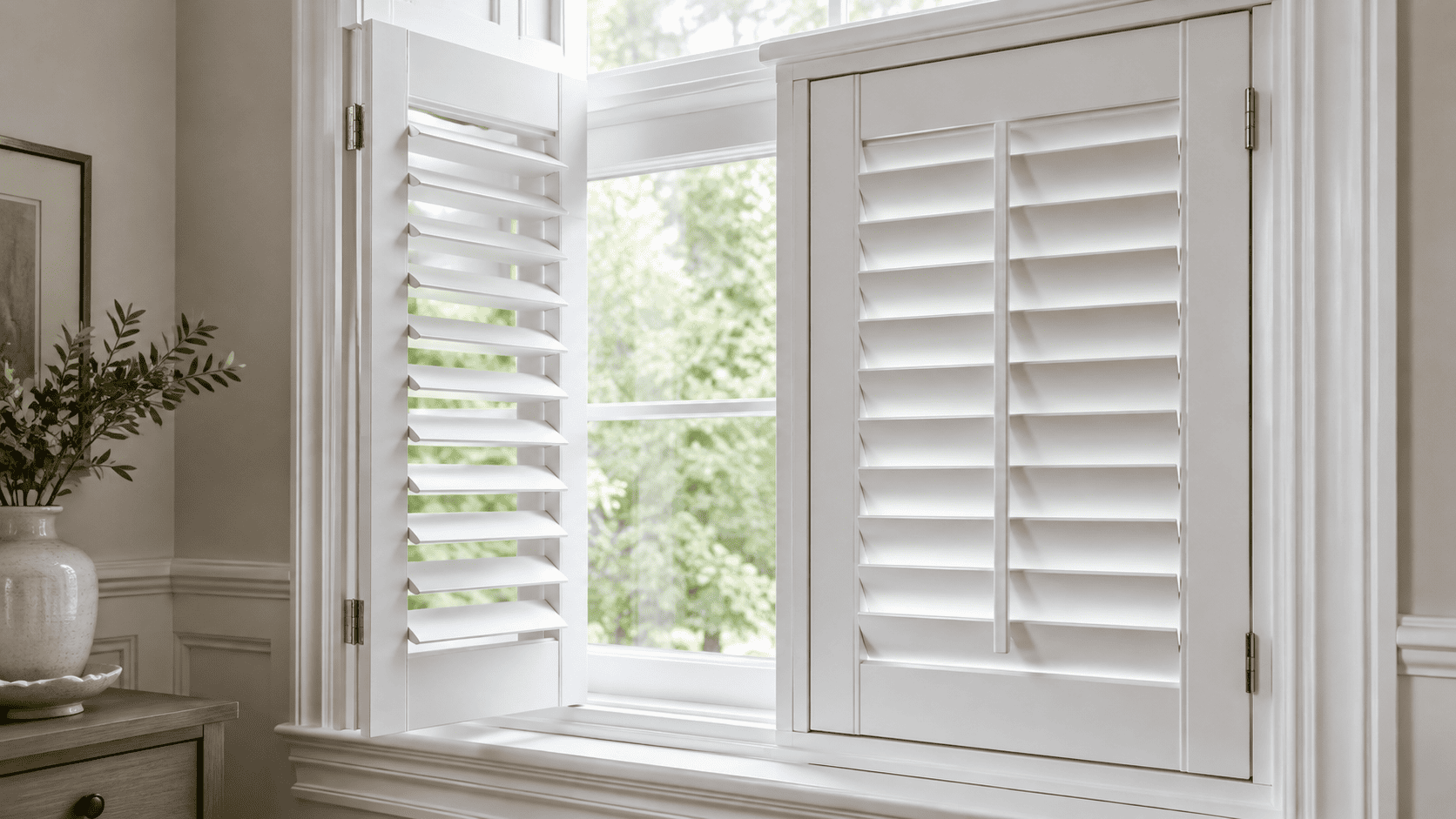
What Is a Shutter Stile? A Quick Glossary Guide
Author: Nigel Harris
August 24, 2026.
A shutter panel may look simple, but several carefully proportioned components work together to create its shape and support its movement. One of the most important is the shutter stile.
The stile is the vertical structural member along each side of a shutter panel. It helps form the panel’s perimeter, connects with the horizontal rails, and creates the side boundaries around the louvers. Its width also influences how substantial, open, or balanced the finished shutter looks.
This guide explains where the stile sits, how it differs from nearby components, and why it matters to custom shutters.
What Is a Shutter Stile?
A shutter stile is one of the two vertical side members of an individual shutter panel. One stile runs down the left side, and the other runs down the right. Together with the horizontal top and bottom rails, they form the main structure around the louvers.
In basic woodworking terminology, stiles are vertical members and rails are horizontal members. The same distinction applies to shutters:
Stiles create the vertical sides.
Rails create the top and bottom edges.
Louvers span the space between the stiles.
Other components may divide, operate, or attach the panel.
The stile is not the stationary frame installed around the window opening. It belongs to the movable panel. When you swing a hinged panel open, the stiles move with it, while the surrounding frame generally remains fixed.
This distinction is helpful when reviewing the parts of a shutter, because the panel and frame perform different jobs.
Where Is the Stile on a Shutter Panel?
To find the stile, look at the outer vertical edges of one movable panel. First separate the panel visually from the frame around it; the stile is part of the panel.
Left and Right Sides of the Panel
A rectangular shutter panel typically has a left stile and a right stile. Each extends from the top rail to the bottom rail.
On a pair of panels, the inner stiles meet near the center of the window when the shutters close. The outer stiles sit closer to the frame and may carry hinges or other hardware, depending on the configuration.
Beside the Louver Ends
The louvers sit between the stiles. Each louver extends horizontally across the panel, with its ends supported or connected near the inside edges of the vertical members.
When you learn what a louver is the stile provides an easy reference: the louver is the adjustable horizontal element, while the stile is the fixed vertical member beside it.
Inside the Shutter Frame
The shutter frame surrounds the panel and helps connect the complete unit to the opening or nearby trim. The stile sits inside that frame when the panel is closed.
A stile on a shutter should therefore not be confused with the vertical side of the installation frame. They may appear next to each other, but only the stile moves with the panel.
Read also:
Rustic Window Shutters: Design Ideas, Finishes and What Creates the Look
Modern Shutters: Design Features, Finishes and What Creates a Contemporary Look
Why the Shutter Stile Matters to Panel Structure
The stile is more than a decorative border. It helps organize adjoining components and allows the shutter to function as a complete panel.
It Forms the Panel Perimeter
The stiles and rails create the panel’s outer structure. This perimeter establishes its basic dimensions and surrounds the louvered area.
Properly proportioned vertical members provide firm sides for the horizontal components. On specialty-shaped shutters, equivalent structural members may follow angles or curves while still defining and supporting the panel outline.
It Connects With the Rails
The top and bottom rails meet the stiles at the panel corners. A divider rail may also extend between the stiles when the design includes separate upper and lower louver sections.
Construction methods vary, but vertical stiles and horizontal rails always work together as an assembly.
It Supports Hardware Placement
Hinges are commonly positioned along an outer stile so the panel can swing from the frame or from an adjacent panel. Other hardware, such as a panel pull or panel lock, may also sit on or near a stile when appropriate.
Placement must account for reach, movement, alignment, and secure attachment, so stile dimensions must suit the panel layout.
It Contributes to Alignment
A well-made stile helps the panel look straight and properly integrated with the rails and louvers. This becomes more noticeable on taller or wider panels, where small alignment issues can be easier to see.
Material, joinery, rail dimensions, hardware, and installation also contribute to performance.
How Shutter Stile Width Affects Proportions
Stile width determines how much solid material surrounds the louvered area, changing whether the panel appears lighter, more substantial, traditional, or streamlined.
Wider Stiles Create a Stronger Border
A wider shutter stile creates a more pronounced vertical outline. It can help a large panel look appropriately grounded, especially when the window has broad trim or substantial architectural details.
On a narrow window, however, very wide stiles may reduce the apparent openness of the louvered area and make the panel feel heavier than the opening requires.
Narrower Stiles Emphasize the Louvers
A comparatively narrow stile leaves more visual space for the louvers. That can create a lighter appearance and complement simpler trim or a cleaner interior style.
The stile still needs enough width for construction and hardware, so the narrowest option is not suitable for every configuration.
Panel Count Changes the Visual Rhythm
A single panel has two vertical stiles. A two-panel arrangement introduces additional lines where the panels meet. Wider openings with several panels create a stronger rhythm of stiles across the window.
Balanced proportions depend on the complete layout, including:
Total window width and height;
Number and width of panels;
Selected louver size;
Surrounding frame and trim;
Center openings and folding arrangements.
Coordinating these lines helps the shutter avoid looking too segmented or too sparse.
Louver Size and Stile Width Work Together
Larger louvers create fewer horizontal lines and a broader view when open. Smaller louvers create a tighter pattern. The stile provides the vertical border around either choice.
When choosing the right louver size, consider how its scale relates to the stile and rails. A large louver with a well-scaled stile can feel open and architectural, while a smaller louver may create a more detailed look. The best combination depends on the opening and room.
Parts of a Shutter Stile and Related Terms
People sometimes search for the “parts of a shutter stile,” but a stile is generally treated as one complete structural member. It is more useful to understand the components that connect to it or sit beside it.
Rails
Rails are the horizontal members that meet the stiles. The top rail forms the upper edge of the panel, and the bottom rail forms the lower edge.
Their dimensions may vary, but they should still look coordinated with the stiles.
Louvers
Louvers are the horizontal slats within the panel. They rotate to help manage daylight, privacy, and the outward view.
Their ends sit between the stiles, making the inner stile edges part of the boundary around the adjustable area. Clean spacing allows the louvers to move without looking uneven.
Divider Rail
A divider rail is an additional horizontal member between the top and bottom rails. It may separate louver sections that can be adjusted independently.
Because it extends from one stile to the other, its position affects function and proportion. Aligning it with a sash, lock, or architectural line can make the treatment look more intentional.
Frame, Hinges, and Panel Hardware
The frame is the stationary structure around the panels. Hinges connect a moving panel to the frame or another panel. Pulls and locks may be added when they improve daily operation or stability.
These pieces relate to the stile but are not part of it.
Shutter Stile vs. Similar Vertical Components
Several vertical lines may appear in an installation. Identifying the stile prevents confusion when reviewing layouts.
A shutter stile is not:
The side of the installation frame: The frame stays around the opening while the panel moves.
A tilt bar or operating mechanism: This component adjusts the louvers; the stile forms the panel side.
The edge of the window trim: Existing casing belongs to the architecture around the window.
The center meeting line itself: Two inner stiles create that line, but each remains part of its own panel.
This vocabulary is especially useful when comparing inside and outside mounting. Mounting describes where the shutter frame sits relative to the opening; stile describes a component within the panel.
Read more:
Stained Shutters vs Painted Shutters: Which Finish Is Right for Your Home?
Cafe Shutters: When Half-Window Coverage Makes Sense
What to Look for in a Well-Proportioned Shutter Stile
You do not need to calculate stile dimensions yourself, but knowing what to observe can help you evaluate a proposed design.
Look for a stile that:
Feels proportional to the panel’s height and width;
Coordinates with the top, bottom, and divider rails;
Leaves appropriate space for the louvered area;
Supports the selected hinge and hardware configuration;
Creates balanced vertical lines across multiple panels;
Relates well to the frame, casing, and window shape;
Avoids making a small opening look crowded;
Gives a large panel enough visual structure.
Evaluate the complete window, because a stile may look different when repeated across a wide bay, tall opening, or several adjacent windows.
For specialty-shaped windows, the panel structure may include angled, curved, or differently proportioned members. Preserving the window’s geometry may matter more than matching proportions used on a standard rectangle.
How Stile Design Is Decided for Custom Shutters
Stile design is established as part of the complete shutter specification and should respond to the actual opening.
During an in-home consultation, a design professional can review window dimensions, recess depth, trim, panel layout, operating clearances, and surrounding architecture. The design may account for:
Panel height, width, and quantity;
Hinge locations and opening direction;
Louver size;
Rail and divider-rail placement;
Material and construction limits;
Window handles, locks, cranks, or sensors;
Inside- or outside-mount requirements;
Desired visual weight and sightlines;
How often the panels will be opened.
Some proportions may be standard, while others depend on panel scale and configuration. The goal is a panel that looks resolved and operates correctly.
Accurate measurement is important because the stile is one of several visible lines that must fit within the opening. A custom design can account for windows that are uneven, unusually tall, particularly wide, or shaped in a way that makes standard proportions less effective.
A Small Detail That Shapes the Entire Panel
The shutter stile is the vertical member along each side of a shutter panel. It joins the rails, borders the louvers, supports certain hardware configurations, and contributes to structural and visual balance.
Stiles, rails, louvers, frames, hinges, and optional hardware must work together. Coordinated dimensions and placement make the finished shutters feel intentional.
Use the stile as a reference point when reading diagrams and comparing designs, then consider how its proportions relate to the full window. For a window-specific recommendation, an in-home consultation can translate these technical details into a custom configuration that fits the opening and complements the room.