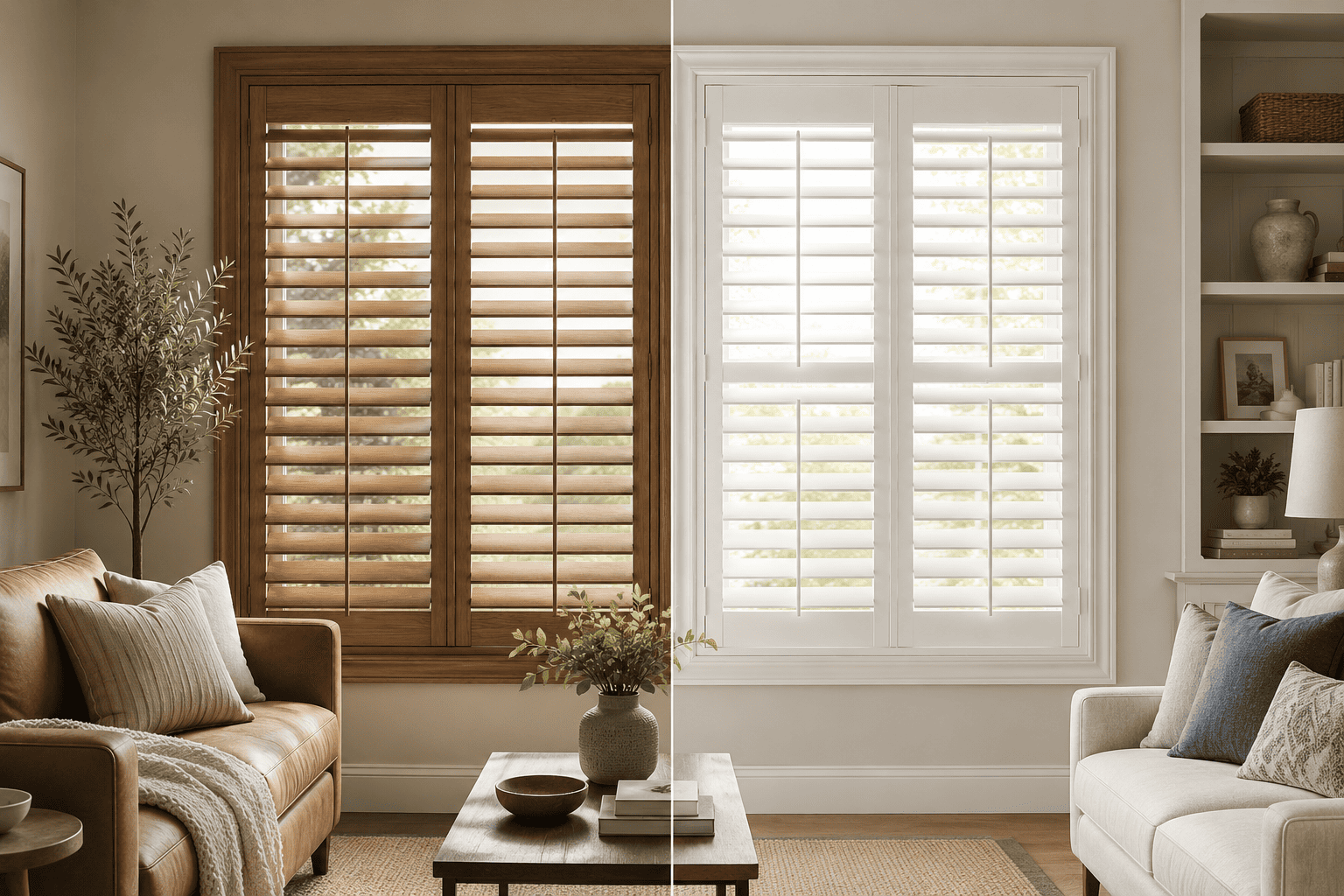
Stained Shutters vs Painted Shutters: Which Finish Is Right for Your Home?
Author: Nigel Harris.
June 22, 2026.
Choosing between stained shutters and painted shutters is about more than color. The finish affects how your shutters look in the room, how much natural wood character shows through, how easy they are to coordinate with trim, and what kind of upkeep you should expect over time.
If you are comparing stained wood shutters, wood stained shutters, or the idea of painting shutters, the right choice usually comes down to your home’s architecture, your interior style, and how much visual contrast you want around your windows.
Stained Shutters vs Painted Shutters: What Is the Main Difference?
Both finishes can create a polished, custom look, but they do it in different ways. Stained shutters highlight the natural qualities of wood, while painted shutters create a cleaner, more uniform surface.
What stained shutters bring to a room
Stained shutters are designed to show the grain, tone, and character of wood. Instead of covering the surface completely, the stain enhances the material underneath. This can make the window feel warmer, richer, and more connected to other wood elements in the room.
Stained finishes often work well when you want your shutters to feel like part of the home’s architecture rather than just a window covering. They can coordinate with hardwood floors, ceiling beams, built-ins, furniture, or stained trim.
What painted shutters bring to a room
Painted shutters create a smooth, solid-color finish. They are often chosen when you want the shutters to blend with white trim, match a wall color, or create a crisp contrast against darker interiors.
If your goal is a clean, flexible look, painted shutters can be easier to coordinate across multiple rooms. White, off-white, soft gray, black, and other neutral paint colors can help the shutters feel intentional without competing with the rest of the space.
Read also:
What Are Shutters? A Simple Overview for Homeowners
Choosing Shutter Colors & Finishes: White, Stained Wood & Painted Options
Appearance: Stained Wood Shutters vs Painted Shutters
The finish you choose changes the visual weight of the window. Before deciding, think about whether you want the shutters to stand out as a design feature or quietly support the room’s overall style.
Stained wood shutters create warmth and depth
Stained wood shutters are a strong choice when you want texture and natural variation. Because wood grain remains visible, the finish can add depth even in a simple room.
They tend to suit interiors with:
Traditional or transitional details;
Warm wood flooring;
Rustic, craftsman, or classic design elements;
Natural materials such as leather, stone, linen, or wood furniture;
Rooms where you want the window to feel rich rather than minimal.
Darker stains can make the shutters feel more dramatic and substantial. Lighter stains can keep the room softer while still showing natural wood character.
Painted shutters create a cleaner and more consistent look
Painted shutters are often the better fit when you want visual consistency. Because the finish covers the wood surface, the shutters can look more streamlined and uniform.
They tend to suit interiors with:
White or painted trim;
Modern shutters and cleaner design lines;
Light, neutral palettes;
Coastal, transitional, or contemporary interiors;
Rooms where you want the shutters to blend into the architecture.
Painted shutters can also help unify windows across a whole-home project, especially when different rooms have different flooring, furniture, or wall colors.
Upkeep: What to Expect From Stained Shutters and Painting Shutters
Maintenance expectations should be part of the decision from the beginning. Both stained and painted shutters can be practical, but the finish affects how dust, small marks, and surface wear may appear.
Stained shutters and natural variation
Stained shutters can be forgiving in rooms where natural texture is part of the design. Because the grain is visible, minor variation may feel less noticeable than it would on a flat painted surface.
However, stain also makes the quality of the wood and finish more visible. If you choose wood stained shutters, the final result depends heavily on good material selection, careful finishing, and a consistent match with the rest of the room.
Painted shutters and surface consistency
Painted shutters are easy to coordinate, but a smooth painted finish can make small chips, scuffs, or dust more visible depending on the color and sheen. Lighter painted finishes may show dust less dramatically, while darker painted finishes can show fingerprints or marks more easily.
If you are considering painting shutters after installation, keep in mind that refinishing can be more complex than painting a wall. Louvers, frames, hinges, and panel edges all need careful preparation to avoid uneven coverage or restricted movement.
Room Suitability: Where Each Finish Works Best
Your room’s function matters. Light exposure, humidity, furniture, flooring, and trim all influence whether stained or painted shutters will feel more natural in the space.
Living rooms and dining rooms
Living and dining spaces are often strong candidates for stained shutters when the room already includes visible wood tones. A stained finish can make the window feel warmer and more furniture-like.
Painted shutters may be better when the room has painted millwork, lighter walls, or a more formal look. They can also help dining rooms feel polished while still offering practical control over glare, privacy, and changing light throughout the day.
Bedrooms and home offices
Painted shutters often work well in bedrooms and offices because they can create a calm, clean background. A finish that coordinates with trim or wall color can make the room feel quieter and less visually busy.
Stained shutters can still work beautifully in these rooms when you want warmth, especially in a bedroom with wood furniture or a home office with built-in shelving.
Kitchens and bathrooms
In moisture-prone or high-use rooms, the finish should be considered alongside material, ventilation, and cleaning needs. Painted shutters are often chosen for kitchens and bathrooms because they can create a bright, clean look and coordinate with cabinetry or trim.
Stained shutters may work better in nearby dining areas, breakfast nooks, or powder rooms where you want a warmer accent and the room conditions are suitable for the selected material and finish.
Read more:
White Window Shutters: Why They Still Look Modern and Premium
Are Black Shutters a Good Idea? When They Work (and When They Don’t)
Style Fit: When Stained Shutters Make More Sense
Stained shutters are usually the stronger choice when you want the shutters to add character rather than disappear into the trim. They can make the window feel like a crafted feature, especially in rooms where wood already plays an important role.
You may prefer stained shutters if:
You want the natural grain of wood to remain visible;
Your home has stained trim, wood floors, exposed beams, or built-ins;
You like warmer interiors with texture and depth;
You are designing around rustic window shutters or traditional details;
You want the shutters to feel more like furniture than trim.
The key is coordination. The stain does not need to match every wood surface exactly, but it should feel intentional next to the room’s dominant tones.
Style Fit: When Painted Shutters Make More Sense
Painted shutters are usually the stronger choice when you want a clean, adaptable finish. They can support many different interiors without requiring every wood tone in the room to coordinate perfectly.
You may prefer painted shutters if:
Your trim is painted white, cream, gray, or black;
You want a crisp, architectural window treatment;
You are planning custom interior shutters for several rooms;
You prefer modern, coastal, or transitional design;
You want the shutters to blend with the window frame or wall color.
Painted shutters can also be useful when you are updating a room over time. Because neutral paint colors are flexible, they may continue to work even if you change furniture, rugs, or wall colors later.
Should You Choose Factory-Finished Shutters or Paint Shutters Later?
If you already have shutters and are thinking about painting shutters, refinishing may seem like an easy update. In practice, it depends on the existing material, finish condition, and the quality of preparation.
For new shutters, choosing the right finish from the start is usually the cleaner path. A professional finish is applied with the shutter components, proportions, and operation in mind. This can help maintain a more consistent surface across louvers, panels, frames, and edges.
If you are repainting older shutters, consider:
Whether the existing finish is peeling, glossy, or uneven;
Whether the louvers still move smoothly;
Whether the frame and panels have surface damage;
Whether the new color will require heavy coverage;
Whether replacement would create a better long-term result.
A shutter measurement appointment can also help you compare finish options in the room, not just on a screen or sample card.
Choosing a Finish You’ll Be Happy to Live With
The best finish is the one that fits your home’s design and your maintenance expectations. Stained shutters are ideal when you want warmth, visible wood grain, and a more character-rich look. Painted shutters are ideal when you want a crisp, consistent finish that coordinates easily with trim, walls, and multiple rooms.
Before making the final decision, look at the room as a whole: flooring, trim, furniture, wall color, natural light, and the mood you want the window to create. A free in-home shutter consultation can help you see how each finish will work with your actual space, so your shutters feel intentional from the first day they are installed.