What Is a T-Post on Shutters? When and Why It Is Used
Author: Nigel Harris
August 24, 2026.
A wide window may look like one simple opening, but a practical shutter layout must account for panel size, hinge placement, visual balance, and everyday operation.
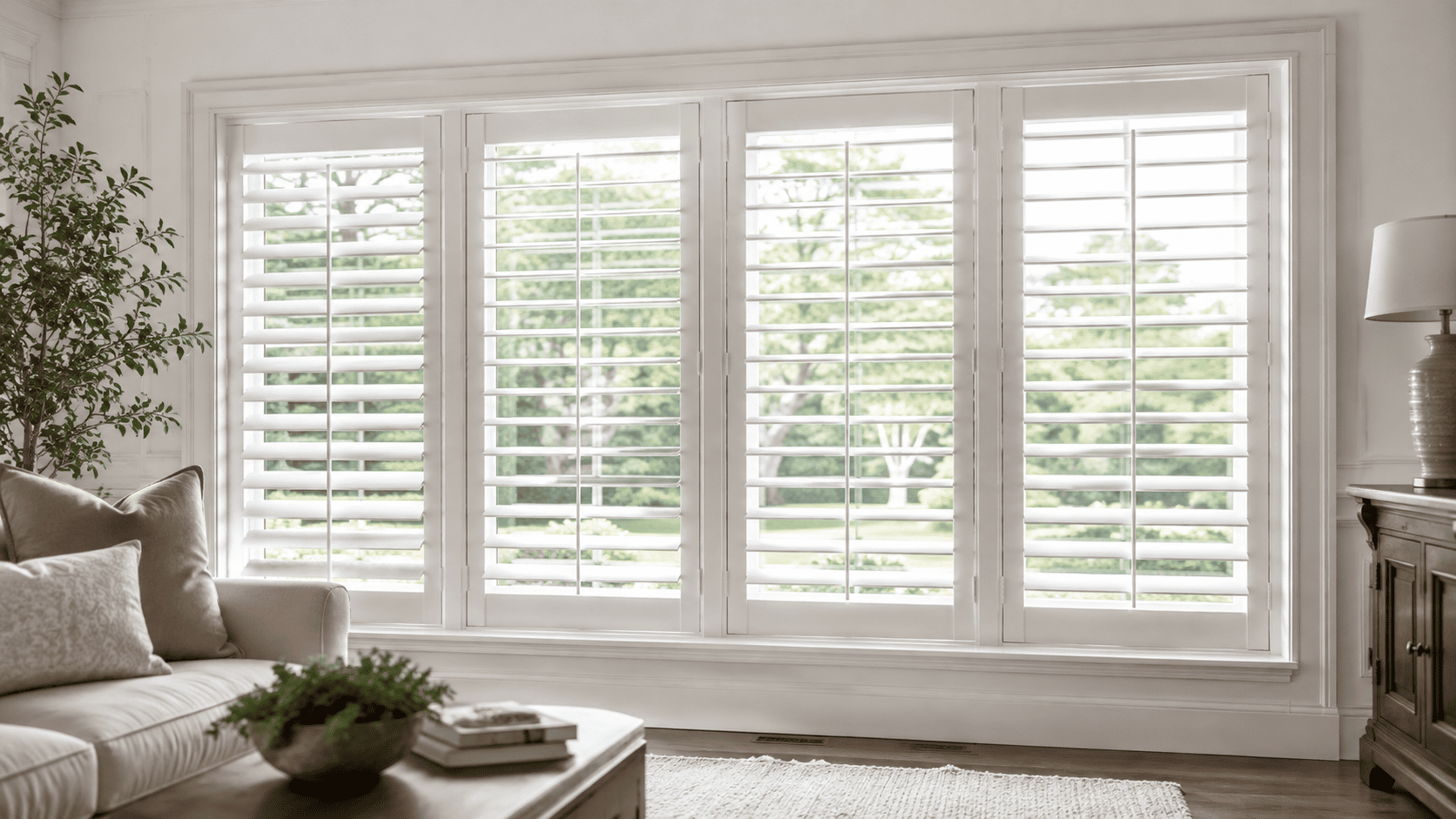
A shutter T-post can help organize the layout. It is a fixed vertical component placed inside the outer shutter frame to divide one broad opening into smaller sections. This creates clear panel breaks while keeping the installation within one coordinated frame.
Not every window needs a T-post. Its value depends on the width and shape of the opening, the existing window divisions, the number of panels, and the way you want them to open.
What Is a T-Post on Shutters?
A T-post is a stationary vertical member installed between the left and right sides of a shutter frame. Unlike a shutter panel, it does not swing open. It becomes part of the fixed frame and creates an intermediate point where panels can meet, close, or attach with hinges.
Where the Shutter T-Post Sits
The outer frame follows the perimeter of the opening. A T-post runs vertically from the top of that frame to the bottom, dividing the framed area into two or more zones.
A wide three-section window might use two T-posts so the shutter layout follows the three sections of glass. A broad single opening might use one central post to create balanced left and right panel groups.
What the T-Post Does
A shutter T-post can:
Divide a wide opening into more manageable sections;
Provide an intermediate point for hinges or panel closure;
Establish clean vertical sightlines;
Align the shutter layout with window mullions;
Give separate panel groups more independent operation.
When Are Shutters With a T-Post Used?
Shutters with a T-post are most common when one frame must cover an opening that is too wide, complex, or visually divided for a simple panel arrangement.
Wide Window Openings
A wider opening may require several panels. Without an intermediate post, those panels may need to hinge from one another in a longer folding group. That can create a heavier group and a less convenient opening pattern.
A T-post introduces another fixed hinge or closing point. The total width can be divided into smaller panel groups instead of relying on one long chain of panels.
This may make the shutters easier to use because you can open one section without moving every panel.
Windows With Multiple Panes
Many wide windows already have vertical mullions separating the glass. A shutter layout often looks cleaner when its fixed vertical components follow those existing lines.
Placing a T-post over a mullion can preserve the window’s rhythm, keep solid shutter components in front of solid window components, and create panel sections that relate naturally to the panes.
Layouts With Several Panel Groups
A T-post can separate groups that need to operate in different directions. Panels on the left may open left, while those on the right open right. A center section may also operate independently.
Read also:
What Is a Divider Rail on a Shutter? Understanding This Simple but Important Feature
Shutter Frame Types: L-Frame, Z-Frame and Other Options
How a Shutter T-Post Supports Wider Openings
“Support” does not mean the post simply holds a panel from underneath. It becomes part of the frame system and changes how hinges, panel weight, and closure points are distributed.
It Creates an Intermediate Hinge Point
Panels beside a T-post can often be hinged to it in the same general way an outer panel is hinged to the side frame. This gives the design a fixed attachment point closer to the center.
That point can reduce the need for multiple panels to depend on one outer jamb or a long sequence of panel-to-panel hinges. The opening becomes a series of smaller operating sections within one frame.
It Can Reduce Oversized Panel Groups
A wide window does not always benefit from the fewest possible panels. Broad panels need more swing clearance and may feel visually heavy. Long folding groups can also require more room when stacked open.
By dividing the opening, a T-post may create a better balance between panel width and panel count.
It Provides a Defined Closing Edge
A T-post gives adjacent panels a consistent vertical edge where they can close or meet. Across a wide span, that can help the installation look orderly when all panels are in position.
How T-Post Placement Affects Shutter Design
Once a post is included, its location becomes a visible design decision.
Aligning the Post With Window Mullions
A common approach is to align the shutter T-post with a vertical window mullion. When the shutter is closed, the post overlaps an existing solid line instead of interrupting open glass.
This can make the installation feel integrated with the window. However, the visible center of the mullion is not the only measurement that matters. The shutter frame, hinges, panel thickness, and louver clearance all affect the final position.
Creating Equal or Unequal Sections
A centered post can create equal left and right sections, which often suits a symmetrical window and room. Unequal placement may be more practical when:
One pane is wider than another;
You need frequent access to one sash;
A handle or lock affects panel movement;
Furniture limits the swing on one side;
The window already has an off-center division.
A balanced design does not always mean identical measurements. It means the placement looks deliberate and supports the way you use the opening.
Coordinating Panel Widths and Sightlines
The T-post is one of several vertical lines in a shutter. Panel stiles, frame edges, and window mullions also contribute to the finished look.
If too many lines cluster together, the center can look busy. If panel widths vary without a clear reason, the layout may feel inconsistent. The post and panel divisions should be read as one composition.
Shutter T-Post vs. Other Shutter Parts
Several components divide or frame an area, but they perform different jobs. These distinctions help you understand a layout drawing or design recommendation.
T-Post vs. Shutter Stile
A shutter stile is a vertical side member of an individual movable panel. It holds the louvers and connects to the panel’s top and bottom rails.
A T-post is fixed within the overall frame. A panel stile may close against it or attach to it with hinges.
T-Post vs. Divider Rail
A divider rail runs horizontally within a panel. It separates upper and lower louver sections and can allow those sections to be adjusted independently.
A T-post runs vertically between panel groups. It organizes the width of the opening rather than dividing the height of one panel.
T-Post vs. Window Mullion
A window mullion belongs to the window and separates panes, sashes, or units. A shutter T-post belongs to the shutter installation.
The two are often aligned for a cleaner appearance, but they remain separate components.
T-Post vs. Outer Frame
The outer shutter frame surrounds the complete installation and connects it to the opening or surrounding surface. A T-post sits inside that perimeter and creates additional attachment or closure points.
What to Consider Before Choosing T-Post Shutters
A T-post should solve a clear structural, operating, or visual need.
Panel Count and Opening Direction
Consider how many panels the opening needs and where they should move. Will they open individually, fold together, or usually remain closed while you adjust the louvers?
A T-post is most useful when it divides the layout into practical operating groups. Its position should support natural opening directions rather than send panels toward furniture, walls, faucets, or other obstacles.
Access and Swing Clearance
Think about which parts of the window you need to reach, including locks, handles, sashes, screens, or cleaning points. Aligning shutter sections with active parts of the window may let you open only the relevant group.
Each hinged panel also needs room to swing. The layout should account for trim, countertops, furniture, walkways, and the space required for folded panels to stack.
Light, View, and Solid Sightlines
A T-post occupies a narrow part of the opening. When it aligns with a window mullion, its effect on the view may be limited. When it falls over clear glass, it adds another solid sightline.
That tradeoff may be worthwhile for better operation or support. The key is to review the proposed location rather than treating the post as an invisible technical detail.
Overall Proportion
The post, panel widths, louver size, rails, and existing window lines should relate to one another. A narrow panel beside several broad panels may look accidental, while perfectly equal shutter sections may conflict with an asymmetrical window.
Proportion should be assessed from inside the room, not only from a measurement sheet.
Read more:
What Are Shutters? A Simple Overview for Homeowners
Shutters Glossary: Frame, Stile, Rail, Louver and More
Questions to Ask About a Proposed Shutter T-Post
During an in-home consultation, use practical questions to connect the drawing to daily use:
Why is a T-post recommended for this opening?
Will it align with an existing window mullion?
Which panels will hinge from the post?
Can each section open independently?
How wide will each panel be?
Where will the panels sit when fully open?
Will the layout preserve access to handles and locks?
How will the post affect the view?
Are equal sections best for this window?
Is there another layout with fewer fixed vertical lines?
These questions help confirm that every component has a purpose and that the final shutter will work with both the window and the room.
Build the T-Post Into the Complete Shutter Layout
A shutter T-post is a fixed vertical member that divides a larger framed opening into smaller panel sections. It can provide intermediate hinge and closure points, support practical panel configurations, align with window mullions, and create a cleaner break across a wide span.
Its success depends on placement. The post should relate to the window architecture, panel widths, swing clearance, and the way you expect to use each section. A technically possible layout is not always the most convenient or visually balanced one.
During an in-home consultation, your design consultant can measure the opening, review mullions and operating hardware, and compare panel arrangements before the shutters are ordered. This helps make the T-post an intentional part of the design rather than an extra line added only to solve a width problem.