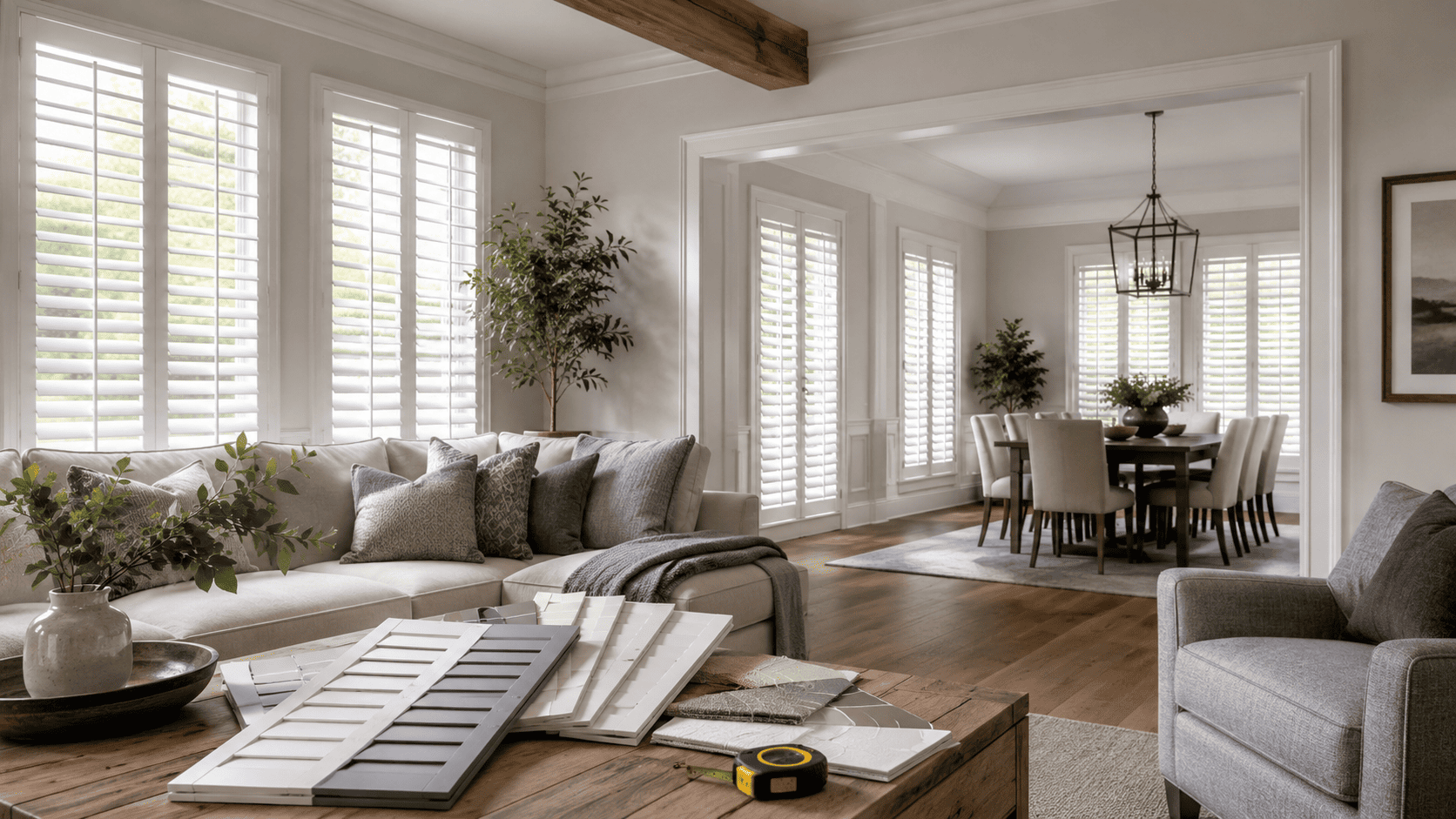
Should You Order Shutters All at Once or Phase the Project?
Author: Dan Williams
September 1, 2026.
Deciding whether to order shutters for your entire home or complete the project room by room can affect your budget, timeline, and final design.
Ordering everything at once can make it easier to create a consistent look and coordinate the project as a whole. Choosing to phase out a shutter project can give you more flexibility, allowing you to begin with the rooms that need shutters most and address the rest of the home later.
Neither approach is automatically better. The right decision depends on your priorities, the number of windows involved, your current budget, and how you want your home to evolve.
Should You Phase a Shutter Project or Order Everything Together?
Before choosing an approach, consider both your immediate needs and your long-term plan for the home. Even when you plan to order shutters room by room, it helps to make early decisions with the complete home in mind.
Ordering all at once may be the stronger option when:
You want the most consistent appearance throughout the home.
Several rooms have immediate privacy or light-control needs.
You prefer to make the main design decisions during one coordinated project.
Your budget is already available for the complete scope.
You want to complete the project within a more concentrated timeframe.
A phased shutter project may make more sense when:
You need to spread the investment over time.
Some rooms are a much higher priority than others.
Parts of your home may be remodeled or redecorated later.
You want to experience shutters in one area before expanding the project.
You are not ready to make decisions for every room at once.
The key is to avoid treating each room as an unrelated purchase. A phased project should still begin with an overall plan.
When Ordering Whole-Home Shutters at Once Makes Sense
Ordering shutters for multiple rooms together can streamline the planning process and help the finished home feel intentional. This approach is especially useful when you already know that shutters will be used throughout most of the property.
You Want a Consistent Look Across the Home
When shutters are visible from connecting rooms, hallways, or the exterior of the home, consistency becomes important.
Planning the complete project together allows you to coordinate details such as:
Mounting approach
Hardware and operating details
These elements do not necessarily need to be identical in every room. However, choosing them as part of one design plan can prevent combinations that feel disconnected.
For example, one room may require an inside or outside mount based on the window depth and surrounding trim. Even when the mounting method changes, the color, louver proportions, and overall style can still support a unified appearance.
You Prefer a More Coordinated Project Timeline
A whole-home order allows the windows, room requirements, and design choices to be reviewed as one project. This can reduce the number of separate decision-making periods and help you understand the overall scope earlier.
Your design consultant will help you schedule installation during your consultation when placing your order. The specific installation plan can then account for the number of windows, room access, and other project details.
Ordering everything together does not mean every window must use the same configuration. It means the differences can be planned intentionally rather than decided separately months apart.
You Are Ready to Make the Full Investment
A larger initial order requires a larger upfront commitment. However, it also gives you a clearer view of the complete project instead of managing several individual phases.
During the planning process, consider more than the number of windows. Window dimensions, specialty shapes, panel layouts, finishes, and other custom details can all affect the project scope.
Reviewing the complete home during an in-home shutter consultation can help you understand those variables before deciding whether to move forward all at once.
Read also:
Shutters Glossary: Frame, Stile, Rail, Louver and More
What Are Shutters? A Simple Overview for Homeowners
When It Makes Sense to Phase a Shutter Project
You do not need to complete every room at the same time to create a well-planned home. A phased shutter project can be practical when it follows a clear order of priorities.
You Want to Spread the Project Across Your Budget
One of the main reasons to choose whole home shutters in stages is the ability to divide the investment into more manageable portions.
Instead of postponing the entire project, you can begin with the rooms where shutters will make the greatest immediate difference. Future phases can then be planned around your budget and other home expenses.
When budgeting, think beyond the first set of rooms. Ask for guidance on the likely scope of later phases so you can make informed decisions rather than restarting the planning process each time.
Certain Rooms Need Attention First
Your shutter project may be driven by a specific need rather than a goal to update the whole home immediately.
You might begin with:
Street-facing rooms where privacy is a priority
Bedrooms where early morning or evening light needs better control
Bathrooms where privacy is especially important
Living spaces that receive strong glare
Home offices where changing sunlight affects screens
Rooms where the current windows feel visually unfinished
Starting with high-priority rooms lets you address the most noticeable problems while preserving the option to expand later.
Other Rooms May Change in the Near Future
Ordering shutters for a room that is about to be remodeled may create unnecessary complications. Changes to trim, built-ins, window hardware, or surrounding finishes can influence the best shutter design.
Phasing may be the better option when certain spaces are still being planned. You can complete the stable rooms first and wait until the remaining windows and décor decisions are finalized.
This is particularly important because custom shutters are measured and designed for specific window openings. Decisions should reflect the room as it will actually be used and finished.
You Want to Experience the First Phase Before Expanding
Completing one phase can help you understand how shutters affect everyday privacy, daylight, and room appearance.
That experience may make later decisions easier. You can identify which details you want to repeat and where another configuration would work better.
The objective is not simply to copy the first room throughout the house. It is to use what you learn while maintaining a consistent overall direction.
How to Order Shutters Room by Room
When you order shutters room by room, the sequence matters. A phased shutter project works best when each stage follows a clear priority order instead of focusing only on the rooms that are easiest to complete first.
Start With Privacy-Critical Rooms
Begin with the rooms where privacy affects your daily routine the most. Bedrooms, bathrooms, and street-facing rooms are often the strongest candidates for the first phase.
Think about when privacy is needed and how often each window is exposed to neighboring properties, sidewalks, or traffic. The right configuration should help you manage visibility without making the room feel unnecessarily closed off.
Move to Rooms With Difficult Light Conditions
Next, look at rooms where glare, strong sunlight, or shifting daylight creates the most frustration.
Adjustable louvers can help you redirect light while maintaining coverage at the window. This can be especially useful in living rooms, dining areas, bedrooms, and home offices where brightness changes throughout the day.
Prioritize the Rooms You Use Most
After privacy and light control, focus on the spaces where shutters will have the greatest everyday impact.
Consider where you spend the most time, where guests gather, and which windows currently bother you most. A frequently used room may be a better early phase than a less-used space, even if the less-used room is more visible from outside.
Complete Highly Visible Areas
Entryways, front rooms, and open-plan spaces can influence how finished the home feels overall.
Shutters have an architectural presence around the window, so completing a visible area can create a noticeable improvement before the rest of the project is finished. Custom shutters may also add value to your home by contributing to a more permanent, tailored appearance, which can help you decide which rooms should move higher on the priority list.
Read more:
Shutters by Room: Kitchen, Bathroom, Bedroom and More
Top 10 Tips to Care for your Indoor Shutters
How to Keep a Phased Shutter Project Consistent
A room-by-room plan does not have to produce a mismatched result. Establishing a few whole-home design standards can connect the phases while still allowing each room to function differently.
Define the Details You Want to Repeat
Before placing the first order, identify the visual elements that should remain consistent across future phases.
These may include:
A primary shutter color or finish
A preferred louver size
A general frame style
Consistent proportions on windows visible from the same area
Similar panel layouts on matching windows
A coordinated appearance from the exterior
Documenting these choices gives later phases a clear starting point.
Allow Room-Specific Configurations
Consistency does not require every window to be treated exactly the same.
A wide living room window may need a different panel layout from a narrow bedroom window. A shallow window opening may require a different mounting solution from a deeper one. Specialty-shaped windows may need a configuration designed specifically for their angles or curves.
The goal is to coordinate the details that create visual continuity while adapting the design to each opening.
Discuss the Full Home During the First Consultation
Even when you are ready to order only the first phase, discuss the complete vision during your consultation.
Explain which rooms are included now, which ones may follow, and whether you want the final home to feel consistent from room to room. Your consultant can then consider future phases when discussing colors, frames, proportions, and configurations for the first order.
This broader conversation can also reveal whether certain rooms should be grouped together. Matching windows, adjoining spaces, or windows visible from the same exterior elevation may be better handled in the same phase.
Keep a Record of the First Phase
Retain the specifications and project details from the initial order. These details can help guide later decisions, especially when you want to repeat a finish or configuration.
It is still important to have each future window professionally measured. Window openings that look identical may have small differences, and changes to trim or surrounding surfaces can affect the fit.
What Could Change Between Project Phases?
Phasing provides flexibility, but extending a project over a long period can introduce additional variables. Understanding them early can help you decide how far apart the phases should be.
Product and Finish Availability
Colors, finishes, configurations, and other options may evolve over time. When an exact match is important, discuss that priority during the first consultation.
Completing visually connected rooms within the same phase can reduce the risk of noticeable differences in areas where the shutters will be viewed together.
Pricing and Project Scope
The cost of future phases may not be identical to the cost of the first order. Window dimensions, shapes, configurations, and project conditions vary by room, and available pricing can change over time.
Instead of assuming that a later room will cost the same as an earlier one, plan each phase around its actual windows and requirements.
Changes to the Home
Renovations, replacement windows, new trim, built-in furniture, or changes in room use may affect the appropriate shutter design.
Before moving ahead with a later phase, tell your consultant about any work completed since the previous order. This helps ensure the new shutters are based on the current window conditions.
Your Design Preferences
Your style may change as the home evolves. This is not always a problem, but it should be managed intentionally.
If you expect major décor changes, choose the whole-home elements that should remain stable and allow more flexible details to vary. A neutral finish, for example, may connect multiple phases even when furniture and wall colors change.
Questions to Ask Before Choosing a Phased Shutter Project
Use these questions to decide whether one complete order or a room-by-room plan fits your situation:
Which rooms have the most urgent privacy or light-control needs?
How many windows will ultimately receive shutters?
Are any rooms likely to be remodeled soon?
Do matching windows need to be completed together?
Which shutter details should remain consistent across the home?
Is the budget available for the whole project now?
Would dividing the order make the project easier to manage?
How far apart would the phases be?
Are there specialty-shaped or unusually large windows that require additional planning?
How will each phase affect the appearance of adjoining rooms or the exterior?
Which decisions need to be made now to protect consistency later?
Bring these priorities to your consultation. A clear list helps keep the discussion focused on both the immediate order and the long-term plan.
Choose a Project Scope That Supports the Whole Home
The choice to order everything at once or phase a shutter project should reflect how you want to balance timing, consistency, and budget.
A whole-home order can provide a coordinated process and establish the finished look sooner. A phased project can let you begin with your most important rooms while leaving time and budget for the rest of the home.
Whichever route you choose, plan beyond the first window. Establish the design direction, identify your priority rooms, and discuss future phases before placing the initial order.
Schedule a consultation to explore custom interior shutters, review the windows throughout your home, and build a project plan that works now without limiting what you may want to complete later.