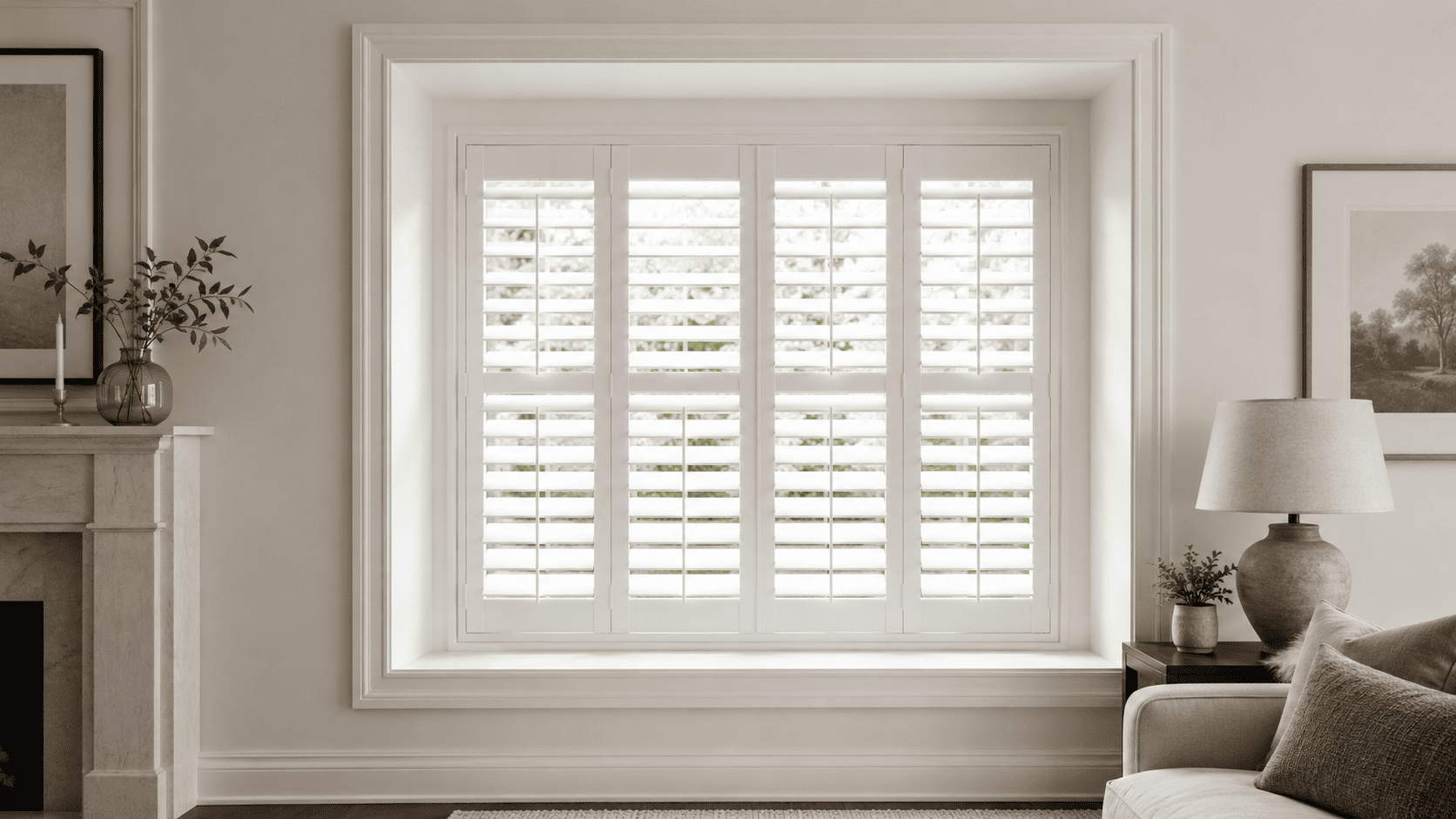
Recessed Window Shutters: What to Check Before Choosing an Inside Mount
Author: Nigel Harris
September 1, 2026.
A recessed window can provide an ideal setting for a clean, built-in shutter installation. Because the window sits back from the surrounding wall, the shutter frame may fit neatly within the opening instead of projecting into the room or covering the existing trim.
However, a visible recess does not automatically mean there is enough usable space for an inside mount. Handles, locks, screens, trim profiles, sill details, and small variations in the opening can all affect how the shutters fit and operate.
Before choosing recessed window shutters, it is important to look beyond the overall appearance of the opening. The best configuration should support proper panel movement, convenient window access, balanced proportions, and a finished look that complements the architecture of your home.
How Recessed Windows Affect Inside Mount Planning
A recessed window is positioned farther back than the interior wall surface, creating an opening with visible sides, a top return, and usually a sill. The depth of this opening may allow the shutter frame to be installed within the recess.
This configuration is generally known as an inside mount Instead of surrounding the window opening from the wall or outer trim, the shutters remain within its boundaries.
For recessed windows, an inside mount can:
Keep the shutter frame visually contained
Preserve surrounding casing and decorative trim
Reduce how far the shutters extend into the room
Create a more integrated architectural appearance
Emphasize the natural depth of the window
The result can look especially tailored, but only when the recess provides the necessary depth and clearance.
Why an Inside Mount Can Create the Cleanest Look
The appeal of an inside mount is not limited to saving space. It can also change how the entire window relates to the wall, trim, and room.
Before deciding, consider which architectural details you want the finished shutters to preserve.
It Keeps the Shutters Within the Opening
When the frame and panels sit inside the recess, the shutters become part of the window opening rather than an additional layer placed over it.
This can produce a streamlined appearance, particularly in rooms with simple trim, clean wall lines, or a more contemporary design. It may also help prevent the frame from competing visually with nearby molding or other architectural features.
It Preserves Visible Window Trim
Decorative casing can contribute significantly to the character of a room. An inside mount may leave that casing fully visible instead of covering part of it with the shutter frame.
This is often valuable when the trim has a distinctive profile, contrasting color, stained finish, or historical detail that you want to maintain.
It Creates a More Integrated Finish
Recessed window shutters can look as though they were considered as part of the room’s architecture from the beginning. The surrounding returns naturally frame the shutters, while the existing depth adds dimension.
The installation should still feel proportionate. A very deep recess, narrow opening, or prominent sill can affect how the shutters look when viewed from different positions in the room.
Start With Usable Depth, Not Total Recess Depth
One of the most important distinctions in inside mount planning is the difference between total depth and usable depth.
A recess may appear deep at first glance, but not all of that space is necessarily available. Your window hardware, trim, frame profile, and shutter configuration all occupy part of the opening.
The Shallowest Point Controls the Plan
Window openings are not always perfectly uniform. One side may be slightly shallower than the other, or the top of the recess may differ from the bottom.
The design must work with the most restrictive point in the opening. Otherwise, part of the shutter frame could project beyond the wall or prevent the panels from operating correctly.
Professional measuring helps identify these small variations before the shutters are ordered.
Window Hardware Can Reduce Available Space
Locks, handles, cranks, sensors, and other components may project into the recess. Even when the opening itself is deep, these elements can reduce the area available for the shutter frame or louvers
This is especially important with casement windows where a crank or handle may need space to turn, and with windows that tilt inward for ventilation or cleaning.
The shutter design should allow you to continue using the window without forcing the panels, louvers, or hardware into one another.
Louver Size and Frame Profile Change Clearance
Your preferred louver size can influence the amount of depth the shutters require. Larger louvers create a more open view and can suit wider windows, but they also need enough room to rotate without contacting the glass, handles, or screens.
The selected frame profile can also affect placement. Some shutter frame options create more build-out than others, which may help accommodate an opening but can change how far the installation projects toward the room.
These choices should therefore be evaluated together rather than as separate design decisions.
Read also:
Cafe Shutters: When Half-Window Coverage Makes Sense
Best Shutters for Insulation: What Homeowners Should Know
Trim and Sill Details That Affect Recessed Window Shutters
Depth is a major consideration, but the surfaces surrounding the window matter as well. The sides, top, and sill create the mounting area and influence the visual alignment of the shutters.
A design consultant will consider how these details interact with the proposed configuration.
Decorative or Stepped Trim Can Limit Placement
Some recessed openings contain trim inside the recess rather than only around the outer edge. This may include stepped profiles, decorative molding, liners, or narrow bands of casing close to the window.
These features can reduce the flat mounting area or create an uneven surface. The shutters may still be possible, but the frame selection and position may need to be adjusted.
An Uneven Opening Requires a Custom Approach
Walls and window openings can shift slightly over time, especially in older homes. Corners may not form exact right angles, and the width may vary between the top, middle, and bottom.
Custom interior shutters can be planned around these variations. Accurate measurements help the finished frame appear balanced while supporting smooth panel operation.
In some cases, a different mount position may provide a cleaner result than trying to force an inside mount into an irregular opening.
The Sill Can Help or Create a Conflict
A deep, level sill can reinforce the built-in appearance of recessed window shutters. However, projecting sill details, raised edges, handles, or decorative returns may interfere with the lower part of the frame.
The panel swing also needs to clear anything placed close to the window, including faucets, shelving, furniture, or countertop items.
The goal is not simply to fit the shutters into the recess. They should remain convenient to use after the room is furnished and in everyday use.
Check How the Window and Shutters Need to Operate Together
The shutter panels, louvers, and window sash each have their own movement requirements. An effective design gives each component the necessary clearance.
Before selecting an inside mount, the following details should be reviewed:
Panel swing: There should be enough space for the shutter panels to open without hitting walls, trim, furniture, or fixtures.
Louver rotation: The louvers need clearance from the glass, screens, locks, and handles.
Window handles and cranks: Hardware should remain accessible when the shutter panels are open.
Tilt-in sashes: Windows that tilt toward the room may require the shutter panels to open first.
Screens: Removable or fixed screens can affect the available depth and access to the window.
Window opening direction: If the window opens into the room, make sure it will not hit the shutter panels.
Nearby room features: Faucets, built-in cabinets, shelves, and deep furniture can restrict panel movement.
A configuration that looks clean while closed but makes the window difficult to operate will not provide the best long-term result.
When to Compare an Inside Mount With an Outside Mount
Even if an iinside mount looks like the natural choice for a recessed window, it is still worth comparing both options during your consultation.
If the recess is shallow, the opening is uneven, or handles and locks take up too much space, an outside mount may create a cleaner and more practical result. It can also help when you want the shutter frame to sit slightly forward or provide more coverage around the window opening.
The best choice depends on how the shutters will look, how the window operates, and how much clearance is available once all hardware and frame details are considered.
Inside Mount vs. Outside Mount for a Recessed Window
The right mounting style depends on the full window configuration. The following comparison can help you understand which direction may be more suitable before your consultation.
This table provides a starting point rather than a final specification. Small differences in hardware, frame depth, and window construction can change the most appropriate solution.
Read more:
Wood Window Shutters: What to Know About Grain, Finish, and Room Fit
Corner Window Shutters: How Custom Fitting Works Around Adjacent Glass
Questions to Ask During an In-Home Shutter Consultation
Your in-home shutter consultation is the best time to compare appearance, clearance, and operation within the actual room.
Use the following questions to guide the discussion:
How much usable depth does this recess provide?
Is the opening square enough for an inside mount?
Will the louvers clear the handles, locks, glass, and screens?
Can the shutter panels open fully?
Will I still be able to open, tilt, or clean the window?
Which frame profile will look most balanced with the existing trim?
Will any part of the frame project beyond the recess?
Would an outside mount create a cleaner result for this particular window?
How will the configuration look from different areas of the room?
Can the same mount style be used consistently on nearby windows?
Your design consultant can measure the opening, review samples, and explain how different frame and louver configurations will affect the finished result. Installation details can also be coordinated as part of the consultation and ordering process.
FAQs About Shutters for Recessed Windows
Recessed openings can vary considerably from one home to another. These common questions address some of the details that influence the final recommendation.
Can You Install Shutters in a Recessed Window?
Yes. A recessed opening can be well suited to custom shutters, particularly when it provides sufficient depth and a clear mounting surface.
The window must still be evaluated for hardware, panel clearance, louver movement, and access. The presence of a recess alone does not guarantee that an inside mount is the most practical configuration.
How Deep Does a Recessed Window Need to Be for Shutters?
There is no single depth requirement that applies to every shutter configuration.
The necessary space depends on the frame profile, louver size, window hardware, screens, and the position of the glass. Measurements should be assessed together with the specific shutter options being considered.
Will an Inside Mount Make the Window Look Smaller?
The frame and panels occupy some space within the opening, but a well-proportioned inside mount can still create a clean and balanced result.
Frame profile, color, panel layout, and louver size all influence how open or substantial the shutters appear. Lighter finishes and an appropriately scaled configuration can help preserve a bright, uncluttered look.
Can Inside-Mounted Shutters Work on Specialty-Shaped Windows?
They may be suitable for specialty-shaped windows when the recess follows the shape and provides enough mounting depth.
Custom measuring is particularly important because angles, curves, and nonstandard corners affect the frame and panel design. The objective should be to preserve the architectural shape while maintaining practical light control and operation.
Are Recessed Window Shutters Custom Made?
Custom fitting is especially valuable for recessed openings because depth, width, trim, and hardware can vary at different points around the window.
Made-to-measure shutters allow the configuration to be planned around the actual opening rather than relying on assumed standard dimensions.
How to Know If an Inside Mount Is the Right Fit
Recessed windows can provide one of the cleanest settings for inside-mounted shutters, but the final result depends on more than visible depth.
Usable clearance, window operation, frame placement, louver movement, trim, and panel swing all need to work together. When these details are evaluated before ordering, the shutters can feel integrated with the window opening while remaining practical for everyday use.
Schedule an in-home consultation to compare mounting options, review the opening with a design consultant, and determine whether an inside mount will create the best result for your recessed windows.